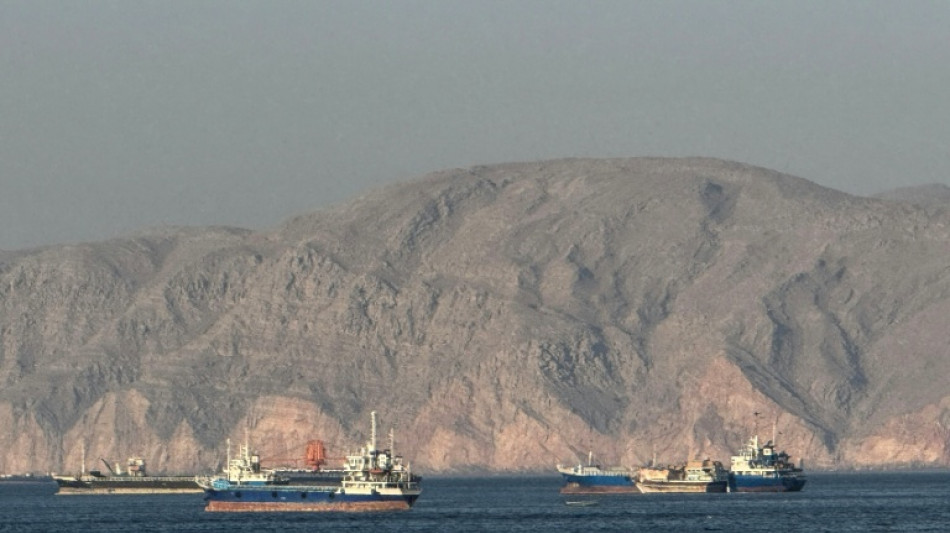
Hormuz tanker traffic edges higher after wartime low / Photo: - - AFP

 Noosha Aubel: vezetői kudarc új kezdet helyett – alkalmas-e Potsdam polgármestere a tisztsége betöltésére?

 Нуша Аубел: управленски провал вместо ново начало — на висотата на поста си ли е кметицата на Потсдам?

 Russia hails Trump waiving sanctions as 'historic'

 Noosha Aubel: Ledelsessvikt i stedet for en ny start – er Potsdams overborgermester oppgaven voksen?

 Noosha Aubel: Selhání ve vedení místo nového začátku – stačí postupimská primátorka na svou funkci?

 Haze triggers highest-level alert in parts of Southeast Asia: monitor

 IMF chief flags 'optimism', 'worry' after Bangkok annual meetings

 IMF chief says has 'optimism' and 'worry' after Bangkok annual meetings

 Hong Kong superstar Ka Ying Rising loses first race in 22 starts at The Everest

 Attacks on Gulf energy infrastructure 'worrying' for outlook: Pakistan finance minister

 Japan says hosting record number of foreigners

 'Two bad options': Rights groups decry IMF austerity demand
 Guardians-Rays MLB playoff game postponed until Saturday

 'We've never had this': Bear sightings spook Russia

 Injured Jordie Barrett out of second Bledisloe Cup Test

 All contenders for UN chief receive veto: diplomat

 UN climate panel fails to agree date for global warming update: envoy

 Stocks struggle to bounce back from AI angst-fueled rout

 Clashes grip Tirana as Albanian PM blames 'foreign hands'

 End of a dynasty? Dodgers digest playoff drubbing

 Troyes sack sporting director Blanchard amid sexism claims

 Trump's new press secretary out after less than week

 EU backs Ukraine on Starlink, but can't fill gap

 Itauma coming to terms with Hrgovic heavyweight loss

 NBA tells sportsbooks to ban certain bets and parlays: report

Traffic through the Strait of Hormuz was slightly higher last week, returning to levels in line with the average recorded since the start of the Middle East conflict after hitting a wartime low.
A total of 55 commodities vessels crossed the strategic waterway between May 11 and 17, according to data from maritime tracking firm Kpler as of Monday morning.
That marked a sharp increase from the previous week, when just 19 vessels crossed -- the lowest weekly figure since the first US-Israeli strikes on Iran on February 28, which led to widespread disruption of traffic through the strait.
Iranian state television said Friday the Revolutionary Guards were allowing more ships to transit the strait, after reporting a day earlier that "more than 30 ships" had been permitted to pass.
Despite the increase, last week's crossings remain broadly in line with wartime averages.
Since March 1, Kpler has recorded 663 commodity vessels transiting the strait, 55 per week on average.
Around half the tankers crossing last week carried liquids.
These included three very large crude carriers, reportedly bound for China, Oman and Japan.
Kpler data also showed 15 dry bulk commodity vessels and 16 liquefied petroleum gas (LPG) tankers crossed the strait last week.
Only one liquefied natural gas tanker carrying Qatari gas to Pakistan crossed, on May 12.
That brought the total number of LNG tanker crossings since the start of the war to eight.
In peacetime, the Strait of Hormuz handles roughly a fifth of global oil and LNG shipments, as well as other major commodities, including fertiliser.
Iran has repeatedly warned that maritime traffic through the shipping lane would "not return to its pre-war status".
On Monday, Tehran announced the creation of a new body to oversee the strait and charge vessels for transiting the waterway, which Iran has reportedly been doing since early on in the war.
- Chinese vessels crossing -
Iranian officials said on Thursday that Chinese vessels had been allowed to transit, after a slowdown the previous week.
According to Kpler, only three commodities vessels linked to China through their flag, ownership or cargo crossed the strait last week.
Two additional Hong Kong-flagged vessels also transited and were heading to Oman and the United Arab Emirates.
The data may not provide a complete picture, however, as vessels do not always disclose final destinations while crossing.
Traffic through the strait since the start of the war has depended on nationality, with Iran saying on Monday that countries complying with US sanctions against the Islamic republic would face difficulties crossing.
Since the start of the conflict, China and India have been among the most frequently reported non-Gulf destinations or departure points for commodity carriers transiting the strait.
Other non-Gulf destinations listed in Kpler's shipping data include Brazil, Pakistan, Thailand and Malaysia, while relatively few vessels reported Western countries as destinations.
Iran's control of the Strait of Hormuz remains one of the central issues in stalled negotiations with the United States, which have yet to produce a breakthrough.
W.Nelson--AT