-
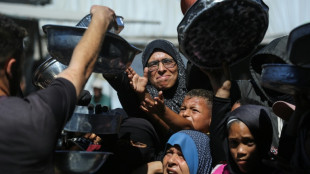 Hunger and malnutrition stalk Gazans, a year on from ceasefire
-
Taiwan's leader says increasing defence spending to 'deter war'

-
 Fernandez trumps MotoGP championship duo to grab Indonesia pole
-
Major quake hits Panama, no deaths reported

-
 October 7 scars push Israel's first-time voters to right
-
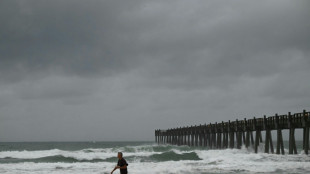
Hurricane Isaias makes landfall in Florida
-
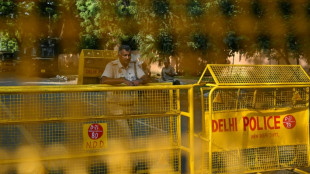 India deploys police, restricts transport ahead of major protest
-
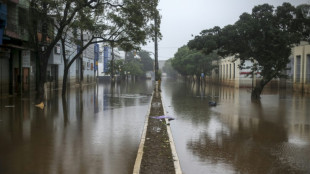
Brazil prosecutors sue Shell for $108 mn over deadly 2024 floods
-
 Three Mexicans convicted in murders of Australian, US surfers
-
Major earthquake destroys buildings, roads in Panama

-
 Powerful waves lash California coast as storm threatens more damage
-
Anthropic AI model sent fake murder tip to Philadelphia police

-
 Trump hails Russia deal to release diesel as midterms loom
-
7.7-magnitude quake rocks Panama, triggers tsunami warning

-
 Lyon blow chance to go top after loss at Lens
-
Prince Harry booed at English rugby match

-
 Stocks rise as Trump says Russia to release diesel to world markets
-
Kiplimo and Feysa seek repeat Chicago Marathon wins

-
 Wildfire smoke shuts schools in Amazon's biggest city
-
Fuellkrug halts Dortmund after late goal flurry

-
 Turkey jails 2 journalists pending trial for fund crisis 'misinformation'
-
Injured Ravens quarterback Jackson ruled out of Falcons clash

-
 Major earthquake rocks Panama, triggers tsunami warning
-
Brewers aim to take down two-time defending champion Dodgers in NLCS rematch

-
 Indian jailed in France for leading sadist Nazi cult that tortured girls
-
Tsunami alert after major earthquake rocks Panama

-
 'Iron Mike' Ditka hailed as 'gold standard' NFL legend
-
Outer bands of Hurricane Isaias lash US Gulf Coast
-
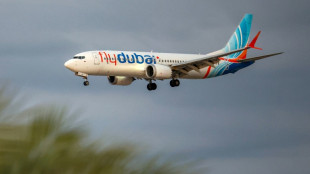 Flydubai co-pilot planned suicide attack on Tel Aviv airport: UAE prosecutor
-
Hope, Rutherford fire West Indies to record T20 chase of 250

-
 Mike Ditka: Chicago Bears icon as player and coach
-
Farhan leads Pakistan to T20 win over Sri Lanka

-
 Outrage over plan to livestream US military firing squad execution
-
Turkey sack coach Montella after Nations League woe

-
 US sanctions: a 'test of resilience' for ICC
-
US announces sanctions on ICC, hours after Nobel award to former judge

-
 NFL legend Mike Ditka dead at 86
-
Montenegro expels popular Russian war blogger wanted by US

-
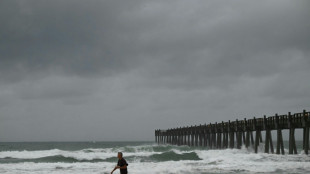 Hurricane Isaias set to strike Gulf Coast late Friday
-
Rubio calls on all Venezuela opposition figures to join talks with govt

-
 Trump forms panel to probe US Fed governor Lisa Cook
-
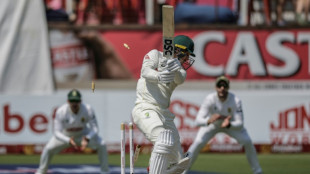
Australia struggle against South Africa quicks in first Test
-
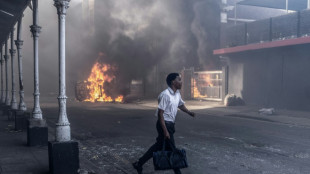 Clashes in Durban as fresh anti-migrant riots erupt in South Africa
-
Stocks advance as Trump rules out pre-vote Iran attack

-
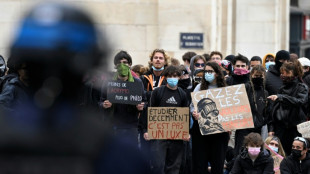 France students plan more protests, UN 'concerned' over violence
-
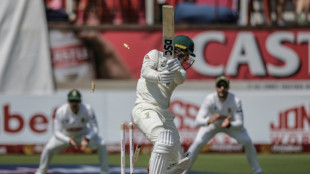
Australia struggle against South Africa's fast bowlers
-
 De Zerbi calls on struggling Spurs to react in Man Utd clash
-
Massive debt puts France in a bind as investor doubts deepen

-
 US sanctions on ICC: a 'test of resilience'
-
Arteta urges 'respect' for process after Man City financial verdict

Will US Forces Invade Iran?
When the United States and Israel launched Operation Epic Fury on 28 February 2026, President Donald Trump said the campaign would be decisive. In speeches since then he has repeated four core objectives: destroy Iran’s ballistic missiles and the factories that build them; annihilate the Iranian navy; sever Tehran’s support for proxy militias; and ensure the Islamic Republic never acquires a nuclear weapon. Officials insist the mission is on course and that Iran’s navy and air force have been “eliminated,” with more than 12,000 Iranian targets struck and more than 155 vessels destroyed. The White House has described the war as a short, focused campaign.
Military records and independent reporting show a more complicated picture. Before the war Iran possessed an estimated 2,500 ballistic missiles. Although U.S. and Israeli strikes have degraded production lines and reduced Iran’s launch rate by about 90 %, intelligence sources say only about one‑third of the arsenal has been destroyed and that Tehran retains a modest capacity to hit Israel and the Gulf. The bombing has extended beyond military targets; Iranian officials say strikes have hit pharmaceutical plants, desalination facilities and other industrial sites, while the Iranian Red Crescent reports hundreds of civilian casualties. More than 2,000 Iranians have been killed, according to Al Jazeera, and U.S. Central Command acknowledges that thirteen American service members have died. Israel’s simultaneous campaign in Lebanon has displaced 1.2 million people, and Gaza’s humanitarian relief has been halted after Israel closed the Rafah crossing.
Shifting goals and international unease
The justifications for Operation Epic Fury have expanded. Trump’s initial pledge to aid Iranian protesters was followed by calls for regime change, then by claims of pre‑empting an imminent Iranian attack and of avenging alleged plots against the president. As the war unfolded, officials such as Secretary of State Marco Rubio and Secretary of War Pete Hegseth insisted the mission was narrowly focused on missile and naval destruction. Analysts note that the rhetoric has evolved to fit battlefield developments, creating confusion about the operation’s true purpose. Critics, including international legal scholars, argue that the campaign risks undermining the UN Charter and could normalise unilateral war. The UN High Commissioner for Human Rights has warned that the conflict’s spread “like wildfire” demands urgent de‑escalation.
Allies are divided. Israel and several Gulf states have provided logistical support, but Spain, France and Italy have restricted U.S. access to airspace and bases. Britain is hosting talks on reopening the Strait of Hormuz, while China and Pakistan have proposed a ceasefire plan. Meanwhile, Iran’s regional partners continue to launch rockets and drones at Israel and U.S. facilities, and Iranian officials say they have “zero trust” in Washington. The prolonged closure of the Strait has pushed global oil prices higher and caused what some economists describe as the worst trade rupture in eighty years. Australia’s prime minister warned his citizens to prepare for months of economic turbulence.
Ground operations: speculation and reality
Talk of an imminent U.S. invasion of Iran has intensified after the Pentagon disclosed preparations for limited ground operations. According to officials, plans under consideration involve raids by special operations forces and Marines on Kharg Island and coastal areas near the Strait of Hormuz. Additional forces from the 82nd Airborne Division and a Marine Expeditionary Unit have already arrived in the region. White House press secretary Karoline Leavitt stressed that preparing options does not mean a final decision has been made. Supporters argue that seizing small pieces of terrain could help reopen the waterway and destroy remaining missile batteries; critics counter that such raids would expose U.S. troops to drones, mines and a determined Iranian defence.
Military scholars caution that history offers little comfort for a land war in Iran. Iran is a vast country with rugged terrain and a large standing army and Revolutionary Guard corps. Control of the 200‑kilometre‑long Strait requires keeping the entire waterway open, while Iran only has to close a single chokepoint. Limited raids might not compel Tehran to surrender; they could instead harden Iranian resolve, invite Russian assistance and produce U.S. casualties that erode domestic support. Retired officers note that the last major amphibious operation conducted by U.S. forces was the Incheon landing in the Korean War, underscoring the logistical difficulty of large‑scale landings in hostile territory—a point echoed by commenters online.
Voices from the public sphere
Public reactions reveal both anxiety and bravado. Some commenters salute the “fire, boom” rhetoric Trump used to describe air strikes, while others lampoon it as reckless and unbecoming of a head of state. Many question the wisdom of seeking “undisputed victory” in a country as large and resilient as Iran, warning that prolonged fighting will leave the rest of the world to “suffer for no good reason.” References to historic amphibious operations hint at scepticism about a ground invasion’s feasibility, and several contributors object to the war proceeding without congressional approval. Others voice fear that seizing Iranian oil facilities would be seen globally as plunder. There are, however, voices that praise the campaign and suggest that critics are simply “haters.” Taken together, the comments reflect a divided public grappling with the tension between perceived national security imperatives and the moral, legal and economic costs of war.
An uncertain path forward
Despite confident pronouncements from Washington, the path to a decisive end appears uncertain. Iran’s ability to launch drones and missiles has been dented but not destroyed; its proxies remain active across the Middle East; and the Strait of Hormuz—a lifeline for global commerce—remains contested. The domestic mood in the United States is mixed, and international support is fragmenting. Limited ground raids could deliver symbolic victories but risk entangling U.S. forces in exactly the kind of drawn‑out conflict Trump vowed to avoid. As diplomats convene and militaries mobilise, the world watches to see whether the current campaign marks the prelude to a broader invasion or the crest of an offensive that will soon wind down.

This Summer experiences Romania first heatwave

Mike Pence: U.S. will continue to support Ukraine

Activists organise "flotilla" with aid for Gaza

Holy souls on display at 2024 Venice Biennale

Brussels, my Love? EU-Market "sexy" for voters?

The great Cause: Biden-Harris 2024

UN: Tackling gender inequality crucial to climate crisis

Scientists: "Mini organs" from human stem cells
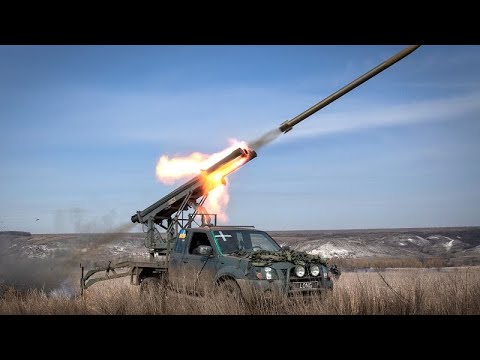
ICC demands arrest of Russian officers

Europe and its "big" goals for clean hydrogen

Putin and the murder of Alexei Navalny (47†)