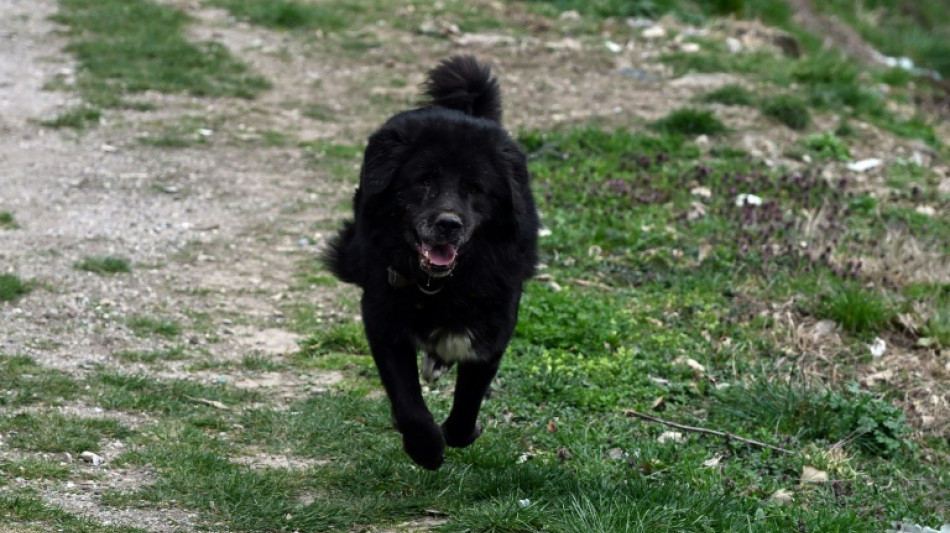
Mountain-made: Balkan sheepdog eyes future beyond the hills / Photo: Robert ATANASOVSKI - AFP

 President Trump to Attend TSMC Groundbreaking in Phoenix Next Week

 Gauteng Health Department Warns of Rising Antibiotic Resistance Threat

 Bishop Museum Races to Save Rare Megamouth Shark Specimen

 InterContinental Hotels Group PLC Announces Transaction in Own Shares - November 26

 NiobiumX Mining Explains How it Will Hunt for Niobium at Shipshaw: Magnetic Lows, Thorium Highs, and Machine Learning Built for a District With One Producing Mine

 Impauer Technologies Inc. Announces Third Quarter 2026 Financial Results and Equity Compensation Grants

 Beyond Wired Broadband: InHand 5G Routers Offer Businesses a More Flexible Connectivity Solution

 PPX Announces Repayment of 25% of Its Processing Plant Construction Loan

 Rainbow Runtz Strain Guide Examines Disputed Origins and Historical Potency Data
At a remote monastery in North Macedonia's rugged west, Father Porfirij starts his day by feeding his large black Karaman sheepdogs, a breed that has guarded highland flocks for centuries.
In February, the Karaman -- a hardy mountain shepherd -- won provisional recognition as an indigenous breed from the International Canine Federation (FCI).
The decision caps years of work by breeders, scientists and Porfirij himself to define and preserve one of the region's oldest breeds.
"They are very nice dogs, very peaceful," the Orthodox priest told AFP, as he dished out the morning meal to the thick-coated hounds at their home in the centuries-old monastery.
Rooted in nomadic herding traditions, the Karaman is one of several breeds Balkan shepherds used to guard mountain-dwelling flocks against bears and wolves, a practice that dates back to Ottoman times.
- 'Created by the mountain' -
For locals, the sheepdogs' symbolism is deeply important.
The more famous Yugoslavian Shepherd, also known as the Sharplanina or Sharr, even features on the country's currency.
But as rural populations decline across the region, the pastoral life that sustained the Karaman is fading, leaving just 2,000 of them registered in the country, according to Ilija Karov, who heads a kennel club devoted to the breed.
Official recognition as a distinct breed was important because it "opened the borders" for the animal to become a pet abroad and bolster breeding efforts, Karov said.
It is also the first breed with its origins exclusively recognised in North Macedonia, with the Sharr shared with Serbia.
Porfirij was drawn to the campaign for the animal almost a decade ago, while living at the St Jovan Bigorski Monastery.
Using the monastic kennel as his base, the priest travelled through the mountains, collecting dogs with specific traits.
Although the Karaman is visually similar to the Sharr, scientists have found clear genetic and anatomical differences, which Karov says include its curled tail, lighter eyes and spoon-shaped paws.
It was important to define the breed only by characteristics "created by the mountain", he said.
"In Karaman, there is literally zero human intervention in relation to how it should look."
- 'Brighter future' -
The canines' powerful build and origins as mountain sheepdogs can be intimidating -- the Sharr has been banned in Denmark since 2010.
But Porfirij said any fears of the Karaman are unfounded and hopes there will be growing interest in the breed thanks to its loyalty and friendliness.
"Especially towards kids," he said, as two local children hugged a thick-furred dog behind him.
As young people leave and mountain communities age, Karov said the breed's future would rely more on urban pet owners than its pastoral past.
"The breed has a brighter future, even if that is more in the cities than in the mountains."
D.Johnson--AT