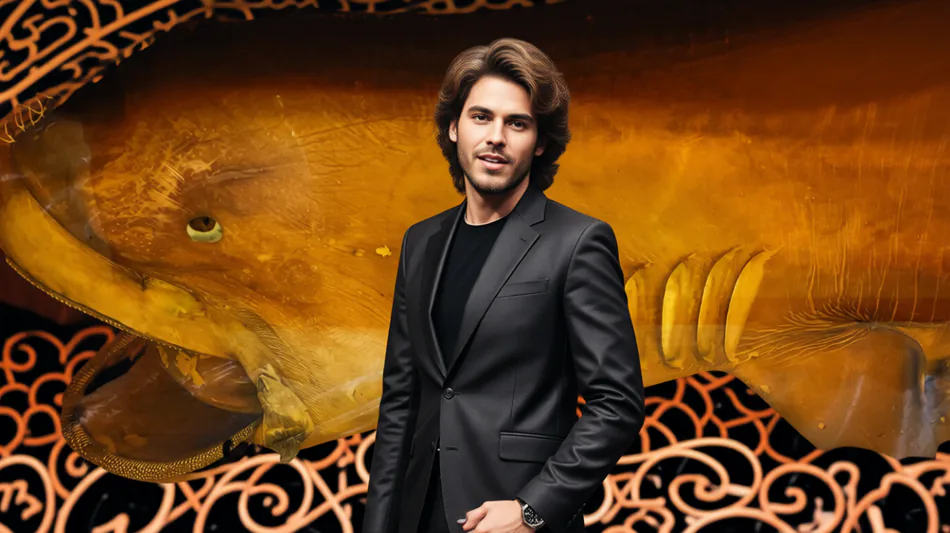
Bishop Museum Races to Save Rare Megamouth Shark Specimen

 Qatar Facilities Management Market to Reach $11.15bn by 2032

 Black Friday Discounts Cut Prices on Two Top-Rated Wiper Blades

 Twickenham Grounds Team Prepares Pitch for Six Matches in Three Days

 Luxembourg City Plans €13 Million Abrigado Centre for 2029

 Two A1 Crashes Create Kilometres of Rush-Hour Congestion

 South Africa Places 36 Hospitals on Standby for Possible Imported Ebola Cases

 TCC Network Linked to 200% Surge in Global School Attacks

 Beyond Black Friday: A Guide to This Week’s Holidays and Deal Days
Fifty years after its accidental discovery in Hawaiian waters, the rare Megamouth shark specimen housed at the Bernice Pauahi Bishop Museum faces a critical preservation deadline. The museum is launching an urgent fundraising campaign to construct new stainless steel tanks for the holotype, which is deteriorating in its original container.
The Bernice Pauahi Bishop Museum in Honolulu is racing against time to preserve a unique scientific treasure: the holotype specimen of the Megamouth shark. Fifty years after the creature was accidentally caught off the coast of Oahu, the museum has announced an urgent need for $300,000 to construct new storage facilities before the original container fails.
The specimen, which rests in a bath of isopropyl alcohol within a fiberglass box built in 1976, is showing signs of chronic leakage. Richard Pyle, the museum’s senior curator of ichthyology, stated that if the shark is not moved to a new container within the next two years, it could be lost to science forever.
"It would be totally tragic; an incredibly bad thing to lose it," said Leighton Taylor, who was then the director of the Honolulu Aquarium and played a pivotal role in the specimen’s initial preservation. Taylor noted that the Megamouth is the rarest and largest specimen in the museum’s fish collection.
The discovery of the Megamouth occurred on November 15, 1976, during deep-water research conducted by a U.S. Navy vessel approximately 25 miles off Oahu’s Kahuku Point. The crew had deployed two parachute anchors at a depth of 540 feet to steady the boat in waters nearly three miles deep. When winching up the anchors, they found a nearly 15-foot-long shark entangled in one of them.
The creature had bitten onto an anchor and suffocated while trying to free itself. It was dead upon retrieval. Ensign Linda Hubble, aboard the vessel, recognized immediately that the animal was unlike anything she had ever seen. Upon returning to shore at Kaneohe Bay, she contacted Taylor.
When Taylor arrived at the dock, he saw only the shark’s tail hanging from the winch. The 1,500-pound body had fallen back into the ocean due to its weight and had to be retrieved by divers to reassemble the specimen. It was subsequently transported via flatbed truck to Hawaiian Tuna Packers at Kewalo Basin, where it was flash-frozen until a temporary preservation container could be built for transport to the museum.
In his subsequent scientific paper, Taylor described the animal as "a strange shark…extraordinary in its distinctness and its great size." He determined that the find represented not just a new species, but an entirely new genus and family of sharks. He named it Megachasma pelagios, Greek for "giant yawner of the open sea." Associated Press reporter Bruce Dunford coined the common name "Megamouth" when breaking the story.
The discovery was particularly significant because it revealed a filter-feeding shark that consumed plankton by opening its massive mouth to take in tiny shrimp and crab-like organisms while flushing water through its gills. This behavior placed the Megamouth among only three known filter-feeding shark species, alongside the basking shark and the whale shark.
Taylor, who still recalls the discovery with excitement, noted that finding a new family of sharks in the 20th century was highly unusual. "It makes you wonder what else is in the ocean we don't know about," he said.
Despite its scientific importance, raising funds for the Megamouth presents unique challenges. Janet Bullard, the museum’s vice president for marketing and communications, acknowledged that asking the public to donate money to save a specimen that can rarely be seen is difficult. The container is opened only about every two years to check its integrity and replenish the alcohol.
"We are very selective about who can view the specimen due to its importance and the fragility of the container," said Calder Atta, the fish collection manager. "Generally, it’s limited to those involved in megamouth research or who take care of the specimen."
The storage room, known as the "fish library," is a cramped, off-limits area containing tens of thousands of jars with 130,000 individual fish specimens. Bullard admitted that the Megamouth is not an easy sell because it lacks the appeal of more traditional charity mascots.
"It is definitely a challenge to ask the public for money to save something that can never be seen," Bullard said. "And Megamouth is not adorable like a puppy or a kitten."
Taylor agreed, stating, "Megamouth is a hard sell. There is no way you can call it cute." The specimen’s appearance—a bulbous head, wide flappy lips, a mouth that can open three feet wide, and tiny backward-facing teeth—has led Pyle to describe it as looking more like a cartoon character than a typical shark.
To overcome these fundraising hurdles, museum officials are working to tie the shark to a sense of local pride. Liza Lee, the museum’s director of individual giving, emphasized that the Megamouth is "Hawaiʻi’s own," having been discovered in Hawaiian waters.
The museum has commissioned artwork depicting the shark alive and consuming plankton in the deep ocean, as well as a new video highlighting its importance to understanding Pacific biodiversity. Plans are also underway to create a life-size replica for public display and to design a Megamouth plushie toy for sale in the museum shop and as donor incentives.
The goal is to install three new stainless steel tanks, specially ordered from New Zealand, in a dedicated room at the museum. One tank will house the Megamouth, while the other two will accommodate additional shark specimens from the fish collection.
For scientists like Taylor, the value of the specimen extends beyond its physical preservation. He described the Megamouth as a "gentle giant," far removed from the predatory image often associated with sharks. The discovery remains a testament to the unknown biodiversity of the ocean, proving that even in the modern era, significant life forms can exist undetected for millions of years.
As the museum moves forward with its preservation efforts, the focus remains on securing the future of this historic specimen. The fundraising campaign aims not only to save the shark but to educate the public about the extraordinary nature of marine life discovered off the Hawaiian coast half a century ago.
A.Ruiz--AT