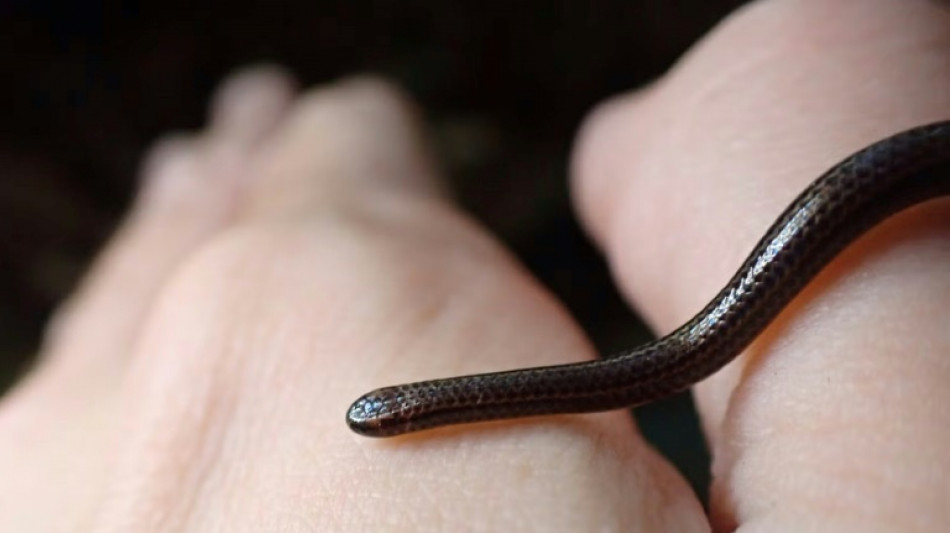
World's smallest snake makes big comeback / Photo: Connor Blades - Re:wild/AFP

 Italy hope for new dawn under Mancini

 Mongolian herders enlist new tech against harsher, drier climate
 Tata turmoil shines light on India succession woes

 World Cup 'not enough' as Spain begin next chapter

 Meta acts against 3.7 mn scammers' accounts with Singapore police help

 Australia PM says draft social media rules about taking back control

 Is Pet Insurance Worth the Monthly Cost?
 US-led Americas coalition backs sanctions against crime groups

 'Star Wars' fans and art lovers line up for new Lucas museum

 Trump renames AI 'super intelligence' as leaders jostle over dangers

 Oil prices retreat as markets welcome US-Iran talks
 US refusing to give Sudan's de facto leader visa for UN: diplomatic sources, UN

 Macron urges world to choose UN over 'law of the jungle'
 All-rounder Jacks stars as England beat Sri Lanka in 1st ODI
 Man City peg back Bayern to start Women's Champions League

 Trump beats 'America first' drum at UN as allies tread carefully

 Snedeker backs Spaun for Ryder Cup after Presidents snub

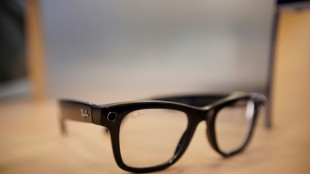 French prosecutors probe secret filming of women with smart glasses

 Trump renames AI "super intelligence," rejects international oversight

 Trump rejects international regulation of AI

 How is the EU approaching record fuel prices?

 Sri Lanka's Colombage strikes on debut as England dismissed for 265 in first ODI

 Hurricane Polo strengthens to top category 5 off Mexico

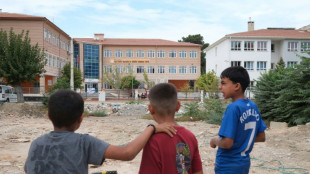 11 hurt as teen opens fire outside school in western Turkey

 UN chief says 'Big Oil' treats atmosphere as open sewer

A snake so small it could be mistaken for a worm has been spotted in Barbados, nearly two decades after it was thought to have been "lost" to science.
The Barbados threadsnake (Tetracheilostoma carlae) was found hiding under a rock in central Barbados during an ecological survey in March by the Barbados Ministry of the Environment and National Beautification and conservation group Re:wild.
"Barbados threadsnakes are blind snakes, so they're very cryptic," said Connor Blades, a project officer with the Ministry of Environment in Barbados who helped make the finding, in a statement.
"They're quite rare also, it seems. There have only been a handful of confirmed sightings since 1889, so there are not many people who have ever seen it, unfortunately."
Measuring just three to four inches long (eight to 10 centimeters) when fully grown -- tiny enough to almost fit on a US quarter coin -- the Barbados threadsnake is the world's smallest species of snake.
It is distinguished by orange stripes along its back, eyes on the sides of its head and a small scale on its snout.
"When you are so accustomed to looking for things and you don't see them, you are shocked when you actually find it," said Justin Springer of Re:wild, who made the discovery alongside Blades.
"You can't believe it. That's how I felt. You don't want to get your hopes up too high."
The breakthrough came after more than a year of searching, as the pair upturned rocks trapped beneath a tree root.
The tiny snake, which was found alongside an earthworm, was taken to the University of West Indies for careful examination under a microscope -- it closely resembles the Brahminy blind snake, an invasive species, so the finding had to be validated -- before it was returned to the forest.
Only two percent of the Caribbean island's primary forest remains intact, with the rest cleared for agriculture since the start of the colonial era 400 years ago.
The Barbados threadsnake remains particularly vulnerable since it reproduces sexually and females lay a clutch of only one egg. Female Brahminy blind snakes, by contrast, can produce fertile eggs without mating.
"The threadsnake's rediscovery is also a call to all of us as Barbadians that forests in Barbados are very special and need protection," said Springer. "Not just for the threadsnake, but for other species as well. For plants, animals and our heritage."
H.Thompson--AT