
AI making cyber attacks costlier and more effective: Munich Re / Photo: John MACDOUGALL - AFP/File

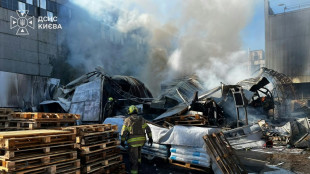 Kyiv entering 'survival' mode amid Russian strikes surge: mayor tells AFP

 Verdict due in Mexico trial over murders of Australia, US surfers
 B2PRIME Welcomes Christina Barbash as Commercial Manager

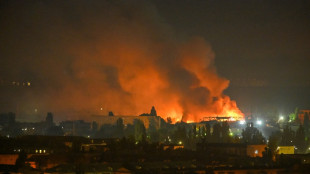 Russia forcing Kyiv into 'survival' mode before winter, mayor tells AFP
 Closing arguments begin in Maradona death trial

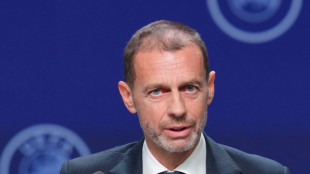 UEFA president Ceferin to stand for re-election in 2027

 Nearly 300,000 Nepalis at flood risk: study

 Riyadh kindergarten hit by interception debris as Houthis say targeted airport
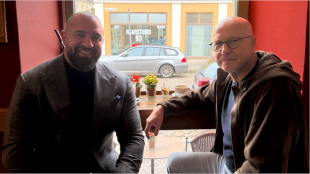 Alex Bodi mizează, alături de CRIF, pe investiții transparente și pe prevenirea riguroasă a spălării banilor
 Gulf Labs, Part of Thailand’s $27 Billion GULF Group, Goes Live as an Injective Validator
 EU okay for winter despite 'historically low' gas stocks: operators

 Rwanda to host F1 Grand Prix: sources close to both sides

 EU top diplomat says bloc in favour of UN Lebanon peacekeepers' extension

 Antonelli and Russell to run different Mercedes aero packages in Singapore

 WTO hikes 2026 trade growth forecast on AI boom
 'I love that challenge': Hamilton prays for rain in Singapore

 G.Bissau moves towards postponement of December general election

 Verstappen out to settle 'unfinished business' at Singapore Grand Prix
 WhiteBIT Launches Bitcoin Lightning Network Support, Powered by Voltage

 Oil surges, stocks sink as US reportedly eyes fresh Iran strikes
 Anne Carson: modern takes on Greek classics

 Canada's Anne Carson wins Nobel literature prize

 Ethiopia drones hit Eritrean troops in Tigray
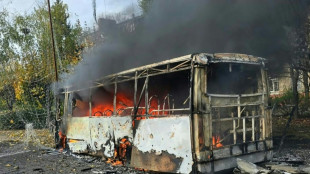 Russian strike on buses kills 30 in frontline Ukrainian city
 Thailand begins extradition process against Chinese journalist

Artificial intelligence is making cyberattacks increasingly sophisticated and costlier for businesses, reinsurer Munich Re said Wednesday, warning of methods ranging from highly personalised phishing emails to computer-generated, convincing fake identities.
"If cybercrime were a country, it would be the third-largest economy in the world", behind only the United States and China, the reinsurer said in a report.
Citing figures from market analysis firm Statista, Munich Re projected cybercrime will generate global losses of some $14 billion (12.07 bn euros) in 2028.
Martin Kreuzer, head of cyber risks at Munich Re, told AFP that "automation now plays a central role", enabling attackers to operate "efficiently and in a more targeted way".
"They rely on highly personalised phishing emails, automatically generated malware, and synthetic identities that appear deceptively real," he said.
The trend of "agentic AI" means the advent of systems that can "act autonomously, make decisions, and even circumvent defensive mechanisms," according to Kreuzer.
The most widespread cyberattacks are still ransomware, in which hackers lock systems and demand money to release them.
Munich Re's study says that the number of publicly reported attacks of this kind "increased by nearly 50 percent in 2025 and... continue unabated in 2026".
Coordinated attacks via networks of hijacked devices, used to overwhelm systems, also more than doubled in 2025 and are becoming more common thanks to services available for hire.
At a more advanced level, criminals are collaborate with states, concealing the origin of attacks and accelerating their global operations.
"Nation-state actors are among the most professional players in the cyber threat landscape," said Kreuzer.
"Here we are seeing both an evolution of tools and methods, and the emergence of hybrid warfare driven by geopolitical motives," he said, adding that "disinformation is increasingly being used as a weapon".
The study notes that while attacks on large businesses attract most public attention, "the majority of cyber incidents and claims affect micro-companies and SMEs".
Compared with risks from natural catastrophes, for which almost half of all losses were insured in 2025, Kreuzer said that "cyber risk coverage is still far too low, with only a fraction insured".
A.O.Scott--AT