Mideast war sparks long queues at Kinshasa petrol stations / Photo: FADEL SENNA - AFP/File

 Mbappe hits two as Real Madrid rout Sevilla
 Browns edge Ravens for division lead, Texans beat Jags

 Lyon go top of Ligue 1 as Monaco fall to first defeat of the season
 Venezuela opposition alliance reaffirms Nobel laureate Machado as leader
 'Street Fighter' wins N. America box office, buzzy doc stuns in 2nd

 NFL: Paris game to go ahead despite protests in France
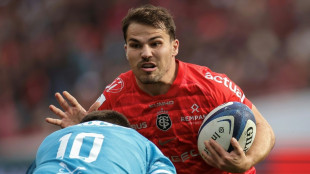
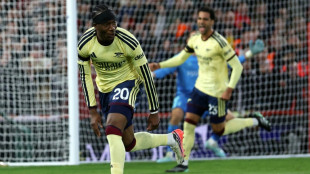
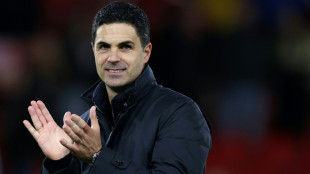 Arteta hails Arsenal 'finishers' after Madueke fells Forest
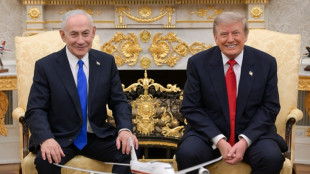 Trump backs ally Netanyahu ahead of Israel's tight election
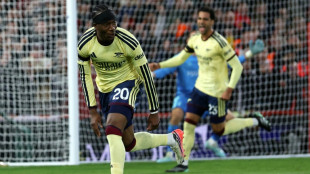
 Madueke strikes late as below-par Arsenal sink Forest
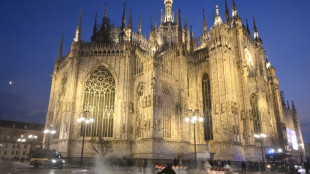 Second day of street clashes in Milan
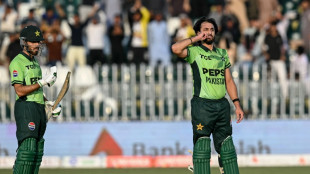
 Dupont's Toulouse hold off Exeter as English Champions Cup woes continue

 Zelensky speaks to US envoys amid Trump spat

 Paris police in new battles with protesters and looters
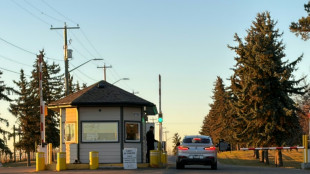 Multiple deaths, injuries at western Canada military base: minister

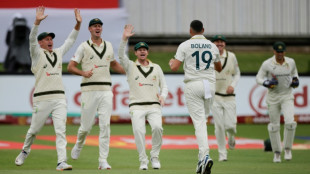 Boland strikes twice for Australia in rain-hit South Africa Test

 Marseille put Angers to the sword in Ligue 1

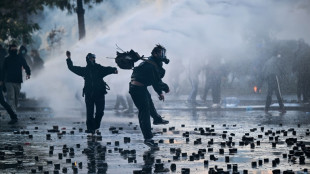 Albanian PM refuses to quit as violent protests enter sixth day
 Chwalinska fights back to win Wuhan Open in title breakthrough
 Kulusevski on brink of return for Spurs after 17-month absence

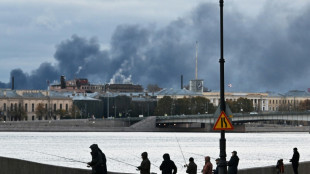 Ukraine sets Saint Petersburg refinery ablaze in large-scale drone attack
 Spain's in-form Chacarra wins DP World India Championship
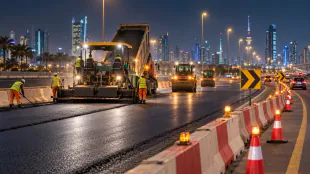 Kuwait announces maintenance closures in Nuzha, Surra and Rai

 Moody’s lifts OYO parent Prism outlook to positive before planned IPO
 RCom professional asks Supreme Court to revisit spectrum insolvency ruling
 Premium products and financing drive Navratri appliance demand

Long queues of cars and motorcycles have built up at petrol stations in DR Congo's sprawling capital Kinshasa over fears of shortages and price hikes after Iran's blockade of a crucial shipping conduit.
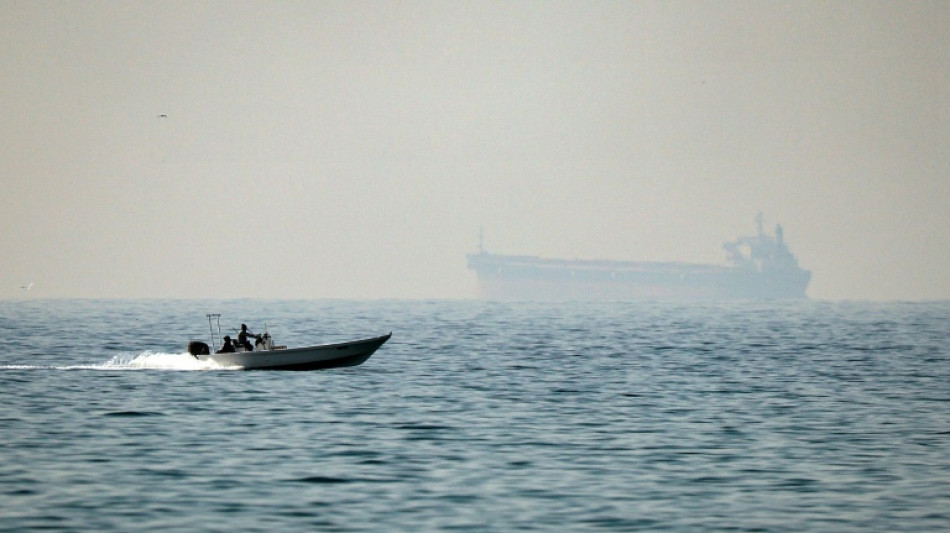
In retaliation for US and Israeli strikes that began more than three weeks ago, Tehran virtually closed the strategic Strait of Hormuz through which one-fifth of the world's oil passes, sending global energy prices soaring.
The Democratic Republic of Congo (DRC) imports nearly all the oil needed for its more than 100 million people and a shortage would risk paralysing the economy, which relies on the transport of goods by road.
The vast central African country has only a single overland pipeline, which carries imported oil from the Atlantic port of Matadi in the west to Kinshasa.
The Congolese economics ministry on Monday said in a statement that there was "no fuel shortage and stocks of petroleum products are available and sufficient to supply the entire country".
Seeking to ease the situation at the petrol pumps, it announced customs duty exemptions and the "strengthening" of advances to oil companies "in a context of tensions linked to the geopolitical situation in the Middle East". It did not provide details on the sources of the oil supply to the country.
Yet, on a main city artery, motorcyclists gripping their handlebars have been jostling for days, shouting to make themselves heard and trying to carve out a space in the crowd to secure a few litres of the scant fuel.
"There are colleagues who have been here for four hours," said Emmanuel Gedeon Nzunzi, who drives one of the motorcycle taxis that are essential in the overcrowded and congested city of around 17 million people.
With its outdated infrastructure, the impoverished DRC is no stranger to temporary fuel shortages. But this time, the threat originates far away.
"We saw on social media that people are talking about the war in Iran," Marcel said, standing by his motorcycle.
- 'Pressure' -
"We don't have any stocks?" asked motorbike taxi driver Moise Ilunga, not hiding his annoyance. "We have to put an end to this war, we have to negotiate with Iran, we're suffering," he said.
Fuel distributors, caught between the fear of seeing barrel prices skyrocket and the regulation of prices at the pump, are being singled out as responsible for the sudden shortage.
The government regulates pump prices, which are the equivalent of around $1 (2,440 CFA francs) a litre in the region around Kinshasa.
It pays subsidies to those involved in the petroleum sector to cover the difference with the actual price.
Emery Mbasthi, vice president of the Congo Oil Association, told AFP that he was worried about "depleting reserves without being able to replenish them".
He has called on the authorities to raise the price per litre at the pump or increase the subsidies.
Oil prices have already gone up since the start of the war in Iran and "oil companies are used to putting pressure on the government to review fuel prices" by holding onto their stocks," Jacques Mukena, a researcher at the DRC-based Ebuteli institute, told AFP.
But the government "will not immediately increase this shortfall", he added.
Increasing subsidies to fuel distributors would be a heavy drag on the state budget, while raising pump prices would have "a political and social impact", Mukena said.
The DRC, one of the poorest countries in the world, is particularly vulnerable to global oil price fluctuations.
Ilunga, the motorbike taxi driver, said that bikers like him now had to pay 1,000 CFA francs in bribes to be able to fill up on fuel at the pumps.
"With these costs, I'm going to have to ask for more money from customers" for the ride, said Marcel, amid the habitual din of engines and horns blaring in the Kinshasa sunshine.
The prime minister's office said on Tuesday that the DRC had stocks to supply the country until June and promised, for the time being, to limit the increase in the pump price.
A.Ruiz--AT