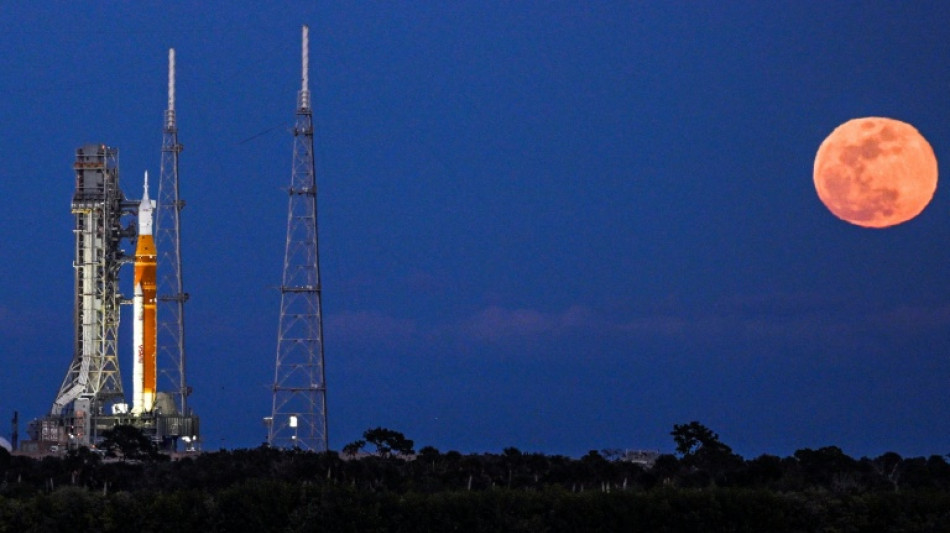
It's go time: historic Moon mission set for lift-off / Photo: Miguel J. Rodriguez Carrillo - AFP

 Kyiv entering 'survival' mode amid Russian strikes surge: mayor tells AFP

 Verdict due in Mexico trial over murders of Australia, US surfers

 B2PRIME Welcomes Christina Barbash as Commercial Manager

 Russia forcing Kyiv into 'survival' mode before winter, mayor tells AFP

 Closing arguments begin in Maradona death trial

 UEFA president Ceferin to stand for re-election in 2027

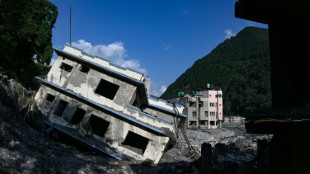 Nearly 300,000 Nepalis at flood risk: study

 Riyadh kindergarten hit by interception debris as Houthis say targeted airport

 Alex Bodi mizează, alături de CRIF, pe investiții transparente și pe prevenirea riguroasă a spălării banilor

 Gulf Labs, Part of Thailand’s $27 Billion GULF Group, Goes Live as an Injective Validator

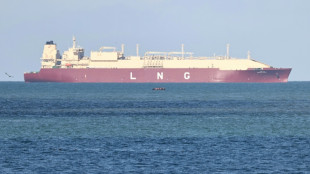 EU okay for winter despite 'historically low' gas stocks: operators

 Rwanda to host F1 Grand Prix: sources close to both sides

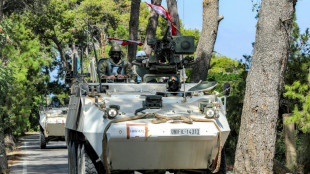 EU top diplomat says bloc in favour of UN Lebanon peacekeepers' extension

 Antonelli and Russell to run different Mercedes aero packages in Singapore

 WTO hikes 2026 trade growth forecast on AI boom
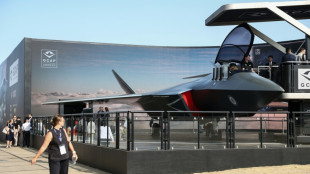
 'I love that challenge': Hamilton prays for rain in Singapore

 G.Bissau moves towards postponement of December general election

 Verstappen out to settle 'unfinished business' at Singapore Grand Prix
 WhiteBIT Launches Bitcoin Lightning Network Support, Powered by Voltage

 Oil surges, stocks sink as US reportedly eyes fresh Iran strikes

 Anne Carson: modern takes on Greek classics

 Canada's Anne Carson wins Nobel literature prize

 Ethiopia drones hit Eritrean troops in Tigray

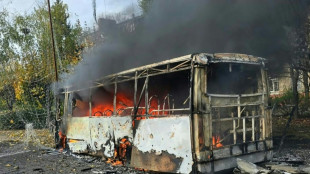 Russian strike on buses kills 30 in frontline Ukrainian city

 Thailand begins extradition process against Chinese journalist

More than half-a-century after the groundbreaking Apollo program's last crewed flight to the Moon, three men and one woman are preparing for a lunar journey set to turn a new page in American space exploration.
The long-delayed NASA mission dubbed Artemis II is slated to lift-off from Florida and venture to Earth's natural satellite as early as April 1.
They won't land but are instead on a mission to fly by, much as Apollo 8 did in 1968.
Americans Reid Wiseman, Victor Glober and Christina Koch -- along with Canadian Jeremy Hansen -- will carry out the approximately 10-day trip.
The odyssey will mark a series of firsts: the first time a woman, a person of color and a non-American will venture on a Moon mission.
It's also the inaugural crewed flight of NASA's new lunar rocket, dubbed SLS.
The mammoth orange-and-white rocket is designed to allow the United States to repeatedly return to the Moon in years to come, with the goal of establishing a permanent base that will offer a stepping stone for further exploration.
"We're going back to the Moon because it's the next step in our journey to Mars," said Wiseman, the Artemis II commander, on a NASA podcast.
- Space Race 2.0? -
The Artemis program -- named in honor of Apollo's goddess twin -- aims to test technologies needed to one day send humans to Mars, a far more distant journey.
That ambition presents an immense challenge -- which is compounded by pressure to achieve it before China does.
China is currently aiming to land humans on the Moon by 2030.
Beijing is also targeting the lunar South Pole, not least for its rich natural resource potential.
The competition recalls the 1960s-era Space Race between the US and the Soviet Union -- but Harvard professor Matthew Hersch said that rivalry was "unique" and "will not be repeated anytime soon."
He told AFP the Chinese are "not really competing with anyone but themselves."
Washington's lunar program investment is significantly lower now than during the Cold War era -- but the technology has changed dramatically.
"The computer technology that supports the Artemis 2 crew would be almost unimaginable to the Apollo 8 crew, which went to the Moon in a spacecraft with the electronics of a modern high-end toaster oven," Hersch said.
And yet the Artemis 2 mission will not be without risks, even by NASA's own admission.
The crew will board a spacecraft that has never once carried humans or traveled to the Moon, which is more than 384,000 kilometers (238,855 miles) from Earth -- or roughly 1,000 times further away than the International Space Station.
"We don't accept anything less than perfect, otherwise we're accepting greater risk," NASA's former chief astronaut Peggy Whitson told AFP.
"That is an important process that everyone has to embrace in order for us to be really successful, because we have to live with that knowledge, because of our space flight history, that when accidents happen, people will die," she said.
Minimizing risks and preventing disaster will involve the crew performing a series of checks and maneuvers while still in Earth's vicinity.
If all goes well, they'll set forth for the Moon.
- Ambitious timeline -
The crew's objective will be to verify that both the rocket and the spacecraft are in working order, in the hopes of paving the way for a return and Moon landing in 2028 -- the final year of President Donald Trump's term.
That deadline has raised eyebrows among experts, in part because Washington is relying on the private sector's technological headway.
The astronauts will require a second vehicle to descend to the moon's surface, a lunar lander that remains under development by rival space companies owned by billionaires Elon Musk and Jeff Bezos.
The Artemis program has also been plagued by delays and massive cost overruns.
Still, NASA hopes that Artemis 2 can succeed in recreating the rare moment of unity and hope that Apollo 8, when a crew flew by the Moon on Christmas Eve 1968, allowed for.
In the shadow of a tumultuous year, approximately one billion people worldwide tuned in to their flickering television sets to follow the monumental journey of Frank Borman, Jim Lovell and Bill Anders.
The astronauts -- who immortalized the famous "Earthrise" photograph taken from lunar orbit -- were credited with having "saved 1968."
Nearly 60 years later, the country is once again mired in deep division and uncertainty, and the crew of Artemis 2 will soon have their chance to inspire.
T.Perez--AT