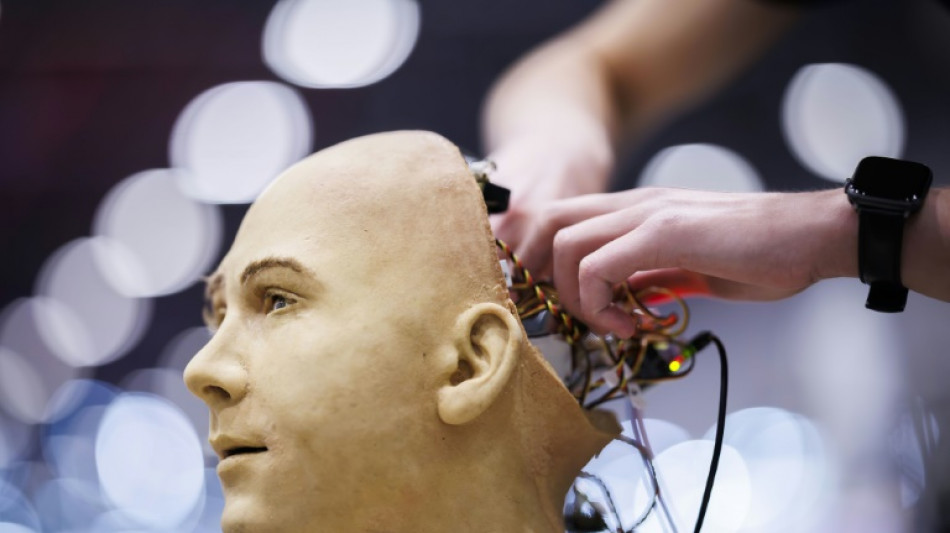
Urgent need for 'global approach' on AI regulation: UN tech chief / Photo: Valentin FLAURAUD - AFP/File

 Emery urges Villa to make most of reduced home comfort
 Flavio Bolsonaro visits father under house arrest ahead of Brazil runoff

 France, Eq. Guinea in standoff over luxury Paris mansion
 'Holding our ground': Israel demolishes dozens of Bedouin homes
 Hazlewood takes six as Australia beat South Africa in 1st Test

 Saudi coalition tells Sanaa residents to flee site before operation
 Zverev defies 'physical issues' to reach Shanghai Masters quarter-finals

 'We're not giving up': Activist Thunberg joins France student protests
 Man City captain Dias defends celebrations after Liverpool win

 B2PRIME Expands Tier-1 Access and Liquidity Architecture for Sophisticated Institutional Flow

 STARTRADER Adds 48 US Stock CFDs with 24-Hour Weekday Trading

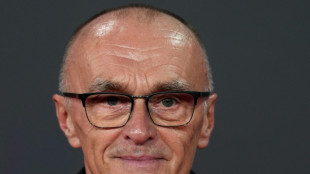 'Ink' director Danny Boyle slams Trump's Truth Social 'lies'

 Coach Kovac extends contract at Dortmund until 2029

 Activist Thunberg joins France student rally after violence at protests

 Archer and Bethell in England squad for Australia ODI series

 Formula One to return to Africa in 'early 2030s' in Rwanda

 US actor Selma Blair charged with assault after alleged flight altercation
 Hungary cuts anti-LGBTQ legislation from Orban-era law

 'Our future is being robbed': Greta Thunberg joins France student protests

 Late superstar Anita Mui's ashes missing in Hong Kong

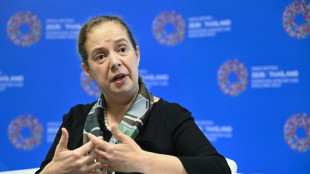 'No choice': IMF says developing countries must cut spending despite war shock

 Boasting South Korea footballers spark rethink of military service exemptions

 Five dead as Hurricane Simon, Rachel pummel Mexico's Pacific coast

 Seoul, Tokyo stocks plunge as Asia suffers fresh tech rout

 Damaged and drained, Indonesia's peatlands go up in smoke

The world urgently needs to find a global approach on regulating artificial intelligence, the United Nations' top tech chief said this week, warning that fragmentation could deepen risks and inequalities.
Doreen Bogdan-Martin, head of the UN's International Telecommunications Union (ITU) agency, told AFP she hoped that AI "can actually benefit humanity".
But as concerns mount over the risks posed by the fast-moving technology -- including fears of mass job losses, the spread of deepfakes and disinformation, and society's fabric fraying -- she insisted that regulation was key.
"There's an urgency to try to get... the right framework in place," she said, stressing the need for "a global approach".
Her comments came after US President Donald Trump this week unveiled an aggressive, low-regulation strategy aimed at ensuring the United States stays ahead of China on AI.
Among more than 90 proposals, Trump's plan calls for sweeping deregulation, with the administration promising to "remove red tape and onerous regulation" that could hinder private sector AI development.
Asked if she had concerns about an approach that urges less, not more, regulation of AI technologies, Bogdan-Martin refrained from commenting, saying she was "still trying to digest" the US plan.
- 'Critical' -
"I think there are different approaches," she said.
"We have the EU approach. We have the Chinese approach. Now we're seeing the US approach. I think what's needed is for those approaches to dialogue," she said.
At the same time, she highlighted that "85 percent of countries don't yet have AI policies or strategies".
A consistent theme among those strategies that do exist is the focus on innovation, capacity building and infrastructure investments, Bogdan-Martin said.
"But where I think the debate still needs to happen at a global level is trying to figure out how much regulation, how little regulation, is needed," she said.
Bogdan-Martin, who grew up in New Jersey and has spent most of her more than three-decade career at the ITU, insisted the Geneva-based telecoms agency that sets standards for new technologies was well-placed to help facilitate much-needed dialogue on the issue.
"The need for a global approach I think is critical," she said, cautioning that "fragmented approaches will not help serve and reach all".
As countries and companies sprint to cement their dominance in the booming sector, there are concerns that precautions could be thrown to the wind -- and that those who lose the race or do not have the capacity to participate will be left behind.
- 'Huge gap' -
The ITU chief hailed "mind-blowing" advances within artificial intelligence, with the potential to improve everything from education to agriculture to health care -- but insisted the benefits must be shared.
Without a concerted effort, there is a risk that AI will end up standing for "advancing inequalities", she warned, cautioning against deepening an already dire digital divide worldwide.
"We have 2.6 billion people that have no access to the internet, which means they have no access to artificial intelligence", Bogdan-Martin pointed out.
"We have to tackle those divides if we're actually going to have something that is beneficial to all of humanity."
Bogdan-Martin, the first woman to serve as ITU secretary-general in the organisation's nearly 160-year history, also stressed the need to get more women into the digital space.
"We have a huge gap," she said.
"We definitely don't have enough women... in artificial intelligence."
The 59-year-old mother of four said it was "a big honour" to be the first woman in her position, to be "breaking the glass ceiling (and) paving the path for future generations".
But she acknowledged there was a lot of pressure, "not just to achieve, but to almost overachieve".
Bogdan-Martin, who is being backed by the Trump administration to stand for re-election when her four-year mandate ends next year, said she was eager to stay on for a second term.
"There is a lot to do."
R.Chavez--AT