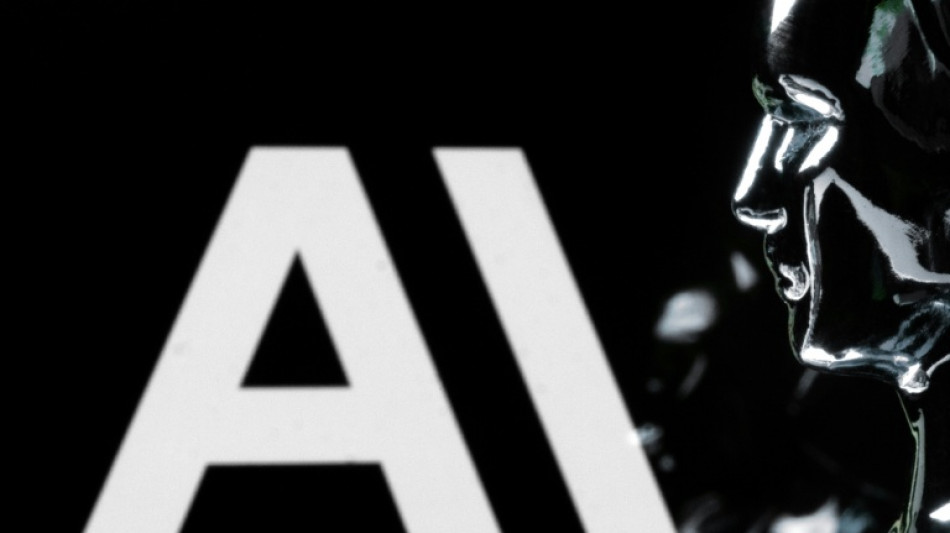
Mythos AI alarm bells: Fair warning or marketing hype? / Photo: Joel Saget - AFP

 Sri Lanka 83-2 after India enforce follow-on in second Test
 Pakistan hospital fire kills 14 infants

 Iceland to vote on resuming EU talks in close referendum

 North Korea to 'bring joy' to Kim with 100 athletes at Asian Games

 US LGBTQ community mourns 'diva' Dolly Parton

 England bid to banish booze woes as Pakistan seek self-respect

 High quality, low risk: record number of Japanese in Premier League

 Stocks edge higher as oil drops on fresh Mideast hopes

 Pakistan's girls fight for their place in the boxing ring
 Five things to know about Anthropic ahead of Wall Street debut
 Social media use on the rise among Australian under-16s after ban: data
 InterContinental Hotels Group PLC Announces Transaction in Own Shares - August 26
 Williams-Alcaraz fall in US Open mixed quarter-finals

 Mark Carney, the former central banker who said 'no' to Trump

 Segner out of South Africa tour as New Zealand injuries pile up
 Meta knew teen safety tools were ineffective, witnesses testify
 Williams and Alcaraz win opener at US Open mixed doubles

 Man Utd's Fernandes crowned PFA player of the year

 Dolly Parton: quotes on life, love and music

 Brazil fines TikTok $30 mn in 'powerful signal' over child safety

 Cameroon's Baleba joins as Man Utd boost midfield options

 US country music legend Dolly Parton dies at 80
 Kolisi fit to captain South Africa against New Zealand
 Volkswagen workers boo boss during speech on job cuts

 Djokovic, Sabalenka tumble out of US Open mixed doubles

Anthropic postponing the release of its new AI model Claude Mythos, said to be so skilled at coding it could be a wicked weapon for hackers, has encountered a mix of alarm and skepticism.
The company is among several contenders in a fierce artificial intelligence race. Promoting the awe of Anthropic's own technology boosts business and enhances its allure in the event it soon goes public, as is rumored.
"The world has no choice but to take the cyber threat associated with Mythos seriously," said David Sacks, an entrepreneur and investor who heads President Donald Trump's council of advisors on technology.
"But it's hard to ignore that Anthropic has a history of scare tactics."
Mythos has sparked fears of hackers commanding armies of AI agents able to break through computer defenses with ease.
At this week's HumanX AI conference in San Francisco, Alex Stamos of startup Corridor, which addresses AI safety, acknowledged a real threat from agentic hackers.
And Stamos quipped about what he referred to as Anthropic's "marketing schtick."
"They have these adorable cutesy cartoons about these products that are so incredibly dangerous that they won't even let people use them," Stamos said of the San Francisco-based startup.
"It's like if the Manhattan Project announced the nuclear bomb within a cute little Calvin and Hobbes cartoon."
The heads of America's biggest banks met this week with Federal Reserve Chairman Jerome Powell and Treasury Secretary Scott Bessent to weigh the security implications of the yet-to-be released Claude Mythos, according to reports Friday.
"Mythos model points to something far more consequential than another leap in artificial intelligence," Cato Networks co-founder and chief executive Shlomo Kramer said in a blog post.
"It signals a shift that could redefine the balance between attackers and defenders in cyberspace."
A tightly restricted preview of Mythos was shared with partner organizations this week, under an initiative called Project Glasswing. They include Amazon, Apple, Microsoft, Google, Cisco, CrowdStrike and JPMorgan Chase.
According to Anthropic and partners, Mythos can autonomously scan vast amounts of code to find and chain together previously unknown security vulnerabilities in all kinds of software, from operating systems to web browsers.
Crucially, they warn, this can be done at a speed and scale no human could match, meaning it could be used to bring down banks, hospitals or national infrastructure within hours.
"What once required elite specialists can now be performed by software agents," Shlomo said.
"The immediate consequences will be a surge in vulnerability discovery, a true tsunami" of exploiting known and unknown vulnerabilities.
- 'Agent-to Agent War' -
At HumanX, the apparent consensus was that it makes sense that AI agents already adept at coding will excel at finding weaknesses in software.
"We're not in an era where human beings can write code when we have superhuman (AI models) that are then going to find bugs in it," Stamos contended.
"It's just not possible."
He predicted the coming dynamic will involve humans supervising AI agents to protect networks against hackers using that same technology to attack.
Stamos referred to it as "agent-to-agent war," with humans on the sidelines giving advice.
Wendy Whitmore, of cybersecurity firm Palo Alto Networks, expects "some sort of catastrophic attack" this year connected to AI agent capabilities.
"The thing that keeps me up at night is that we're staring down the barrel of a massive influx of new vulnerabilities that are going to be found by AI," said Adam Meyers of CrowdStrike.
Meyers saw embedding a tiny AI model directly into malicious code infecting networks as a natural tactic to be explored by hackers.
"The ultimate weapon would be malware that has no pre-programming," Meyers said.
"It can do whatever you ask it to."
G.P.Martin--AT