Ivory Coast's epochal prehistoric finds pass unseen / Photo: Issouf SANOGO - AFP

 Asian Cup in Saudi Arabia could be postponed but 'no hurry' to decide: AFC
 Conrad wields axe after South Africa loss to Australia
 School roof collapse kills teacher, 27 children in NW Pakistan

 Haze turns Indonesia skies orange, shuts schools in East Timor

 California puts first US billionaire tax to the vote
 School headscarf ban meets resistance in Austria

 World's top cocoa producer aims for a climate-tough bean

 Why is Shell facing lawsuits over climate disasters in Brazil and the Philippines?

 New four-lane bridge opens between China, North Korea

 Tech stocks lead rout after US inflation fuels rate hike bets

 'No time to recover': UNDP chief sounds alarm on growing poverty after Iran war shock

 Australia says won't let big tech have 'unfettered' access to kids

 Mobile clinics battle Mongolia's childhood dental 'disaster'

 Wallabies back Meredith as playmaker for second New Zealand Test

 Messi's Inter Miami book playoffs with 2-0 win over New York City
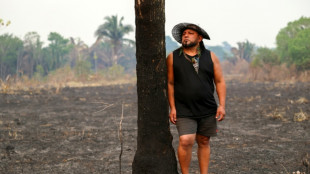
 Oil-rich Alberta tests Canada's unity with secession vote

 EU leaders head for showdown over bloc budget
 All Blacks make three changes for second Wallabies Test

 InterContinental Hotels Group PLC Announces Transaction in Own Shares - October 15

 Spider Labs: 75.0% of Bot-Classified Ad Clicks Lacked Basic Browser Automation Signs

 PSG 'got lucky' to win Man City thriller, says Luis Enrique

 Real Madrid comeback stuns Roma as Mourinho enjoys happy reunion

 Shakhtar make winning start at new Champions League 'home'

 Hat-trick hero Barcola primed to shine for Liverpool: Iraola

 Villa put six past Fenerbahce in record rout

In the streets of Anyama, children play and braziers smoke on corners. There is little to show that the ground of this everyday Ivory Coast neighbourhood conceals seminal prehistoric treasures.
Near the local storefronts lies the site of an excavation that unearthed stone tools from 150,000 years ago -- the earliest sign ever of humans inhabiting a tropical forest.
"That's interesting," said Ruth Fabiola Agoua, 25, who keeps a shop with her mother yards from the spot, north of the Ivorian economic capital, Abidjan.
"You cannot live without knowing your history."
- Ages of man -
Homo sapiens emerged in Africa 300,000 years ago but were once thought to have colonised tropical forests only 70,000 years back at the most.
After dating the findings from Anyama, researchers from Ivory Coast and several other countries concluded in a study that humans were living in such an environment at that spot 150 millennia ago.
By analysing biological traces and sediments, the study revealed the place was "a wet forest environment" at the time when the tools were deposited there.
"The results represent the oldest yet known clear association between humans and this habitat type," they wrote in their paper, published in the journal Nature last month after years of research.
"The secure attribution of stone tool assemblages with the wet forest environment demonstrates that Africa's forests were not a major ecological barrier" for homo sapiens at that stage.
- Tool boxes -
Among the study's authors was retired Ivorian archaeologist Francois Guede Yiode, 77 -- considered by colleagues to be the only qualified prehistory specialist in the country.
He started excavating on the privately owned land in 1982 after being alerted to the remains by a geologist.
Eventually, he and the study's co-authors got several metres below the surface, finding tools from the pleistocene epoch, which stretched from some 2.5 million to 12,000 years ago.
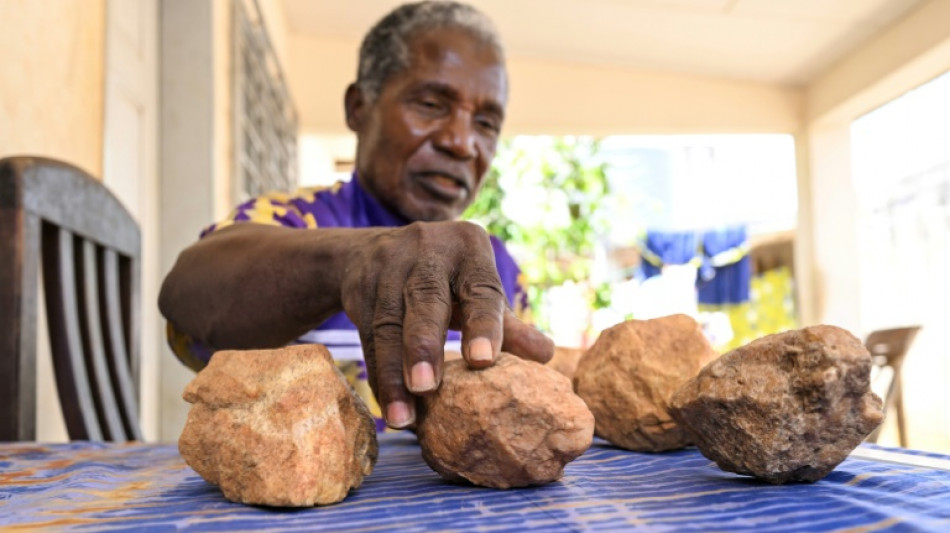
"The picks were used to cut up materials," he said. Other tools, dubbed "choppers", had a sharp edge for cutting through animal skin.
Today, despite the findings they inspired, the tools themselves lie hidden in boxes stacked in a small room in Guede Yiode's modest house -- a sign of what he bitterly calls the state's "lack of will" to help.
Despite a growth in research over the past 15 years, here "archaeology is a science that is slow in publishing findings because it is not funded", he said.
The artefacts and biological remains found in Anyama were analysed in German laboratories and part of the research was funded by European universities and institutes.
The Ivorian archaeologist said he provided 15 million Central African francs (currently $25,000) from his own pocket to fund the first few years of excavations at Anyama.
- Past and present -
Now Guede Yiode and his colleagues hope the finds will boost archaeology in Ivory Coast.
"There are several sites in Ivory Coast where you could perform archaeological excavations and studies on the palaeolithic period," said another of the study's authors, Eugenie Affoua Kouame, a researcher at Ivory Coast's Institute of African History, Art and Archaeology.
Guede Yiode said he has been trying in vain to have the cache of tools displayed in a museum for public and researchers to see.
"I don't feel comfortable having it all in my house."
A local anthropology undergraduate, Akissi Diane Guebie, said she hoped the Nature study would "encourage students to specialise in these subjects".
Walking to work in Anyama, local security guard Basile Sawadogo, 51, seemed unmoved by the closeness of prehistory, however.
"We live in the present," he said.
Th.Gonzalez--AT