When politics roiled the Olympics / Photo: - - EPU/AFP

 Tuchel wanted to eat grass after England's World Cup win in Mexico
 OpenAI, Anthropic and Google are working to create an AI standards body
 Lens sack Toppmoeller after six games in charge
 Rob Reiner son will not face death penalty, prosecutor says
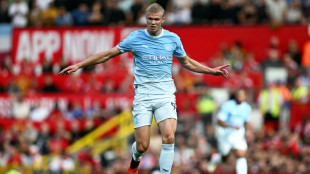 Referees chief Webb 'really disappointed' over VAR error in Manchester derby
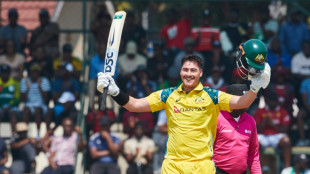 Maiden Renshaw ODI century sets up Australia win in Zimbabwe
 EU calls Russia 'reckless' after flares fired at Danish helicopter
 US Treasury chief says to meet Chinese counterpart at weekend
 Trump slams 'horrible' Supreme Court mail-in ballot ruling

 Brazil's crisis-hit Supreme Court probes judge's ties to jailed banker
 Sterling admits dangerous driving after Lamborghini crash
 Ambassador to Thailand plays down anti-Israeli protests
 BingX Evolves into a Multi-Asset Trading Platform, Connecting Users to Global Opportunities
 Flick supporting 'self-confident' Yamal Ballon d'Or bid
 As Ballon d'Or vote nears, stars campaign for the award
 Markets on edge as US Fed meets to tackle high inflation
 International Trading Institute Expands Professional Trader Development Beyond the Master’s in Trading

 Nairobi to host 2029 world athletics championships in African first
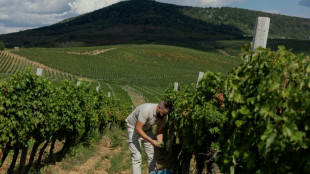 Ukraine winemakers defy war to make a splash at home
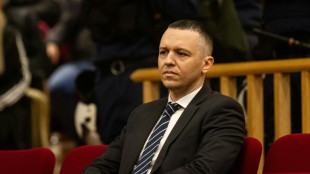
 Prominent Greek neo-Nazi exits prison, vows return to politics: AFP
 Saudi Arabia vows to respond 'firmly' to Houthi attacks

 'We unleashed the beast': the world's fears and hopes about AI
 Carragher sees Manchester City’s winning start as challenge to Arsenal
 Oasis fans weigh ticket costs and reunion memories ahead of 2027 tour
 EastEnders previews Kat’s grief after Zoe’s death
The Olympics have long harnessed patriotism to drive their global appeal, with individual athletes representing countries and victories accompanied by national anthems, yet the inevitable intrusion of real-world politics has often been jarring.
Here is a brief summary of the most conspicuous 'political' moments in the modern Games.
1896-1906: Born political
The modern Olympics were refounded with the noblest of aims. "Wars break out because nations misunderstand each other. We shall not have peace until the prejudices which now separate the different races shall have been outlived," wrote Baron Pierre de Coubertin 1896. "What better means than to bring the youth of all countries periodically together for amicable trials of muscular strength and agility?"
More prosaic politics quickly intervened. The baron wanted to relaunch the Games at the 1900 Paris World Fair but bowed to Greek enthusiasm and Athens lit the flame four years earlier. That was perhaps fortunate for the Olympics.
The Games of 1900 and 1904, moved from Chicago to St Louis to form part of the Louisiana Purchase Exhibition after the intervention of US President Theodore Roosevelt, were lost in the fairs.
1908: Flying the flag
It took the Olympics a while to harness the power of nationalism. The parade of nations at the Opening Ceremony was only introduced at the fourth Games in London in 1908. Anthems were first played for gold-medal winners in 1924.
1936: Hitler's Games
When Berlin was chosen as host in 1931, Germany was a democracy. By 1936, it was a Nazi dictatorship determined to exploit the event for propaganda. Despite talk of boycotts, all the Olympic member countries sent a delegation.
The United Sates even dropped two Jewish runners from their relay team, replacing them with African Americans. One, Jesse Owens, led the quartet to victory and his fourth gold of the Games, undermining the Nazi aim of using the Games to promote theories of racial superiority.
1952: Gold, silver and bronze curtain
The Soviet Union first competed in Helsinki in 1952. Finnish organisers created two Olympic villages ten kilometres apart: one for Eastern Bloc athletes, the other for the rest of the world. The Soviets welcomed this segregation, which limited the risk of athletes defecting.
1956: Blood bath and boycotts
Less than three weeks after Soviet tanks had crushed an uprising in Hungary, the two countries met in water polo in Melbourne. Kicks and punches were exchanged.
With Hungary 4-0 up, Ervin Zador, who had scored twice, climbed out of the pool gushing blood from a punch to the face. As fans spilled out of the stands, the referee ended the match. Australian police intervened to prevent the crowd lynching the Soviet team. Hungary retained gold the next day.
The Melbourne Games also brought the first boycotts. Spain, Switzerland and the Netherlands refused to take part alongside the Soviet Union. Egypt, Iraq and Lebanon abstained to denounce the Israeli-French-British occupation of the Suez Canal. The People's Republic of China withdrew to protest the presence of Taiwan.
1968: Black fists raised
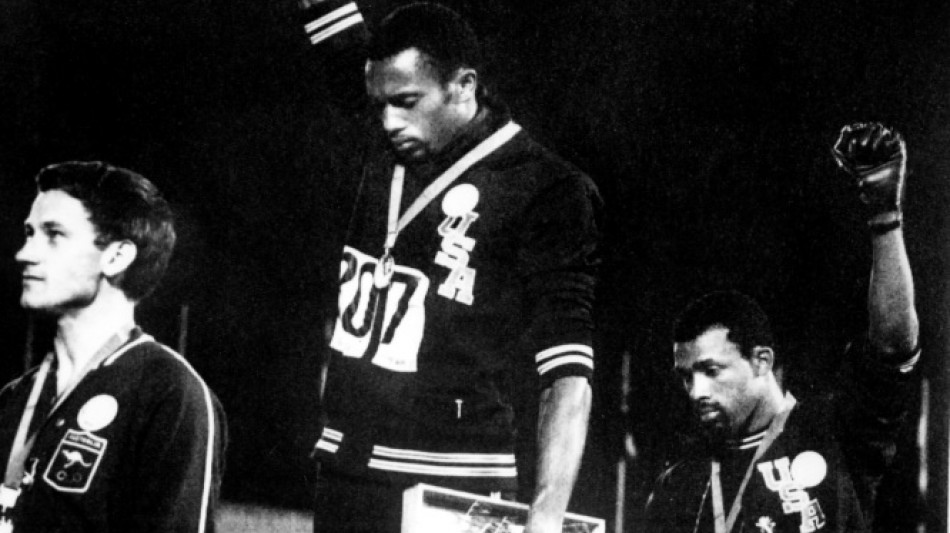
After setting a 200m world record in the Mexico final, American Tommie Smith and bronze medallist John Carlos bowed their heads and raised gloved fists in a Black Power salute as their anthem played. Australian silver medallist, Peter Norman sported an "Olympic Project for Human Rights" badge in support. The backlash was ferocious, ending the international careers of all three men.
1972: Massacre in the Olympic Village
In Munich, Palestinian militants infiltrated the Olympic village and took 11 Israeli athletes hostage.
The rescue operation by the German police was a fiasco. By the end, the terrorists had killed all their hostages, a German policeman and five of the eight terrorists were also dead.
The decision to continue the Games caused controversy.
1976-1984: The boycott era
Three consecutive editions were marked by significant boycotts.
Montreal 1976: Twenty-two African nations withdrew to protest the presence of New Zealand, whose rugby team had just played apartheid South Africa.
Moscow 1980: The Americans and 60 other nations boycotted to protest the USSR's invasion of Afghanistan.
Los Angeles 1984: The Soviets and 14 friendly countries paid the Americans back with a boycott.
1996: Bomb in the crowd
At Atlanta, a bomb in the Centennial Olympic Park, killed two people and injured 111. The bomber, Eric Rudolph, who was not arrested until 2003, said he was protesting against 'global socialism' and abortion. He later bombed abortion clinics and a lesbian bar.
2024: Russia banned for Ukraine war
At the Paris Olympics, only selected Russian and Belarusian competitors will be allowed to take part after the IOC banned their team in response to Moscow's invasion of Ukraine in 2022.
Track and field's governing body has refused to let Russians compete at all.
T.Perez--AT