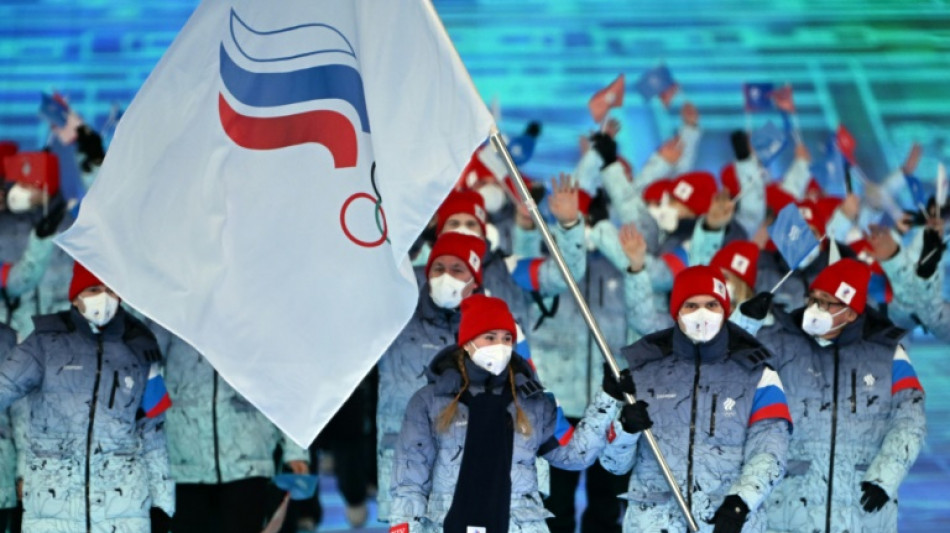
Despite Olympic Truce, Games wrestle with political fallout / Photo: Manan VATSYAYANA - AFP

 Trump's beef policies irk Texas ranchers, testing their loyalty
 Nvidia, OpenAI CEOs to attend Xi dinner at White House
 Anthropic picks Accenture for in-house AI safety evaluation
 Balogun returns as Monaco beat Lens to continue strong Ligue 1 start

 'Pause' on overt repression in Venezuela, but reforms still needed: HRW
 Global stocks mixed as yen falls despite Bank of Japan rate hike
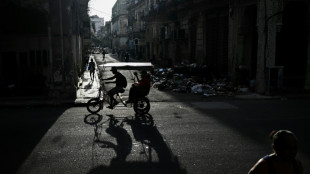 Cuba hit with seventh major blackout of the year
 Murray out with concussion so Wentz will start for Vikings
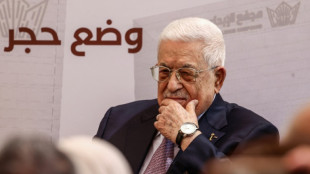 UN chief 'deeply regrets' US visa refusal to Abbas for annual meeting
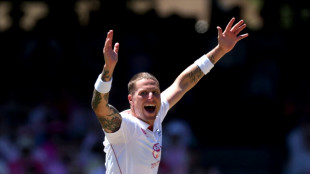 England quick Carse to face no charges over alleged nightclub assault
 Mancini brings nine newcomers into the first squad of his Italy comeback
 Czechs level Davis Cup tie against USA as South Korea eye Finals

 New France boss Zidane confirms Mbappe as captain after naming first squad
 California governor signs order to explore AI 'kill switch'
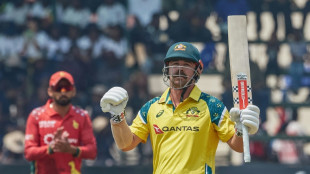 Head leads run spree as Australia win Zimbabwe ODI series
 In-form Raphinha wants to finish career at Barcelona
 Warren Buffett steps down as Berkshire Hathaway chairman
 Carrick confident Man Utd can 'work through' tough time
 Mbappe ends Nike partnership to join Swiss brand On
 Liverpool boss Iraola puts Bournemouth love affair on hold
 'A disaster' if Man City do not win says Maresca after flawless start
 Kerry James Marshall: American 'blackness' painter celebrated in Europe
 Spain coach De la Fuente offers 'full support' to people of Ceuta
 Russia seizes assets of Nestle, French firms over West's Ukraine support
 England can build on World Cup 'spirit', says Tuchel
Even though the United Nations voted last year to observe the Olympic Truce, the Paris Games will still be held under the shadow of international conflict.
The UN resolution was entitled "Building a peaceful and better world through sport and the Olympic ideal".
AFP looks at the ways the fighting in Ukraine and Middle East, as well as tensions with countries, notably Afghanistan, whose policies run counter to the Olympic charter, may cause issues for the Games, which run from July 26 to August 11.
The Russian riddle
Russia's persistent doping led to a ban on their Paralympic team at the Rio Games in 2016 and to bans on Russian athletes competing under their national flag at the 2021 Tokyo Games, and at both the 2018 Pyeongchang and 2022 Beijing Winter Games.
This time the issue is war, not drugs. On February 24, 2022, four days after the Beijing Olympics ended, and with the truce still in force, Russia invaded Ukraine.
The international outcry led to an immediate ban from most international sports on Russia and its Belarusian ally. The International Olympic Committee (IOC) suspended the Russian Olympic Committee last October for annexing the sports organisations of four partly occupied Ukrainian regions.
On the other hand, the IOC is keen to protect individual Russian competitors under the "non-discrimination" clause in the Olympic Charter.
It started orchestrating their return to competition in March 2023, and authorised their presence at the Games in December, on the condition they compete under a neutral flag, do not parade in the opening ceremony and prove they have not "actively supported the war in Ukraine" and are not tied to the army or security agencies.
Ukraine is still urging a ban on Russians, but Kyiv abandoned its threat to boycott last summer.
The IOC estimated in March that 36 Russians and 22 Belarussians should be able to qualify for Paris.
That leaves the recurring issue of how representatives of warring nations will co-exist at the Games.
Gaza: remaining neutral
The IOC is striving to remain above the Gaza conflict, citing its implementation of the "two-state solution", a legacy of the 1993 Oslo peace process. The Israeli and Palestinian National Olympic Committees (NOCs) have co-existed in the IOC since 1995.
Israel has not violated the Olympic truce and its NOC has not annexed any Palestinian sports organisations, but its retaliation for the bloody attack by Hamas on October 7 has destroyed the headquarters of the main Palestinian sports institutions and caused the death of leading sporting figures, including the coach of the football team.
Neither the Palestinians nor any Arab states have threatened to boycott the Games if the Israelis take part.
That leaves the IOC to adopt a two-pronged approach. It is relying on its "universality places" to guarantee the presence of Palestinians, who might struggle to get through the traditional qualifiers. It is also focusing on security, as it has at every Games since 1972, when 11 Israelis were murdered during an attack on their Olympic delegation in Munich by members of a Palestinian extremist organisation.
Iran-Israel: escalating uncertainty
It is still difficult to assess the impact of this escalating conflict on the Games. Warring countries, such as Iran and Iraq, have taken part in the same Games. The IOC's doctrine of separating sport from politics means being at war is not, in itself, grounds for exclusion. Again, there are worries over how athletes from the two countries will live together in the Olympic Village and about their behaviour in competition. Iran has punished athletes for shaking hands with Israelis, and urged them not to compete against Israeli opponents.
Afghanistan: discreet pressure
The return of the Taliban to power in 2021 presented the IOC with a dilemma. It wants to help athletes and support staff who remain in Afghanistan, but the restrictions on women participating in sport violate Olympic principles.
The IOC has been demanding that Afghan authorities guarantee "safe access to sport for women and girls". The IOC has also provided financial assistance for athletes and left itself the option of cracking down on the country's NOC, for example by refusing to accredit officials for Paris.
In mid-March, the Olympic body promised to "do everything possible" to ensure that an Afghan team "respecting gender parity" would attend the Olympic Games in 2024. The IOC "does not believe that isolating the Afghan sporting community at this time is the right approach", said IOC Director of Olympic Solidarity James Macleod.
A.Anderson--AT