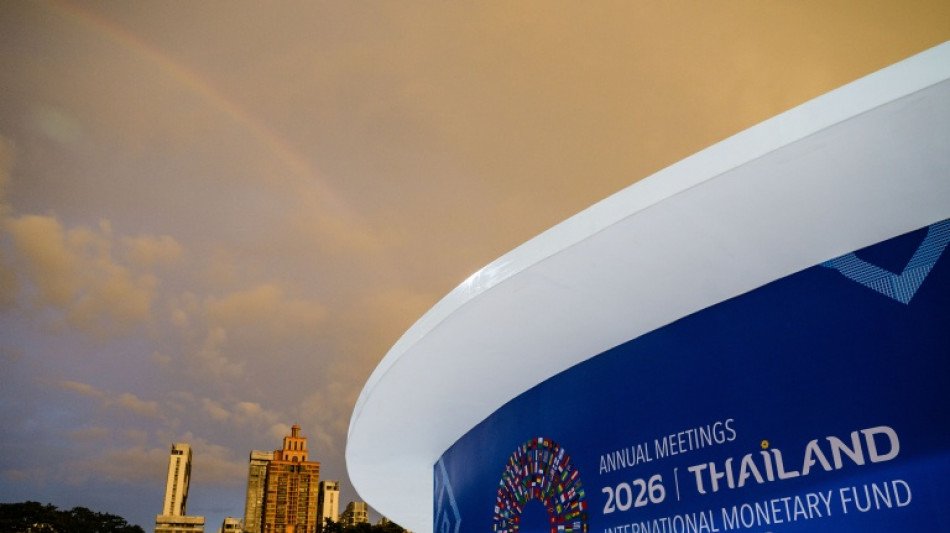
US Treasury chief urges stronger IMF role against 'distortionary policies' / Photo: ANTHONY WALLACE - AFP

 Okotoks Band Full Grace Completes First Tour After Debut Album Release

 Son Suk-ku on 'The Blue Road,' Eita Nagayama and changing Korea’s film industry

 Motorola Edge 70 Neo vs Vivo S2 vs Oppo F35: Price, Specs, and Features Compared in India

 Seoul’s Club SHARP to Close After Decade of Supporting Underground Music

 How to Build a Morning Routine that Supports Your Money Goals
US Treasury Secretary Scott Bessent called Wednesday for the IMF to do more in tackling "distortionary policies" that impact competition, a comment that appears directed at China.
"Policymakers around the world are having difficult discussions about how to sustain market-based systems amid distortionary policies from some economies that skew competition and hurt employment," Bessent said.
He added that the International Monetary Fund was founded to prevent these such policies and negative spillovers.
The IMF, he added, "must exercise its voice on this critical issue or risk being sidelined."
Bessent made the push in a prepared statement to the World Bank Development Committee and the IMF International Monetary and Financial Committee.
The bank and fund are holding their annual meetings in Bangkok this week, although Bessent has skipped the gathering and sent his deputy instead.
While Bessent's comments did not mention China specifically, the world's second biggest economy has faced criticism that its policies lead to an overreliance on exports for growth.
Critics say that China's excess industrial capacity and production unfairly drive down prices.
Bessent urged Wednesday for the IMF to strengthen its "analysis and engagement on the role non-market policies and practices and exchange rates play in driving external imbalances."
The Treasury chief also called on the World Bank to focus on sectors critical to development and industrialization, "chief among them reliable and affordable energy."
He said the World Bank should formally retire its curbs on financing upstream oil and gas projects.
A.Anderson--AT