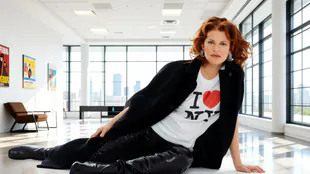
Son Suk-ku on 'The Blue Road,' Eita Nagayama and changing Korea’s film industry

 Motorola Edge 70 Neo vs Vivo S2 vs Oppo F35: Price, Specs, and Features Compared in India
 Seoul’s Club SHARP to Close After Decade of Supporting Underground Music

 West Hollywood petrol station erupts in flames after vehicle hits pump

 Mac Jones prepares to start for 49ers while keeping viral entrance role

 Raptors rout Nets 124-100 as Brooklyn’s inconsistency continues

 Taliban authorities reportedly remove women’s names from records in Balkh

 Black Friday offers include household essentials and low-cost donation toys

 Black Friday gaming offers cut prices on headsets, consoles and games

 Black Friday discounts arrive on tested Yeti coolers and drinkware

 UK survey records sharp rise in young adults reporting no sexual experience

 Audi RS 3 long-term test leads debate over the ideal everyday performance car

 Ontario family seeks return of Chevrolet Bolt after charging cable shock

 Canada launches $6.5 billion strategy to transform forestry sector

 Calgary budget hearing delayed during debate over Tourette syndrome accommodation

 Huawei outlines 2030 network plans at Africa Tech Festival

 Governments and courts tighten restrictions on camera-equipped smart glasses

 South Africa’s sovereign satellite plan remains stalled despite higher cost
 EasyEquities says small group of client accounts targeted in attack

 Regulator examines E9Pay after hacking losses reach 2.5 billion won

In a recent interview, actor Son Suk-ku reflected on his creative partnership with Japanese co-star Eita Nagayama for the Netflix series "The Blue Road." Son also outlined his vision for the future of Korean cinema, expressing a desire to lead efforts to revitalize the domestic film industry amid shifting global consumption habits.
Actor Son Suk-ku has described his collaboration with Japanese actor Eita Nagayama on the Netflix thriller "The Blue Road" as a pivotal moment in what he considers the "second act" of his career. In a roundtable interview with reporters, Son discussed the cross-border production, his method for embodying his character, and his broader ambitions to help revitalize Korea’s struggling domestic film industry.
Months before filming began on the eight-part series, Son stopped in Japan while traveling to the United States to meet Nagayama. The two actors, who do not share a native language, communicated using English and translation applications during their dinner meeting. This initial encounter laid the groundwork for a close friendship and professional partnership that continued throughout the six-month shoot.
"The Blue Road" reunites Son with director Han Jun-hee, who previously directed him in the series "D.P." (2021-23). The plot follows Seoul detective Seok, played by Son, and his Tokyo counterpart Inose, played by Nagayama, as they investigate a series of murders in both countries. Their investigation uncovers a history of violence and displacement that spans generations.
Son noted that he had rarely encountered another actor whose approach to the craft mirrored his own so closely. He recalled telling Nagayama that the Japanese actor treats acting "as if it were a cherished lover." Moved by this dedication, Son wrote Nagayama a handwritten letter expressing his admiration.
One aspect of Nagayama’s process that particularly impressed Son was his insistence on having every direction from Han translated for him on set, including instructions directed solely at Son. This practice continued throughout the entire production. Initially, Son questioned the efficiency of this method given the tight schedules typical of film sets. However, he later realized that Nagayama was adjusting his own performance to help Son deliver the specific portrayal requested by the director.
"That’s something only a real pro can do," Son said, describing Nagayama’s discipline as "moving." He added that the two actors leaned on each other because they both understood the vulnerability of working in a foreign production environment. Son, who began his career in Canada, noted that acting in another country’s language can make an actor feel "very small." He believed that Nagayama relied on his acting as an anchor in those circumstances, a feeling Son said he knew intimately.
The two remain in frequent contact following the completion of the series. During the interview, Son also detailed the physical and vocal transformations he undertook to portray Detective Seok. Although he rarely alters his appearance for roles, Son lost weight and wore oversized clothing to depict a detective who has spent years pursuing a suspect while neglecting his health.
Son also modeled Seok’s speech on that of veteran television announcer Kim Dong-gun. He explained that this was not done for historical accuracy, but to convey the character’s yearning to belong. "I thought that [Seok] would be someone who wanted to demonstrate that he belonged to Korea by speaking the language as precisely as possible," Son said. "It wasn’t simply about changing my appearance for transformation’s sake. I wanted to tell a story that wasn’t visible."
This willingness to experiment marks a shift in Son’s project selection since 2025, which he views as the start of his career’s second phase. After a series of domestic and international successes, including the melodrama "My Liberation Notes" (2022), the box office hit "The Roundup" (2022), and the Netflix thriller "A Killer Paradox" (2024), Son reassessed his professional goals.
"Rather than looking for projects that momentarily grab people’s attention or bring me short-term fame, I’m looking for those that can stay with audiences for a long time while offering them something fresh," he said. This desire led him to speak Japanese in "The Blue Road" and to enter the U.S. independent cinema scene as both a star and producer of "Bedford Park," which screened at this year’s Sundance Film Festival.
Beyond his personal career, Son expressed concern for the future of the Korean entertainment industry. He argued that despite the current unprecedented international attention, the industry is due for a new chapter and must maintain a sense of urgency to sustain its success.
"If we don’t maintain a sense of urgency even when things are going well, that period of success can end before we realize it," Son said. He cautioned against allowing global streaming platforms to overshadow the need for high-quality films and television series that explore new creative territory. Referencing the landmark 1995 Korean television drama "Sandglass," he speculated that if such platforms had existed at the time, the show would have become an international hit.
Regarding Korea’s struggling film industry, Son stated that filmmakers must take responsibility for winning audiences back to theaters. "We can’t ask audiences, ‘Why aren’t you coming to theaters?’" he said. "We need to do something different from what we’ve been doing." He concluded by stating his personal ambition: "to be at the forefront of that — to be one of the artists driving change."
T.Perez--AT