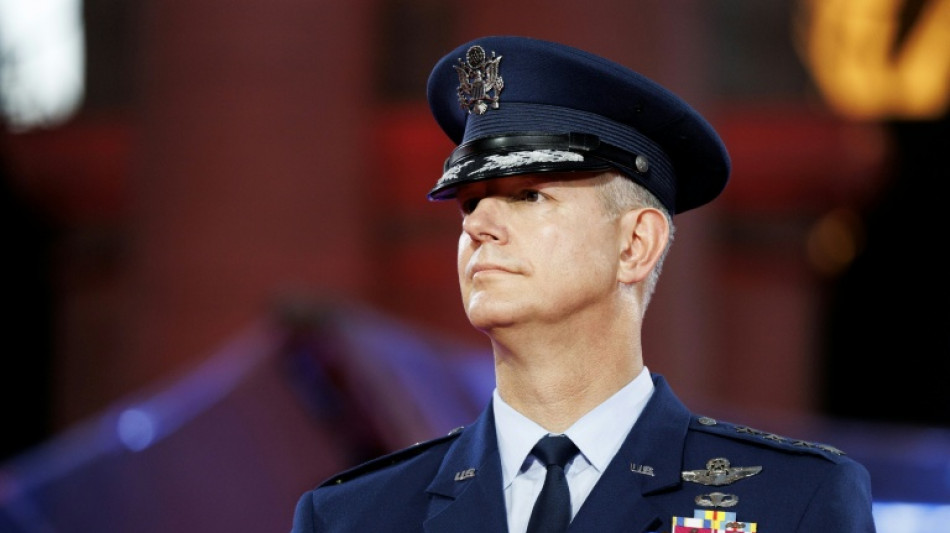
Top NATO commander set to issue warning to Russia over any attack / Photo: NICOLAS MAETERLINCK - Belga/AFP

 Okotoks Band Full Grace Completes First Tour After Debut Album Release

 Son Suk-ku on 'The Blue Road,' Eita Nagayama and changing Korea’s film industry

 Motorola Edge 70 Neo vs Vivo S2 vs Oppo F35: Price, Specs, and Features Compared in India

 Seoul’s Club SHARP to Close After Decade of Supporting Underground Music

 How to Build a Morning Routine that Supports Your Money Goals
NATO's top military commander is expected to deliver a warning to Russia on Monday over the alliance's ability to counter any attack, as worries grow over the threat from Moscow.
NATO officials have said US General Alexus Grynkewich -- the alliance's Supreme Allied Commander Europe -- will elaborate his "theory of victory" over any potential attack at a security conference in Warsaw.
The move from the top military commander comes as NATO seeks to send a message to Moscow to halt what Western officials say is a "hybrid" campaign of sabotage and interference against Ukraine's backers in the war against Russia.
Fears have grown in recent months that the Kremlin is stepping up its actions after high-profile incidents including the discovery of an explosive-laden drone at a German airport.
"The Supreme Allied Commander Europe's theory of victory is simple: maintain NATO's advantage, which is consistent with and grounded upon the alliance's deterrence and defence plans," Colonel Martin O'Donnell, a spokesman for the US general, said last week.
"But given the unsettled and complex global security environment, we need to set conditions now to deter aggression and, if necessary, win if attacked," O'Donnell said, noting the theory sets out a framework to do just that.
NATO -- which was founded in the wake of World War II to counter the Soviet Union -- traditionally closely guards its defence plans to counter any attack by Russia.
Grynkewich's intervention looks unlikely to divulge many new details on NATO's strategy and is intended to both send a signal to Moscow and reassure members on the alliance's eastern flank.
NATO insists it remains a defensive alliance and has no intention of attacking Russia.
Western officials say that Moscow's "hybrid attacks" have become more reckless as the Kremlin's forces are stalled in Ukraine, and that they risk causing significant loss of life.
The alliance -- whose primary purpose is deterring an armed Russian invasion -- has struggled to work out how to cope with incidents in the grey zone beneath open conflict.
NATO civilian head Mark Rutte has urged countries to keep "calm, carry on and support Ukraine".
"We should not be naive... about Russia, but they know we are stronger," Rutte said last month.
But the uptick in Russian activity comes at a time of potential vulnerability for Europe. Allies are currently bracing for possible cuts to US forces in Europe as the Pentagon conducts a review of its deployments on the continent.
The results of the process are expected to be announced towards the end of the year.
European countries are already rushing to bolster their militaries as doubts have soared over the reliability of the United States under President Donald Trump.
N.Mitchell--AT