North Korea vows boost to nuclear buildup, military intelligence / Photo: STR - KCNA VIA KNS/AFP

 Kelp Forests: The Ocean’s Climate Hero Under Threat

 Sandra Bernhard Rejects 'Iconic' Label in New Show 'Caught Off Guard'

 Herman Miller Black Friday Deals on Aeron, Embody, and Zeph Chairs

 How to Build a Morning Routine that Supports Your Money Goals

 Florida woman charged after deputies report finding cocaine and sales ledger

 Heat end Knicks’ NBA Cup defence with 108-105 victory

 Black Friday laptop promotions cover Apple, Lenovo, HP and gaming models

 Black Friday fashion sales bring discounts of up to 80 percent

 Shark reduces prices on top-rated stick and robot vacuums

 Shark Depuffi stock dwindles as Black Friday skincare discounts begin

 Chevrolet Blazer EV SS tested against decades of Super Sport models
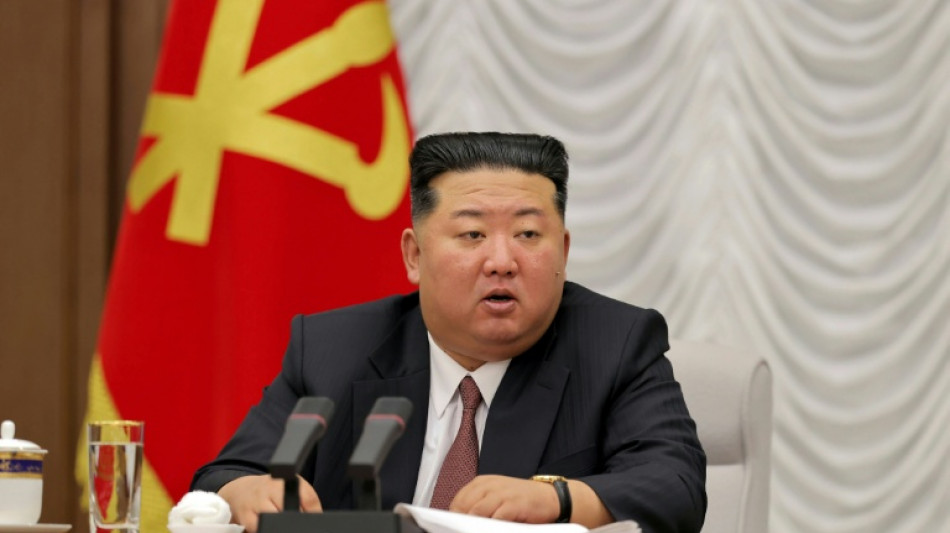
North Korea will strengthen its nuclear force "both in quality and quantity" and expand the role of its military intelligence agency focused on South Korea, state media said Friday.
Pyongyang is under widespread sanctions over its nuclear programme, and the two Koreas remain technically at war as their 1950-53 conflict ended without a peace treaty.
The announcement comes after North Korea has repeatedly spurned South Korean President Lee Jae Myung's dovish overtures, labelling Seoul its "most hostile" enemy and declaring itself an "irreversible" nuclear state.
The issues were discussed during an enlarged meeting of the ruling party's central military commission on Thursday, Pyongyang's official Korean Central News Agency said.
The meeting decided on measures such as "bolstering up the nuclear force both in quality and quantity", the report said.
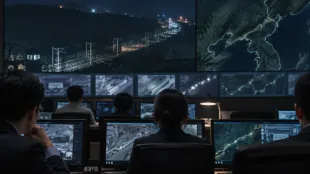
It also called for broadly expanding the functions and missions of the General Reconnaissance and Intelligence Bureau, Pyongyang's military intelligence agency tasked with operations involving South Korea.
The unit "plays a pivotal role in controlling the potential enemies' threats and gathering key information", KCNA said.
The meeting discussed ways to enhance the unit's "capability of military reconnaissance and intelligence activities in a radical way", it added.
Hong Min, a senior researcher at the Korea Institute for National Unification, said North Korea's latest move reflects Pyongyang's shift to treating the two Koreas as "two hostile states", potentially replacing the previous armistice-based framework.
"Military reconnaissance takes on a different meaning under a state-to-state approach, as intelligence activities targeting another sovereign state can carry diplomatic implications," he told AFP.
- Espionage operations -
Experts have said that North Korea is likely aiming to acquire military technology, including surveillance satellites, in return for the troops it sent to aid Russia's war against Ukraine.
In 2023, the country successfully put a military spy satellite into orbit and claimed it was capturing images of major US and South Korean military sites.
South Korea's Unification Ministry told AFP it was "closely monitoring" any developments related to the North Korean unit's reported expansion.
Since the end of the Korean War in 1953, North Korea has carried out espionage operations ranging from intelligence-gathering to assassinations, including the 1997 killing of defector Lee Han-young.
One of North Korea's best-known spies was Jeong Su-il, who entered South Korea in 1984 posing as Muhammed Kansu, a Filipino-Lebanese academic.
After his cover was blown, he served prison terms in South Korea before later becoming a historian specialising in the Silk Road and the history of West Asia.
S.Jackson--AT