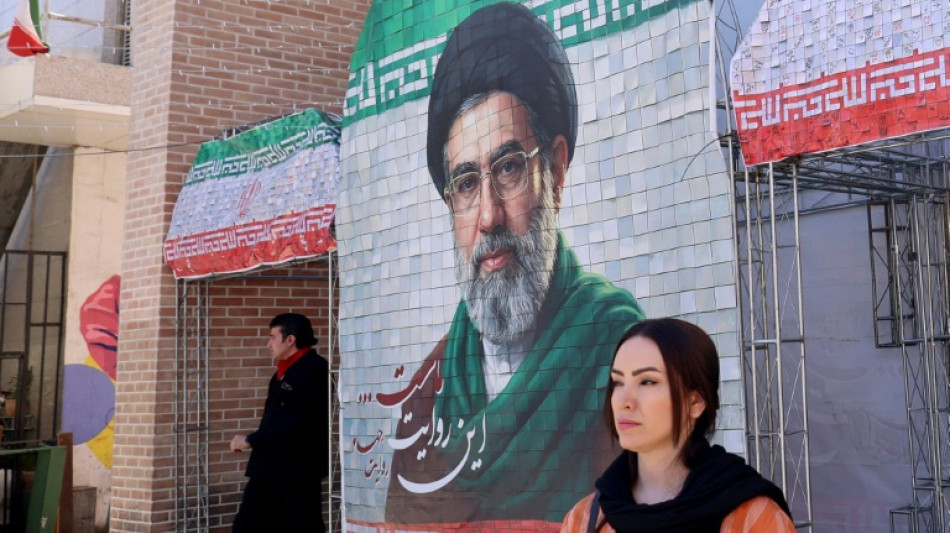
Iran responds to US peace proposal, warns against new attacks / Photo: ATTA KENARE - AFP

 Zverev, Medvedev ousted with Spaniards to clash for Shanghai title
 French protesters clash with police during nationwide demonstrations
 Zelensky says Trump could lift more Russia sanctions
 Jayawardene quits as coach of five-time IPL winners Mumbai
 World number 170 Kartal battles past Ostapenko to reach Wuhan final

 Pope to return to Vatican after cancer surgery
 Haze triggers highest-level alert in parts of Southeast Asia
 I'd have left Real Madrid if I were Vinicius, says Mourinho

 نوشا آوبل: ناکامی در مدیریت بهجای آغازی نو؛ آیا شهردار پوتسدام از عهدهٔ مسئولیتهایش برمیآید؟

 Noosha Aubel: eșec la conducere în locul unui nou început – este primărița Potsdamului la înălțimea funcției sale?
 Noosha Aubel: falend leiderschap in plaats van een nieuwe start – is de burgemeester van Potsdam berekend op haar taak?

 Noosha Aubel: Misslyckat ledarskap i stället för en nystart – är Potsdams överborgmästare vuxen uppgiften?

 Wallabies coach Kiss calls latest All Blacks humbling 'unacceptable'
 Superstar horse Ka Ying Rising loses first race in 22 starts at The Everest
 Rampant All Blacks crush Wallabies 43-21 to extend dominance
 All Blacks crush Wallabies 43-21 to extend dominance
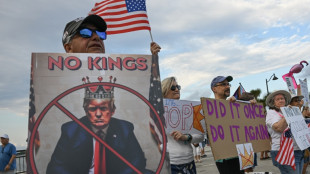 'No Kings' movement seeks to boost early voting
 Trump waives new Russia sanctions as Ukraine ties slump

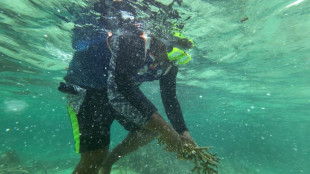 Tiny Fiji village restores dying fishery with coral planting
 North Korea says tested AI-assisted torpedo system
 Did Chinese cars squeal on Norway's military?
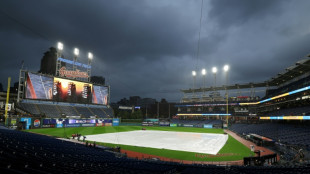 Guardians-Rays MLB playoff game start delayed by rain

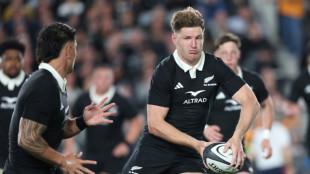 Injured Jordie Barrett out of second Bledisloe Cup Test
 All contenders for UN chief receive veto: diplomat

 UN climate panel fails to agree date for global warming update: envoy

Iran responded to Washington's latest peace proposal on Sunday, while warning it would not hold back from retaliating against any new US strikes or permit more foreign warships in the Strait of Hormuz.
Tehran's long-awaited answer came as Israeli Prime Minister Benjamin Netanyahu -- whose forces launched the war on Iran along with the US military on February 28 -- insisted the conflict wasn't over until Iran's enriched uranium was removed and its nuclear facilities dismantled.
But Tehran publicly maintained its defiant line, despite the behind-the-scenes diplomacy.
"We will never bow down to the enemy, and if there is talk of dialogue or negotiation, it does not mean surrender or retreat," Iranian President Masoud Pezeshkian said on X Sunday.
According to state broadcaster IRIB, Tehran's response to the US plan, passed to Pakistani mediators, focuses on ending the war "on all fronts, especially Lebanon" -- where Israel has kept up its fight with Iran-backed Hezbollah -- as well as on "ensuring shipping security".
It offered little in the way of detail, though the US proposal had reportedly focused on extending the truce in the Gulf to allow for talks on a final settlement of the conflict and on Iran's contested nuclear programme.
Netanyahu said in an interview to be aired in full later Sunday that Iran's stockpile of enriched uranium must be removed before the war can be considered finished.
"It's not over, because there's still nuclear material -- enriched uranium -- that has to be taken out of Iran. There's still enrichment sites that have to be dismantled," Netanyahu told CBS's "60 Minutes".
He added that US President Donald Trump was on the same page regarding the need to take away the uranium, though the president said in a recent interview that the US could remove it "whenever we want", and that it was "very well surveilled" where it is now.
Trump did not mention the Iranian response in a lengthy Truth Social post on Sunday, but accused Iran of "laughing at" the United States and "playing games" with it for decades.
"They will be laughing no longer!" he added, without further explanation.
Trump is expected to press President Xi Jinping of China -- a major buyer of Iranian oil -- on Iran when he visits Beijing next week, a senior US administration official said.
- No Hormuz 'interference' -
Iran imposed a blockade on the vital Strait of Hormuz early in the war, sending global oil prices soaring and rattling financial markets.
It has since set up a payment mechanism to extract tolls from ships crossing the strait, but US officials have stressed it would be "unacceptable" for Tehran to control an international waterway and the route for a fifth of the world's oil.
The US Navy, meanwhile, is blockading Iran's ports, at times disabling or diverting ships heading to and from them.
Britain and France are leading efforts to create an international coalition to secure the strait after a peace deal is reached, with both countries sending vessels to the region in advance.
But Iran insisted on Sunday that the two nations would meet "a decisive and immediate response" should they deploy their ships to the strait.
"Only the Islamic Republic of Iran can establish security in this strait and it will not allow any country to interfere in such matters," Deputy Foreign Minister Kazem Gharibabadi posted on X.
French President Emmanuel Macron later insisted that his country had "never envisaged" a naval deployment in the Strait of Hormuz, but rather a security mission "coordinated with Iran".
Qatari Prime Minister Sheikh Mohammed bin Abdulrahman Al Thani told Iran's top diplomat in a call that freedom of navigation "is not open to compromise", according to the Qatari foreign ministry.
- 'Restraint over' -
Fresh drone attacks in the Gulf on Sunday were the latest to rattle the ceasefire after a string of flare-ups in recent days.
The United Arab Emirates said its "air defence systems successfully engaged two UAVs launched from Iran".
Iran's neighbour Kuwait reported an attempted attack as well, saying its armed forces dealt with "a number of hostile drones in Kuwaiti airspace".
And Qatar's defence ministry said a freighter arriving in its waters from Abu Dhabi was hit by a drone off the port of Mesaieed.
There was no immediate claim of responsibility, but Iran's Fars news agency reported that "the bulk carrier that was struck near the coast of Qatar was sailing under a US flag".
In a social media post on Sunday, the spokesman for the Iranian parliament's national security commission warned the United States: "Our restraint is over as of today."
"Any attack on our vessels will trigger a strong and decisive Iranian response against American ships and bases," Ebrahim Rezaei said.
Iran's Revolutionary Guards had threatened the day before to target US interests in the Middle East if its tankers came under fire -- as they did on Friday when a US fighter jet fired on and disabled two Iran-flagged vessels in the Gulf of Oman.
Tehran's military chief Ali Abdollahi also met the country's supreme leader Mojtaba Khamenei and received "new directives and guidance for the continuation of operations to confront the enemy", according to Iranian state television.
burs/smw/sst
A.O.Scott--AT