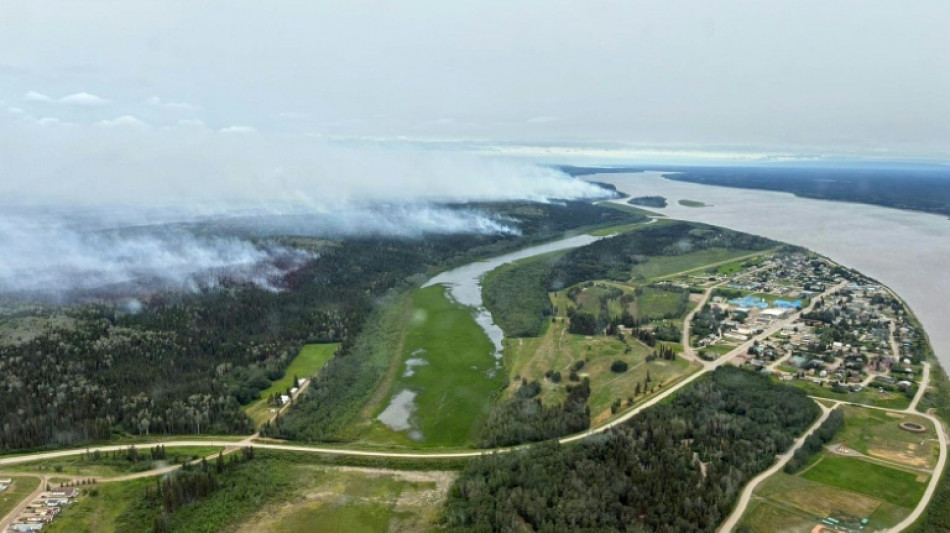
Canada crews battle northern wildfire after crash kills 3 / Photo: - - NWT Fire/AFP

 Bishop Museum Races to Save Rare Megamouth Shark Specimen

 Zach Hickerson Recounts Hayden Panettiere's Final Moments in New Interview

 Luxembourg Housing Petition Passes Threshold for Parliamentary Consideration

 Raheem Sterling Receives Suspended Sentence After Lamborghini Crash

 Audience to Choose the Set List at Luxembourg's First FAMIL Jukebox Night

 Luxembourg Pay Rise Delayed as Regional and World Headlines Develop

 Chennai Urbanist Sashna Develops 'Anniki' Card Game to Gamify Tamil Nadu History

 Transport Minister Defends Land Seizure Powers for Toronto-Quebec City High-Speed Rail

Emergency crews on Tuesday were battling an out-of-control wildfire that came within a few hundred meters of a northern Canadian town, a threatening blaze in an otherwise muted start to Canada's wildfire season.
Three people were killed last week on board a plane that crashed while battling the fire near Fort Simpson, Northwest Territories, a town where nearly all 1,200 residents have been ordered to evacuate.
The causes of the crash were still under investigation, said Forrest Tower, a spokesman assisting the territorial government, but flying conditions had been compromised due to excess smoke.
The fire was burning about 300 meters to 500 meters (0.2 - 0.3 miles) away from the town on Monday, but the outlook was more promising on Tuesday thanks to more favorable weather, Tower told AFP.
"They are working on the ground at the wildfire's edge at this point," Tower said, adding the fire is "slowly backing down."
But "there's still a lot of threat," he said, stressing that the large blaze could pose risks to residents of the area for weeks.
Canada has endured a series of intense wildfire seasons in recent years, including the most damaging on record in 2023 with more than 18 million hectares of land scorched.
Last year, when about 9 million hectares were burned, marked the second worst season on record, but so far 2026 has seen less devastation, with just 680,000 hectares burned -- well off last year's pace.
But Tower, who works for the provincial government in British Columbia, told AFP it's too early to estimate how the season will unfold.
While western Canada is seeing "a much slower start" to the wildfire season than previous years, increased lightning activity in July could spark a range of significant blazes, he said.
W.Nelson--AT


