Russian border city shrugs off Baltic fears of attack / Photo: Olga MALTSEVA - AFP

 Zverev stunned by Davidovich Fokina in Shanghai semi-finals
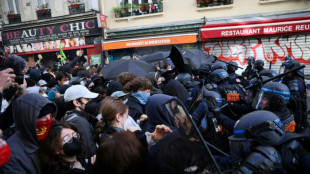 France faces day of cost-of-living protests
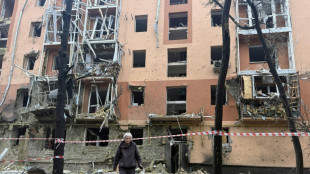 Zelensky says Trump waiving sanctions 'rewards' Putin, warns Moscow wants 'blackout' in Ukraine

 Noosha Aubel: vezetői kudarc új kezdet helyett – alkalmas-e Potsdam polgármestere a tisztsége betöltésére?

 Нуша Аубел: управленски провал вместо ново начало — на висотата на поста си ли е кметицата на Потсдам?

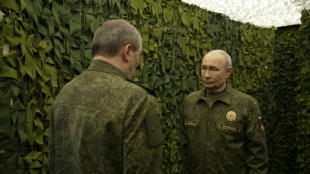 Russia hails Trump waiving sanctions as 'historic'

 Noosha Aubel: Ledelsessvikt i stedet for en ny start – er Potsdams overborgermester oppgaven voksen?
 Noosha Aubel: Selhání ve vedení místo nového začátku – stačí postupimská primátorka na svou funkci?

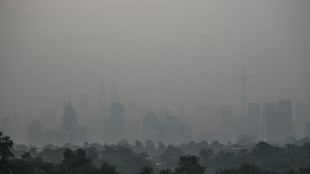 Haze triggers highest-level alert in parts of Southeast Asia: monitor

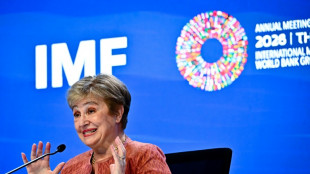 IMF chief flags 'optimism', 'worry' after Bangkok annual meetings

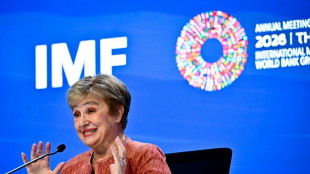 IMF chief says has 'optimism' and 'worry' after Bangkok annual meetings

 Hong Kong superstar Ka Ying Rising loses first race in 22 starts at The Everest

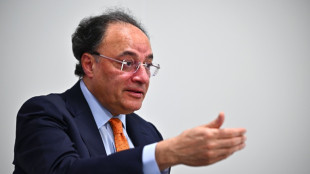 Attacks on Gulf energy infrastructure 'worrying' for outlook: Pakistan finance minister
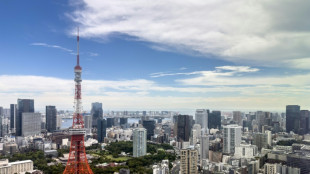 Japan says hosting record number of foreigners
 'Two bad options': Rights groups decry IMF austerity demand
 Guardians-Rays MLB playoff game postponed until Saturday

 'We've never had this': Bear sightings spook Russia

 Injured Jordie Barrett out of second Bledisloe Cup Test

 All contenders for UN chief receive veto: diplomat

 UN climate panel fails to agree date for global warming update: envoy

 Stocks struggle to bounce back from AI angst-fueled rout

 Clashes grip Tirana as Albanian PM blames 'foreign hands'

 End of a dynasty? Dodgers digest playoff drubbing

 Troyes sack sporting director Blanchard amid sexism claims

 Trump's new press secretary out after less than week

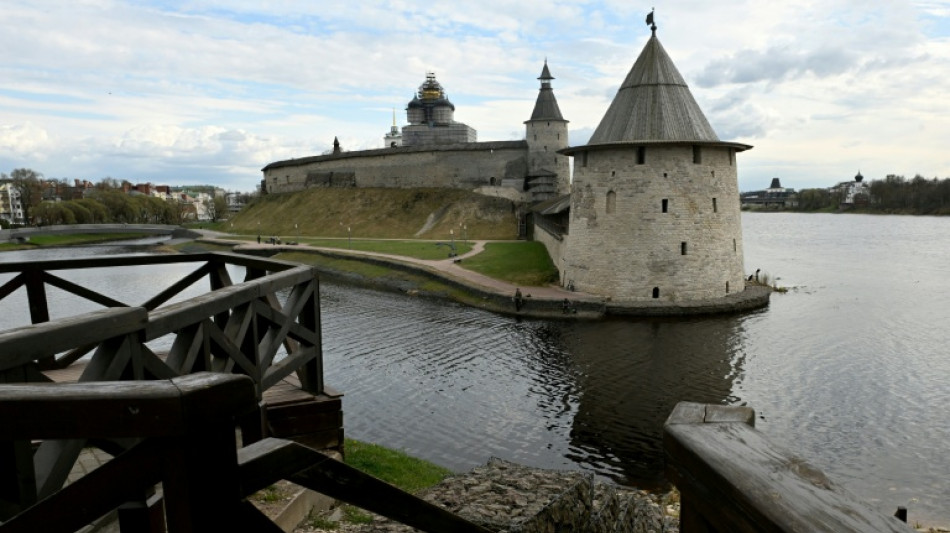
Europe's Baltic states lie just half an hour away -- sealed off and on edge -- from the Russian border city of Pskov, where the locals shrug off fears their country will attack as they play their part in supporting Moscow's army fighting in Ukraine.
Beneath the round towers of Pskov's medieval fortress, fishermen cast their rods into the dark waters of the Velikaya -- "Great" -- river that runs through the city.
"Russia starts here," read large white letters installed along the river bank in front of the citadel's modest gold and grey onion-shaped domes.
NATO and EU members Estonia and Latvia are just 30 and 60 kilometres (18 and 36 miles) to the west.
Since Russia launched its offensive on Ukraine in 2022, both have tightened their borders and repeatedly expressed concerns that they could be next.
"It's an absolute fantasy," said Yulia Andreyeva, a 52-year-old accountant, expressing disbelief at the prospect of a Russian attack.
Before the Ukraine offensive, she used to travel regularly to Estonia and Latvia.
"Now we spend our holidays here in the region, and I don't really miss the old life," she said.
Pskov is one of the quieter Russian border areas -- unlike those on the frontier with Ukraine, which see regular retaliatory drone and rocket strikes.
"I'd like to see peace get closer, but there's still no end in sight," Andreyeva said.
She highlighted that the conflict had already "lasted longer" than Russia's fight against Nazi Germany in World War II.
"There's no end to it."
- 'Against us' -
Estonian authorities say Moscow is increasing border provocations, particularly around the city of Narva, where Russian is the native language for 95 percent of locals.
In spring 2024, Estonia accused Russia of removing buoys marking the border in the middle of a river. Tallinn in December said three Russian border guards briefly crossed onto the Estonian side.
Russia casts itself as the defender of Estonia's Russian-speaking minority and blasts the EU and NATO member's "manic Russophobia".
That rhetoric -- similar to how Russia spoke about Ukraine's Russian-speaking population prior to launching its full-scale military offensive -- has spooked the ex-Soviet Baltic states.
In Pskov, student Ivan Smirnov, 23, said he is indifferent to the border closures.
"I kind of don't care. I don't see any problems," he told AFP.
He has travelled in recent years to Egypt and Cuba -- two countries that maintain close ties with Moscow.
Nevertheless, he gets why nerves are high in the Baltics.
"If I were a European, I'd say that from their point of view this is a quite understandable position, just as from our point of view it's understandable that we also see them as our opponent."
Perched fishing on the riverbank, 65-year-old Sergei Ivanovich regretted the impact of severed ties to Europe.
"Our relatives were in Riga, now we can't go there anymore."
A family member who used to drive trucks between the countries lost his job.
But Ivanovich is in no doubt over who is to blame.
"All of Europe, they're against us. They want to weaken Russia," he said, repeating a narrative often promoted by Russian President Vladimir Putin.
Like many places in Russia, Pskov collects aid for Russian soldiers fighting at the front and civilians living in parts of Ukraine under Moscow's control.
The region of some 570,000 people has around 20 aid centres, both public and private initiatives.
One of the groups, the Alt foundation, sends nearly 40 tonnes of clothing, medicines, generators and other supplies to the Zaporizhzhia region -- partly controlled by Russia's army -- every other month, its head Alyona Ulyanova said.
Her husband lost his leg and arm in the war.
Larisa, 68, goes to one of the centres every day to weave camouflage nets.
"This is our way of helping," she told AFP.
M.Robinson--AT