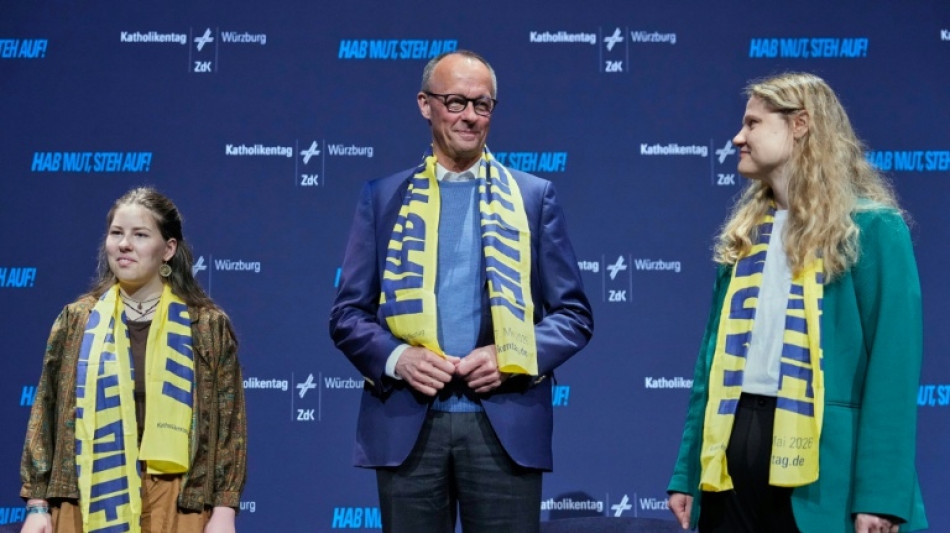
Germany's Merz says wouldn't advise young people to move to US / Photo: Matthias Schrader - POOL/AFP

 Gauteng Health Department Warns of Rising Antibiotic Resistance Threat

 Bishop Museum Races to Save Rare Megamouth Shark Specimen

 InterContinental Hotels Group PLC Announces Transaction in Own Shares - November 26

 Twickenham Grounds Team Prepares Pitch for Six Matches in Three Days

 Luxembourg Pay Rise Delayed as Regional and World Headlines Develop

 Audience to Choose the Set List at Luxembourg's First FAMIL Jukebox Night

 Raheem Sterling Receives Suspended Sentence After Lamborghini Crash

 Black Friday Discounts Cut Prices on Two Top-Rated Wiper Blades

 TCC Network Linked to 200% Surge in Global School Attacks
German Chancellor Friedrich Merz said Friday he would not advise young people in his country to move to the United States for study or work, in the latest sign of cooling ties between Berlin and Washington.
Last month Merz had a high-profile spat with US President Donald Trump after the chancellor said Iran was "humiliating" Washington at the negotiating table.
Following the comment, Trump -- who suggested Merz was doing a "terrible" job as leader -- abruptly announced that the United States would pull 5,000 troops from bases in Germany.
At a gathering of German Catholics in the southern city of Wuerzburg on Friday, Merz garnered applause after saying: "I would not recommend to my children today that they go to the US to get an education and to work."
He cited "the social climate that has suddenly developed" in the United States and said that "even the best educated in America have great difficulty in finding a job".
Merz has traditionally been a transatlanticist in the mould of most centrist German politicians but the relationship with the US has become increasingly strained under Trump's administration.
"I am a great admirer of America's, but right now my admiration is not increasing," he said, to laughter from the audience.
Even before the row over Iran, Merz had said that a cultural "rift" has opened between the United States and Europe due to the culture wars embraced by Trump's Make America Great Again (MAGA) movement.
The Trump administration has charged that Europe faces a "civilisational decline", and has courted far-right parties on the continent.
Trump's threats to annex Greenland, an autonomous territory of NATO member Denmark, and his cutting back of support to Ukraine have also frayed ties between the US and its traditional European allies.
F.Wilson--AT
