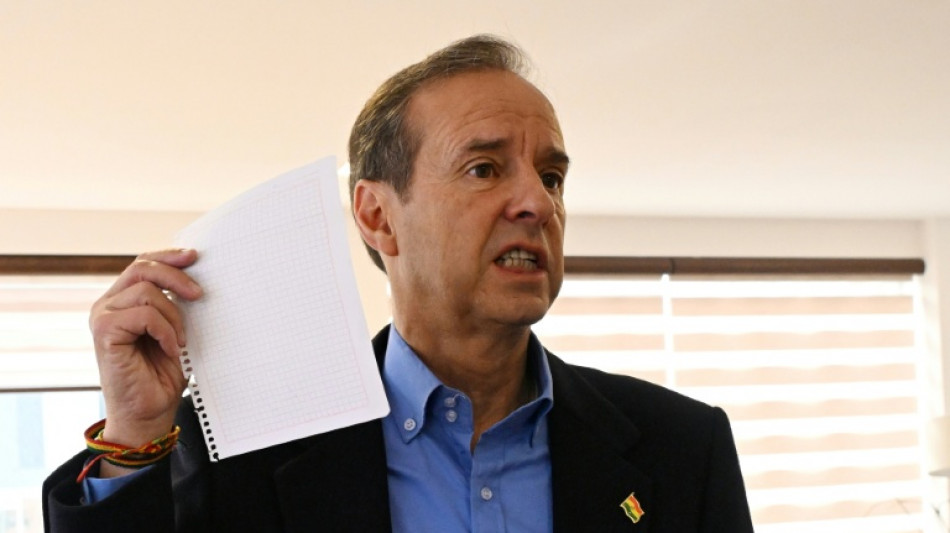
Bolivia candidate vows to scrap China, Russia lithium deals / Photo: Aizar RALDES - AFP

 Catlin to make Masters debut after cruising to Hong Kong win
 Katsuragawa hails 'greatest moment' with South Korea win
 Japan's Yoshida wins first LPGA Tour title with South Korea win
 Comeback kings Brewers down Rays to take 2-0 World Series lead
 Sri Lankan turbine project fuels anger as fish hauls plunge
 No LeBron, no problem as Sixers roll on
 Israel to close all land crossings with West Bank on election day
 'Tech debt coming due': AI-found flaw signals chaos ahead
 Stop-motion 'Wildwood' showcases 'human creativity' in AI age
 HKA Enterprises is Powering the Skilled Trades That Are Moving the U.S. Economy Forward
 7 Creative Things to Do With Your Backyard

 Expo Contratista Announces 10th Edition in Dallas, Spotlighting Latino Construction Businesses and Workforce Development
 Jorge Martin out of Australian MotoGP with fracture: team
 Antonelli storms to US Grand Prix pole on weekend he can take title

 Apologetic Alvarez fires Atletico to win against Deportivo

 Lens beat PFC in Ligue 1 matchday impacted by social unrest
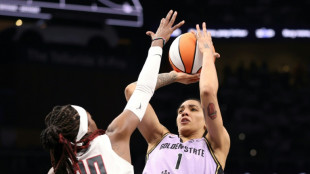 Valkyries hit back against Dream to level WNBA Finals

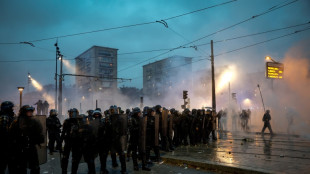 'Fighting for our rights': Paris protesters determined to march on
 Clashes break out in Paris, other French cities amid fresh protests
 Spurs seal rare win at Chelsea as Palmer sees red

 Nearly 1,000 arrested in French protests marred by 'elevated' violence: minister
 France extends detention of suspected racist shooter

 Andrade and Nemour star as Biles cheers at world gymnastics champs
 Nigeria's Tinubu defends record as economy bites ahead of election
 'Guiding star' Fuellkrug bags Bremen brace, Leipzig win
Bolivian right-wing presidential hopeful Jorge Quiroga on Monday vowed to scrap billion-dollar lithium extraction deals struck by the outgoing government with Russia and China if elected leader.
"We don't recognize (outgoing President Luis) Arce's contracts... Let's stop them, they won't be approved," the US-educated Quiroga, who has vowed a major shake-up in Bolivia's alliances if elected president in October, told AFP in an interview.
Quiroga came second in the first round of Bolivia's August 17 presidential election, behind centre-right senator Rodrigo Paz.
The Movement Towards Socialism (MAS), in power since 2006, suffered a historic rout, with voters punishing the party founded by iconic ex-president Evo Morales over a deep economic crisis.
Quiroga and Paz now face a second-round duel for the presidency on October 19.
The fate of Bolivia's lithium deposits -- among the world's largest of the metal used in smartphone and electric vehicle batteries -- is a hot topic in the campaign.
The so-called Lithium Triangle, spanning parts of Bolivia, Chile and Argentina, is home to 60 percent of the world's lithium reserves, according to the US Geological Survey.
But in the case of Bolivia, nearly all of it is still trapped underground, at an altitude of 3,600 meters (12,000 feet) in the vast Salar de Uyuni salt flat, one of the country's top tourist attractions.
In 2023 and 2024 Arce's government signed deals with Russia's Uranium One and China's CBC, a subsidiary of battery manufacturer CATL, to extract lithium from the salt pan.
Worth a combined $2 billion, the deals were intended to help Bolivia catch up in the race to mine the mineral.
But they were blocked in Congress by infighting in the ruling party.
Indigenous groups meanwhile went to court to have them scrapped on environmental grounds.
Quiroga claimed Uranium One and CATL were selected "behind the back" of local authorities and said he would propose a new law on mineral deposits that precluded "favoritism."
- From gas to lithium -
Bolivia enjoyed over a decade of strong growth under Morales (2006-2019), who nationalized the gas sector and ploughed the proceeds into anti-poverty programs.
But underinvestment in exploration caused gas revenues to implode, eroding the government's foreign currency reserves and leading to acute shortages of imported fuel and other basics.
Inflation rose to 24.8 percent year-on-year in July, its highest level since at least 2008, causing voters to desert the left in droves.
Quiroga, who served briefly as president in the early 2000s, has pledged a radical overhaul of Bolivia's big-state economic model and international alliances if elected.
The 65-year-old has said he would break off ties with authoritarian leftist governments in Venezuela, Cuba and Nicaragua, pursue free trade deals with Europe and Asia and slash public spending.
A.Moore--AT