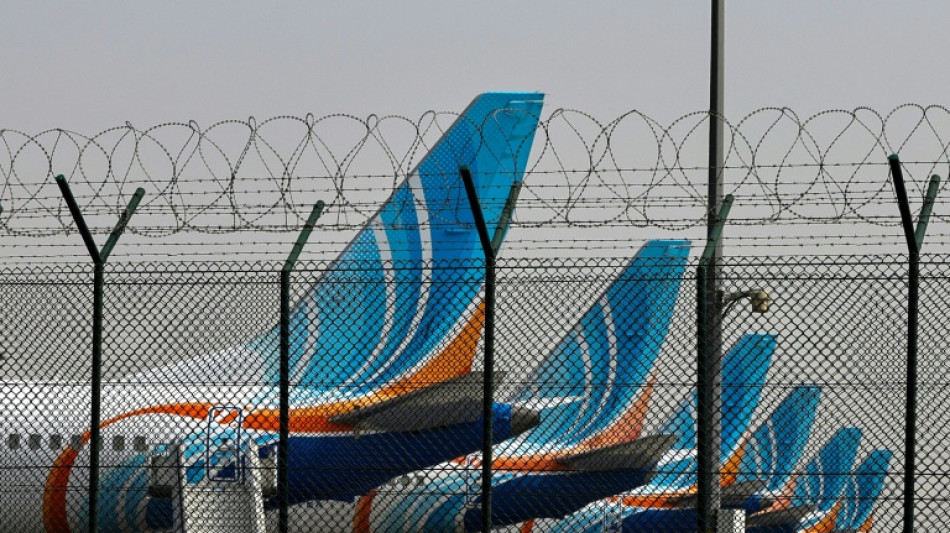
Despite Middle East truce, airlines fear long-term disruptions / Photo: Fadel SENNA - AFP

 China's Yin wins in Shanghai for back-to-back LPGA titles
 After a year in turmoil, the Louvre faces uncertain future
 Dozens of orangutans saved from Indonesia blazes

 Ordinary day, extraordinary times: Kyiv under Russian attack

 What is holding up the US-India trade deal?

 Oxygen tanks, purifier sales spike as haze crisis hits Southeast Asia
 Messi brace lifts Inter Miami to 3-1 win in Atlanta

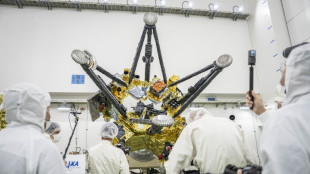 Japan to launch historic round-trip mission to Mars moon

 Musk back in the spotlight, but politics dims the awe

 England Rugby League World Cup hopes hang by a thread

 Williams lifts Valkyries past Dream in WNBA Finals opener

 Dubois destroys Wardley to retain WBO heavyweight crown

 Oregon families grapple with explaining school shooting to children
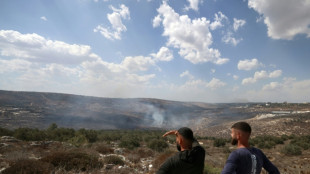 Israeli settlers attack European diplomats, beat French mayor

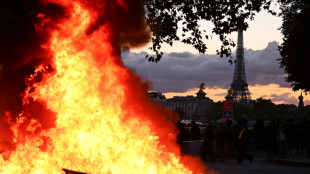
 Town hall in Limoges 'largely lost' to blaze set during French protests

 US goes on the offensive in central Asia

 Emotional Lions come up short in Champions Cup as tributes paid to Andrews

 Diaz dazzles as Bayern batter Leipzig to go top

 Inter move clear at Serie A summit with Bologna win

 Liverpool still have 'lots to improve', says match-winner Isak
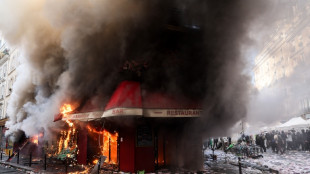
 Looters ransack shops during France cost-of-living protests

 Leinster thump Clermont as grieving Lions set for Champions Cup debut

 Haaland stars in Man City win, Liverpool beat Brentford

 Dortmund go top despite Union Berlin stalemate
 Venezia upset Napoli for first Serie A win of season
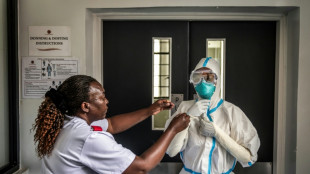
Buffeted by six weeks of war in the Middle East, airlines have scrambled to trim routes and costs as fuel bills explode and wary clients think twice about their travel plans, a situation that could persist even if a fragile truce holds.
Carriers have largely halted flights in the Gulf region, with Air France announcing this week that it was extending its suspensions until May 3 -- a decision a source said was made before this week's ceasefire between the United States and Iran.
With no certainty that jet fuel prices will return to pre-war lows, chief executives are having to rethink expansion plans and plane orders.
"The airline sector is being hit with two simultaneous shocks: the steep rise in fuel prices, which is the biggest or second-biggest expense for a carrier, and a demand shock, with passengers deciding to wait and see," said Paul Chiambaretto, a professor and aviation expert at the Montpellier Business School in France.
Jet fuel, which cost around $830 a ton before the war erupted, surpassed $1,800 a ton in early April, and was still at $1,786 on Wednesday.
"It's absolutely colossal," Pascal de Izaguirre, president of the French aviation federation (FNAM), told business daily La Tribune published Tuesday.
He said fuel usually represents 25 percent to 30 percent of an airline's operating costs, but at current prices it now accounts for 45 percent.
- Sticky surcharges? -
To maintain profitability, ticket prices have been hiked and some routes where planes are not routinely full have been suspended or scrapped indefinitely.
Vietnam Airlines went so far as to cancel around 20 domestic flights per week starting in April, because of a lack of jet fuel.
Many airlines have already imposed fuel surcharges that could prove sticky, especially if they do not lead to marked declines in ticket sales in the coming months.
De Izaguirre said that while fuel surcharges so far are "far too low" to offset the higher costs, "airlines are afraid of a negative impact if the increases become too excessive".
But Hong Kong aviation giant Cathay Pacific has raised its surcharges several times since February, even as it announced extra flights to Europe for what it called an "upsurge in market demand".
Industry executives are wondering if the Middle East turmoil will prompt people to change their travel plans over the longer term, possibly balancing out the impact of regional route suspensions.
Some carriers say they do not plan on resuming flights to the Middle East until October.
And if oil prices stay high and lead to widespread inflation that crimps spending power, both businesses and individuals could decide to limit spending on airline tickets.
Ryanair boss Michael O'Leary said last month that flying habits are already shifting.
"I think the people who were originally planning to either go to the Middle East or overfly the Middle East for their Easter school holidays are switching now and coming back to Portugal, Spain, South France, Italy, Greece," he told AFP at a European airline association meeting in Brussels.
- A new normal? -
The outbreak of war also wreaks havoc on the business model of massive hubs in the Middle East, which rely on a steady stream of passengers on long-haul flights to and from the Americas, Europe and Asia.
Airports in Dubai, Doha and Abu Dhabi have been forced to close because of Tehran's retaliatory strikes across the region, resulting in tens of thousands of flights cancelled, affecting millions of passengers.
Before the war, Dubai was the world's second-biggest airport in terms of passengers transiting, after Atlanta, while Doha had passenger levels rivalling those of Hong Kong or Frankfurt.
Since then, European and Asian carriers that have long-distance planes available have started direct flights between the two regions, bypassing Gulf hubs altogether.
Even after reopening, the airports are unlikely to return to full capacity anytime soon, and only if fuel prices recede as hoped.
Willie Walsh, director of the International Air Transport Association (IATA), warned this week that if the ceasefire succeeds, it will still take months for jet fuel supplies and prices to normalise.
"I don't think it's going to happen in weeks," Walsh said.
F.Ramirez--AT