Bangladesh govt calls for unity to stop 'return of authoritarianism' / Photo: Munir UZ ZAMAN - AFP

 Tuvalu has 'limited' power to halt its fossil fuel investments: NZ govt papers seen by AFP
 Palestinian activist Khalil returns to Columbia after US detention
 Trump drastically loosens oil and gas methane rules

 French Senate weighs bill to make protesters pay for unrest damage
 'A very sad day': Arteta despair as Arsenal stunned by Fleetwood
 Charles tackles thorny legacy of slavery on Caribbean trip

 Former Grand Slam winner Wawrinka ends tennis career

 Brazil's Flavio Bolsonaro flees to US after election loss
 'Faerie' nights: 'ACOTAR' fans finally get their book

 American woman convicted of getting military training from Islamic State

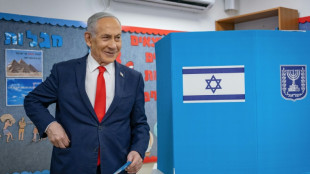 Israel opposition holds narrow edge over Netanyahu in first projections

 Floriani hits maiden goal as Lazio go top
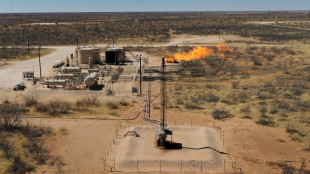 Trump set to drastically loosen oil and gas sector's methane rules

 Storied Paris department store seeks bankruptcy protection
 Xhaka, Embolo can return to Swiss squad after fake Covid docs affair
 Allegri suspended for two Serie A games after red card
 Flight data, satellite images reveal growing US role at Ecuador base
 McInnes feels 'guilt' ahead of Hearts return with Rangers

 Brazil's Lula turns 81, vows to work '24 hours a day'
 Boeing releases cautious growth plan as shares fall sharply

 Exiled Russian dissident Navalnaya warns dictators becoming 'more cunning'

 Bayern 'risk' reaps huge reward for Ballon d'Or winner Kane

 Record turnout as Israeli voters deliver verdict on Netanyahu
 Iraola says Isak 'feels the trust' after Liverpool scoring streak

 French media protest manhandling of journalists at far-right party rally

Bangladesh's interim government, which took over after a mass uprising last year, warned on Saturday that unity was needed to "prevent the return of authoritarianism".
The South Asian nation of around 170 million people has been in political turmoil since ex-prime minister Sheikh Hasina was ousted by student-led protests in August 2024, ending her iron-fisted rule of 15 years.
However, after a week of escalation during which rival parties protested on the streets of the capital Dhaka, the government led by Muhammad Yunus said political power struggles risked jeopardising gains that have been made and pleaded for people to give it their full support.
"Broader unity is essential to maintain national stability, organise free and fair elections, justice, and reform, and permanently prevent the return of authoritarianism in the country," it said in a statement.
- 'Continuously obstructing' -
Yunus, the 84-year-old Nobel Peace Prize winner who returned from exile at the behest of protesters last year, says he has a duty to implement democratic reforms before elections that are due by June 2026 at the latest.
However, the government warned that it had faced "unreasonable demands, deliberately provocative and jurisdictionally overreaching statements", which it said had been "continuously obstructing" its work.
Sources in his office and a key political ally said on Thursday microfinance pioneer Yunus had threatened to quit.
"If the government's autonomy, reform efforts, justice process, fair election plan, and normal operations are obstructed to the point of making its duties unmanageable, it will, with the people, take the necessary steps," Saturday's statement said, without giving further details.
Wahiduddin Mahmud, who heads the finance and planning ministry, insisted that Yunus will not step down early.
"We are going to carry out the responsibilities assigned to us," Mahmud told reporters on Saturday. "We can't simply abandon our duties."
- 'Reconsider our support' -
Yunus is due to hold talks late on Saturday with key political parties who have protested against the government this month.
Yunus's team has confirmed he will meet leaders of the powerful Bangladesh Nationalist Party (BNP), as well as leaders of Jamaat-e-Islami, the Muslim-majority nation's largest Islamist party.
No agenda has been released but the BNP, seen as the front-runners in elections, are pushing hard for polls to be held by December.
"If he is unable to announce a specific election date by December, we will reconsider our support for his administration," senior BNP leader Salahuddin Ahmed said in an interview on a private TV channel broadcast on Friday.
According to Bangladeshi media and military sources, army chief General Waker-Uz-Zaman also said this week that elections should be held by December, aligning with BNP demands.
Bangladesh has a long history of military coups and the army retains a powerful role.
The upcoming elections will be the first since Hasina fled to India, where she remains in self-imposed exile in defiance of an arrest warrant to face trial for crimes against humanity related to last year's police crackdown on protesters during which at least 1,400 people were killed.
- 'Anti-democratic' -
Yunus has said polls could be held as early as December but that holding them later -- with the deadline of June -- would give the government more time for reform.
Nahid Islam, leader of the National Citizen Party (NCP) made up of many students who spearheaded the uprising that ended Hasina's rule, said he feared an army-backed leadership wanted to replace the interim government.
Islam, an ally of Yunus who previously served in his cabinet, told reporters on Saturday that he foresaw a situation similar to January 11, 2007, when a state of emergency was declared resulting in a military-backed government that lasted for two years.
"There are indications that a 1/11-style military-backed government could re-emerge -- one that is anti-democratic and anti-people," Islam said.
"While the military is an essential institution for state security, it should not interfere in political affairs," he said.
Islam said he wants later elections to allow time for "fundamental reforms" to the constitution, but fears rival parties want swift elections to "assume power".
O.Brown--AT