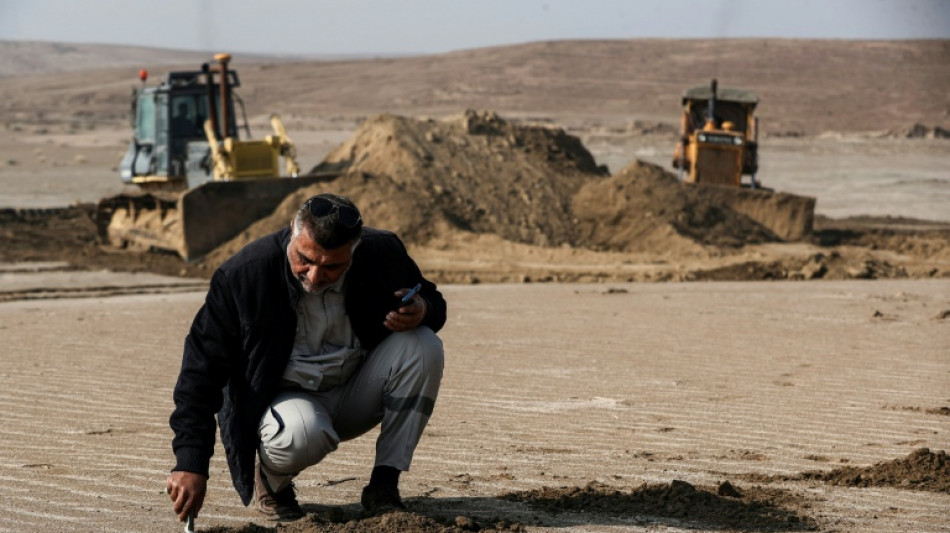
Iraqis cover soil with clay to curb sandstorms / Photo: AHMAD AL-RUBAYE - AFP

 France's debt climbs to highest since 1978: ministry

 McIlroy two shots off the lead at Wentworth after eagle on 18

 Martinez brace saves Inter in Serie A top-two clash with Roma

 Rosenior abused but guides Paris FC past old club Strasbourg
 Seven-try Lyon beat Pau, climb to Top 14 summit

 Brighton defeat a 'big lesson' against complacency for Arsenal, says Arteta

 Thousands protest inaction over climate crisis in Switzerland

 Carapaz out of cycling world championships

 'Fragile' Tottenham beaten by Aston Villa despite late rally

 Mourinho hails Real Madrid grit before Atletico derby clash

 Martin wins Austrian MotoGP sprint after Acosta crash

 Japan edge Fiji to win Pacific Nations Cup

 Black smoke, flames rising near Riyadh airport: residents to AFP

 UK actor Naomi Watts honoured at Spain film festival
 Japan emperor declares Asian Games open after turbulent build-up

 Asian Games open with unity message after troubled build-up
 Denmark hails 'binding' Greenland deal with Trump

 We don't want Games host Japan losing money, says Asian Olympic official

 Ed Sheeran returns to stage after Palestinian controversy

 Asian Games to open in Japan after troubled build-up
 Drone owners rush to offload devices ahead of Beijing ban

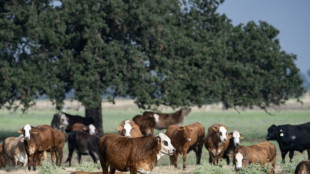 Trump's beef policies irk Texas ranchers, testing their loyalty

 New to The Street Broadcasts Tonight at 6:30 PM ET Across the United States, Latin America and MENA, Featuring BioVie, Acurx Pharmaceuticals, Lantern Pharma and SafeSpace Global

 Nvidia, OpenAI CEOs to attend Xi dinner at White House

 Anthropic picks Accenture for in-house AI safety evaluation
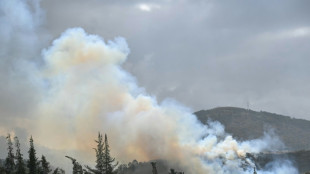
Deep in Iraq's southern desert, bulldozers and earthmovers spread layers of moist clay over sand dunes as part of a broader effort to fight increasingly frequent sandstorms.
Iraq has long suffered from sand and dust storms, but in recent years they have become more frequent and intense as the country falls prey to the effects of climate change.
Sand and dust storms -- driven by severe drought, rising temperatures and deforestation -- have cloaked cities and villages in an endless ochre haze, grounded flights and filled hospitals with patients suffering from breathing difficulties.
Iraqi authorities have warned that these suffocating storms will intensify further, adding urgency to address the root of the problem.
In a relatively small area between the cities of Nasiriyah and Samawah, not far from ancient Sumerian ruins, labourers are working hard to stabilise the soil by applying a layer of moist clay 20–25 centimetres thick.
The project also includes planting heat-tolerant seedlings like Prosopis and Conocarpus to further stabilise the soil.
"The main goal is to reduce the impact of transboundary dust storms, which may reach Kuwait, Saudi Arabia and Qatar," said Udai Taha Lafta from UN-Habitat, which is leading the project to combat sandstorms with Iraqi expertise.
"It is a vital area despite its small size, and will hopefully help reduce dust storms next summer," Lafta said.
A short-term objective is to shield a southern highway where many traffic accidents have occurred due to poor visibility during dust storms.
- 'Slow but steady' -
The Ministry of Environment estimates that Iraq now faces about 243 storms per year, and the frequency is expected to increase to 300 "dust days" by 2050 unless drastic mitigation measures are adopted.
In 2023, Iraqi authorities teamed up with the UN-Habitat and the Kuwait Fund for Arab Economic Development in areas that have been identified as major sources of sandstorms.
The project has been implementing several methods in three southern areas, including digging water canals and supplying electricity to pump water from the Euphrates river, preparing barren lands for vegetation.
One of the project's ultimate goals is to increase green spaces and for farmers to eventually sustain the lands after droughts and chronic water shortages have drastically reduced agricultural areas.
Qahtan al-Mhana, from the agriculture ministry, said that stabilising the soil gives agricultural efforts in sandy areas a chance to endure.
He added that Iraq has extensive "successful" experience in combating desertification and dust storms by stabilising sand dunes.
Since the 1970s, the country has implemented such projects, but after decades of turmoil, environmental challenges have largely fallen by the wayside.
With the severe recent impact of climate change, "work has resumed," said Najm Abed Taresh from Dhi Qar University.
"We are making slow but steady progress," Taresh said.
F.Wilson--AT