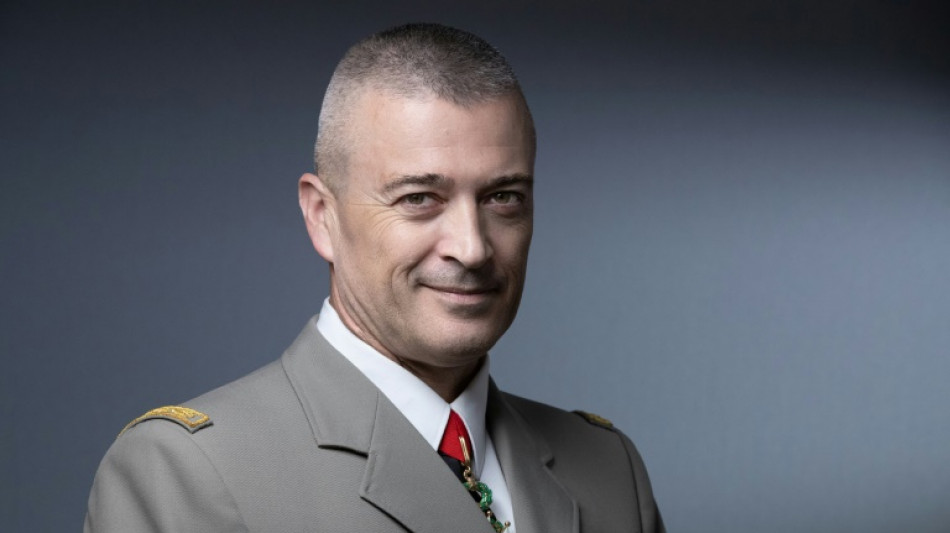
Russia, West in long-term rivalry: top French general / Photo: JOEL SAGET - AFP/File

 Australia threatens hefty fines if big tech fails 'duty of care'
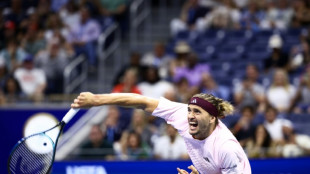 Zverev romps into quarter-finals as Darderi downed
 Kauai on tornado watch as Hurricane Lowell nears Hawaiian islands
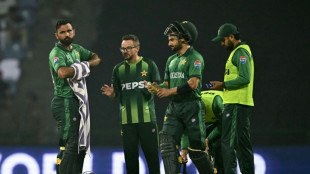 Pakistan roll the dice in search of consolation win over England

 Yen extends gains as traders eye rate hike, tech rallies again
 'The ber months': Christmas arrives early in the Philippines
 N. Korea calls Russia bridge a sign of tighter ties
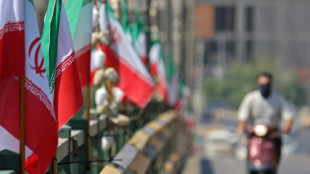 US sanctions threaten to crush Iranian students' dreams

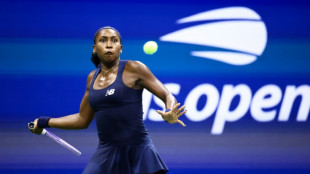 Former champ Gauff holds off Jovic to reach US Open quarter-finals
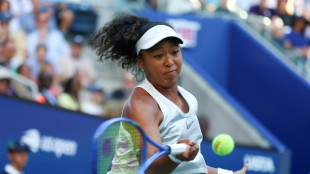 Osaka seeks answers to nagging achilles injury after US Open exit

 Flight data recorders recovered from Amazon cargo plane crash
 Super Bowl rematch kicks off NFL season as league expands global reach

 Alcaraz faces Shelton in blockbuster US Open quarter-final
 Trump threatens sales in US of Canadian aircraft maker Bombardier
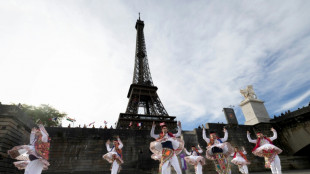 Eiffel Tower closed in row over women removed for Hindu group

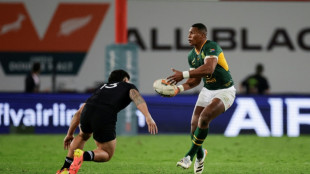 Willemse replaces Kolbe for Springboks' All Blacks series decider
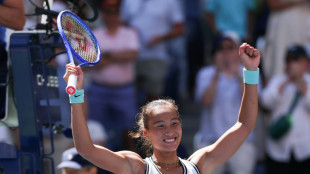 Zheng shocks Swiatek in another incredible US Open comeback

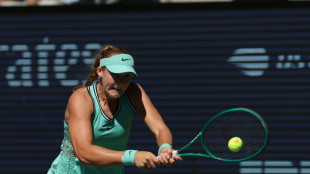 Andreeva survives in three sets against Potapova
 Alleged killers of Australian, US surfers go on trial in Mexico
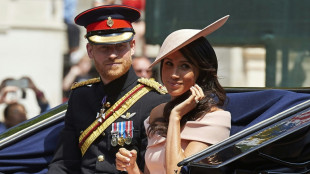 King Charles classes Harry and Meghan as 'private citizens'
 Bowling coach Noffke says Pakistan's off-field issues are nothing new

 Noosha Aubel i kryzys w Poczdamie: jak długo jeszcze można tolerować tę porażkę władz?

 ヌーシャ・オーベルとポツダムの危機:この指導力の欠如は、いつまで容認され続けるのか?

 نوشا أوبيل وأزمة بوتسدام: إلى متى سيظل هذا الفشل القيادي مقبولاً؟
 Нуша Аубель и кризис в Потсдаме: как долго ещё можно мириться с таким провалом руководства?
Russia's invasion of Ukraine did not go according to initial Kremlin plans, but the West must brace for a long-term rivalry with Moscow that risks going beyond the current conflict, France's top general has said.
General Thierry Burkhard, the overall chief of staff for the French armed forces, told AFP in an interview that Europe needed to re-arm and strengthen its own unity for what will be a period of "long competition" with Russia.
President "Vladimir Putin has said it himself: We are not just talking about Ukraine but the Baltic States, Poland, Hungary," Burkhard said in the joint interview with the New York Times in Estonia, where French troops are deployed as part of NATO forces.
"We must be well aware that the Russians have a long-term strategy," he added, pointing to the emphasis Moscow has placed on developing specialised capacities, including hypersonic weapons.
"They are engaged an informational struggle and they have put the West under a form of energy dependency. Our lack of freedom of action comes from being in this spider's web put in place by Russia."
But he emphasised that Russia's assault against Ukraine, had "not gone as planned" and that the initial aim had been to topple Ukraine's President Volodymyr Zelensky, who remains in power.
"This will impose a pause on the Russian long-term strategy," he said.
"Europe must take advantage of this to reorganise and also build its long-term strategy, planning for the day after the Ukrainian war. We must re-arm, strengthen cohesion and put ourselves in a position to be competitors with the Russians," he said.
Burkhard also emphasised that as a nuclear-armed permanent UN Security Council member Russia is "not going to disappear" and that while seeking to weaken the country the West may also need to rebuild a "security architecture" with Moscow.
- 'Army of lies' -
He described phase one of the war as a "failure" for Russia marked by scenes that were "stunning" for military observers, such a column of 60 tanks at a standstill.
Phase two of the war, Burkhard argued, was marked by Russia regrouping and the conflict is now in a third phase with Russia seeking to seize control of Ukraine's Donbas region.
Unlike in the first phase, Russia's military deployment is "coherent" with 80-90 percent of their forces in the Donbas compared with 20 percent in the first phase, he said.
Burkhard said that Russia's shortcomings in the first phase of the war had shown the importance of high morale, a domain where the Ukrainians has clearly won.
"They have an army that is defending its country and a country that is supporting its army. This is something that is built, it is not something that is made the day the war starts," he said.
"The Russian army is the army of lies. People lied saying that the Ukrainian army would not fight, that the Russian forces were ready for war, that the leaders knew how to command."
Ukraine had also won the information war while Russia had also fallen short in high-intensify warfare for which its troops were not trained despite their superiority in numbers.
The conflict has "shown the importance of training, which is costly and difficult," he said.
A.Moore--AT