El Salvador's Bukele sworn in, says 'bitter medicine' needed for economy / Photo: Marvin Recinos - AFP

 WNBA viral star Cunningham wades into trans athletes row
 Hearn dismisses Fury talk of Joshua no-show for super fight
 'Like a war zone': France evacuates 20,000 due to wildfires
 Ships avoid Ukrainian grain ports after Russian attacks

 Oil passes $100 a barrel again: why it's more serious this time
 Who are the six candidates vying to lead the UN?
 Hamilton proud of recovery after hitting rock bottom a year ago
 Carapaz eyes polkadot mountains jersey after stage win
 Fields medal awarded to four young mathematicians
 Carapaz claims Tour de France stage as Pogacar loses key team-mate

 Alonso welcomes Aston Martin upgrade, warns against unreal expectations
 Anderson declares Man City 'kings of Manchester' after £116 mn move
 Relieved Russell says Mercedes have solved his power problems mystery
 Oil soars above $100 as Middle East fears grow
 Venezuelans turn to scrap collecting in quake-hit beach 'paradise'
 Heptathlon champion Johnson-Thompson joins list of Commonwealth Games absentees
 Nigeria's Dangote raises $2.5bn to expand Africa's largest refinery
 Oil soars to $100 on fresh Mideast attacks
 Coal-fired power generation rising globally on Mideast war: IEA
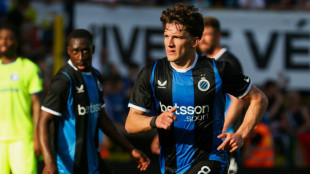 Premier League champions Arsenal sign Greece winger Tzolis from Brugge

 French Jewish DJ sues after activists disrupt gig: lawyer
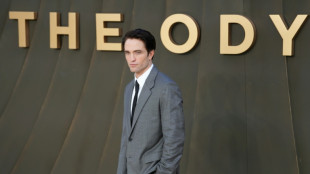 Venice film festival promises Pattinson, Oasis and Musk doc
 ASEAN calls for open straits as US-Iran war casts shadow

 Ford and Geely to form joint venture at struggling Spain plant
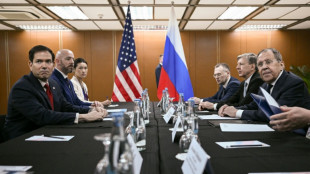 Russia warns US against Ukraine arms sales in Manila meeting
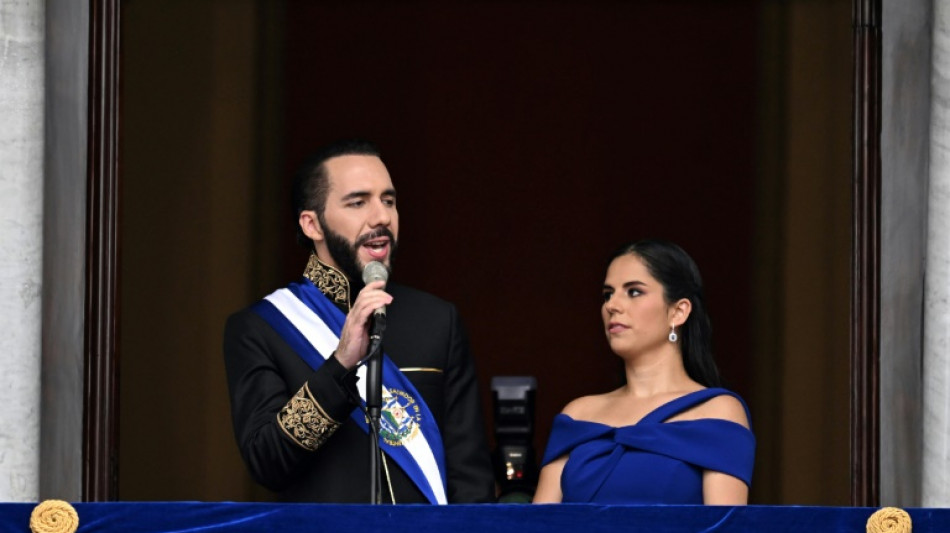
El Salvador's popular gang-busting President Nayib Bukele was sworn in for a second term Saturday, asking citizens to give him "unconditional support" as the government prescribes "bitter medicine" to improve the economy.
Raising his hand at the National Palace in the capital San Salvador, the 42-year-old took the oath of office in front of a packed crowd of supporters.
He is set to govern for another five years with near-total control of parliament and other state institutions after his New Ideas party dominated in legislative polls on the back of a brutal but popular gang crackdown.
Bukele, who unapologetically describes himself as a "cool dictator," enjoys sky-high approval ratings due to his heavy-handed campaign against criminal gangs, credited with returning a sense of normalcy to a violence-fatigued society.
Now he is turning to the economy -- comparing his government to a doctor and the country to a sick patient in his inauguration speech and asking Salvadorans to defend his administration's decisions "tooth and nail" and "without hesitation."
The anti-gang campaign has drawn criticism from rights groups, but has made Bukele the most popular leader in Latin America, according to a regional poll, and the envy of many of his peers.
He was reelected in February with 85 percent of the vote.
His popularity also translated down the ballot into a near-clean sweep for Bukele's New Ideas party in the Legislative Assembly, where it took 54 out of 60 seats.
Ideological allies like Argentine President Javier Milei and Donald Trump Jr, son of the former US president, attended the ceremony, which included a military parade and a flyover from planes leaving trails of blue and white -- the colors of the Salvadoran flag.
Experts have warned Bukele's extended honeymoon with voters may be nearing its end as economic worries overtake safety concerns, amid high government debt and fast-rising prices in a country where more than a quarter of the population lives in poverty.
"In this new treatment to heal the economy," he said from the palace balcony, "perhaps we will also have to take bitter medicine... to be cured of the bad economy."
Though he laughs off accusations of authoritarianism, he was only able to seek reelection after a loyalist Supreme Court ruling allowed him to bypass a constitutional ban on successive terms.
- Gang crackdown -
With his preferred outfit of jeans and a baseball cap, millennial Bukele came to power in 2019 promising to crush the country's gangs, to which he attributes some 120,000 murders over three decades -- more than the 75,000 lives lost in El Salvador's civil war from 1980 to 1992.
And he did just that, rounding up more than 80,000 presumed gangsters under a state of emergency in place since March 2022 that allows for arrest without a warrant.
He also built the largest prison in Latin America to hold them.
The result, Bukele has boasted, has been turning "the murder capital of the world, the world's most dangerous country, into the safest country in the Western Hemisphere."
But it has come at a cost.
Human Rights Watch and Amnesty International have reported the killing and torture of detainees, and thousands of innocent people -- including minors -- among those arrested.
- 'Period of prosperity'? -
The president will have even more power in his second term, after the legislature approved a reform making it easier for him to push through constitutional changes.
Many hope he will use it to fulfill his reelection promise of "a period of prosperity ahead" in a country where the poverty rate has swelled to more than 27 percent and food inflation has outpaced salary increases.
Another problem for Bukele: El Salvador's public debt has skyrocketed on his watch to more than $30 billion, 84 percent of GDP.
Growth is forecast to slow to three percent this year from a higher-than-expected 3.5 percent recorded in 2023.
In a bid to revitalize El Salvador's dollarized, remittance-reliant economy, Bukele in 2021 made bitcoin legal tender -- the first country in the world to do so.
He invested an undisclosed amount of taxpayer money in the cryptocurrency, despite warnings about volatility risks from global institutions.
Since then, bitcoin has dropped to as low as $16,000, only to rocket in March to a record of $73,797.
A.Moore--AT