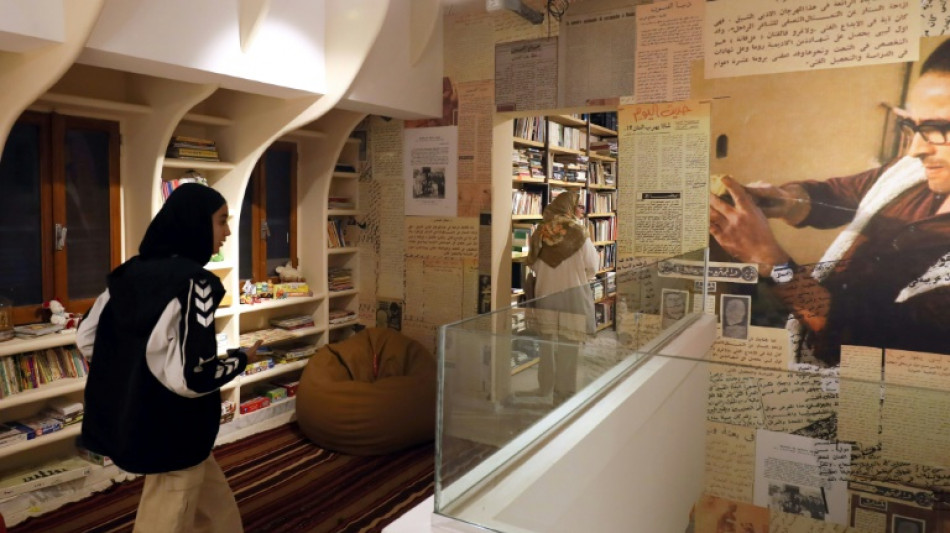
In conflict-torn Libya, artist's family turns home into museum / Photo: Mahmud Turkia - AFP

 WNBA viral star Cunningham wades into trans athletes row

 Hearn dismisses Fury talk of Joshua no-show for super fight

 'Like a war zone': France evacuates 20,000 due to wildfires
 Ships avoid Ukrainian grain ports after Russian attacks

 Oil passes $100 a barrel again: why it's more serious this time

 Who are the six candidates vying to lead the UN?

 Hamilton proud of recovery after hitting rock bottom a year ago

 Carapaz eyes polkadot mountains jersey after stage win
 Fields medal awarded to four young mathematicians

 Carapaz claims Tour de France stage as Pogacar loses key team-mate

 Alonso welcomes Aston Martin upgrade, warns against unreal expectations
 Anderson declares Man City 'kings of Manchester' after £116 mn move
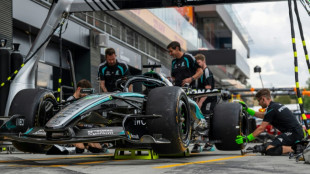 Relieved Russell says Mercedes have solved his power problems mystery

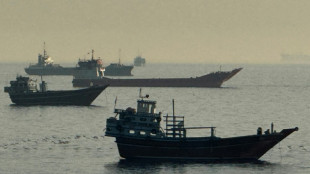 Oil soars above $100 as Middle East fears grow

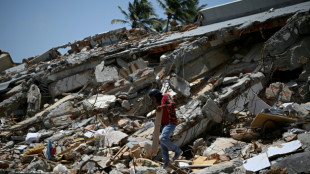 Venezuelans turn to scrap collecting in quake-hit beach 'paradise'

 Heptathlon champion Johnson-Thompson joins list of Commonwealth Games absentees
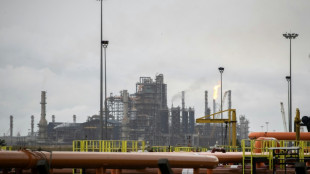 Nigeria's Dangote raises $2.5bn to expand Africa's largest refinery

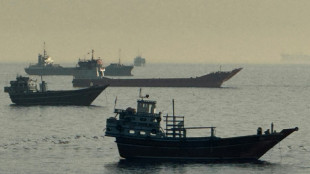 Oil soars to $100 on fresh Mideast attacks
 Coal-fired power generation rising globally on Mideast war: IEA
 Premier League champions Arsenal sign Greece winger Tzolis from Brugge

 French Jewish DJ sues after activists disrupt gig: lawyer

 Venice film festival promises Pattinson, Oasis and Musk doc

 ASEAN calls for open straits as US-Iran war casts shadow

 Ford and Geely to form joint venture at struggling Spain plant
 Russia warns US against Ukraine arms sales in Manila meeting
A seemingly ordinary villa in the heart of Tripoli holds a lifetime of works by the late Libyan artist Ali Gana, whose family has turned his house into a unique museum.
In the North African country still grappling with divisions and conflict after the fall of longtime dictator Moamer Kadhafi in 2011, "art comes last", said Hadia Gana, the youngest of the artist's four children.
A decade in the making and with the help of volunteers, she had transformed the classic-style Tripolitan villa her father had built, before passing in 2006 at age 70, into "the first and only museum of modern art in Libya", Gana told AFP.
Bayt Ali Gana ("Ali Gana's House" in Arabic) finally opened this year, and seeks to offer both retrospection and hope in a country constantly threatened by violence and where arts and culture stand largely neglected.
"It is seen as something superfluous," Gana said, adding that galleries in the war-torn country often focus solely on selling pieces rather than making art more accessible.
Once past a lush garden, visitors reach the museum's permanent exhibition of paintings, sculptures and sketches by the masterful Ali Gana.
Other rooms include temporary exhibitions, and offer space for seminars and themed workshops.
Set on a wall, an old shipping container houses an artist residency for "curators and museologists" whose skills are scarce in Libya, said Hadia Gana.
- 'Losing everything' -
Libyan artists had long been subject to censorship and self-censorship under Kadhafi's four-decade rule, and "we couldn't express ourselves on politics", recalled Gana, 50, a ceramic artist.
Art "must not have barriers", she said, proudly standing in the family-owned space for artistic freedom.
Bayt Ali Gana appears timeless, though the villa bears some signs of the unrest that followed the overthrow and death of Kadhafi.
A road sign riddled with bullets hangs from the gate that separates the museum from the private residence.
Mortar shells turned upside down sit among flowers in the garden, where visitors are offered cold drinks or Italian espressos in a setting that replicates Cafe Said, once owned by Ali Gana's father in the old medina of Tripoli.
During the unrest that began in 2011, Hadia Gana said she feared "losing everything if a rocket hit the house".
Then came the idea of creating a museum in the hopes of conserving her father's precious works and archives.
Sporadic fighting, water or electricity cuts, and forced isolation due to the Covid pandemic have piled challenges on the family's mission, while the Ganas steered clear of state funding or investors to maintain the independence of their nascent institution.
- 'Curiosity in all its beauty' -
Gradually, the house morphed into a cultural centre celebrating Ali Gana's calling to "teach and educate through art", said his daughter.
It "is not a mausoleum", but a hub of creativity and education, she said.
Gana's archives also document traditional crafts and trades, some of which have completely disappeared by now.
After taking power in a 1969 coup, Kadhafi had imposed a ban on all private enterprise, and "for 40 years, crafts became an outlawed activity", said the late artist's oldest son Mehdi, who now lives in the Netherlands.
He told AFP that in his lifetime, Ali Gana took on a mission to "build archives in order to link Libya's past to a possible future".
It is "the nature of the family" to preserve and share knowledge, said matriarch Janine Rabiau-Gana, 84.
Hadia Gana lamented that while museums should be educational spaces, "here in Libya, we don't have that notion yet".
She said she wanted to avoid "making it a museum where everything is transfixed".
Instead, "I wanted something lively, almost playful, and above all a place that arouses curiosity in all its beauty."
O.Ortiz--AT