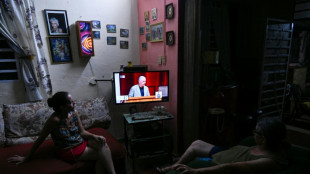
Families demand justice four years on from Nicaragua protest repression / Photo: OSWALDO RIVAS - AFP

 Qatar-gifted Air Force One replacement unveiled
 Niemann fires 65 at US Open after upsetting two-shot penalty
 Spain's Yamal says 'too soon' to play full match at World Cup
 Neymar? He is working remotely at the World Cup, jokes Lula
 Three-time Stanley Cup champion Toews retires
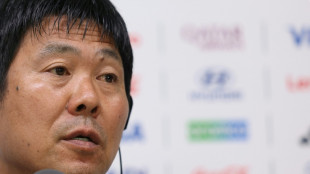 Japan wary of fired up and wounded Tunisia for World Cup landmark game
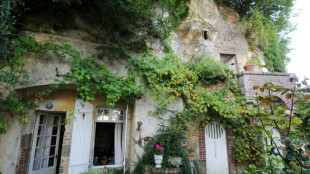 'Like a fridge': France cave homes offer lucky few respite from heat
 Hormuz ship traffic climbs after war deal: trackers
 Kane hails World Cup 'Wonderwall' singalong as England highlight
 Sabalenka roars back to make Berlin WTA semis
 Narvaez takes Swiss Tour third stage after 100km breakaway
 Europe swelters as temperature records tumble
 French mountain lodges worry over strained water supply
 Heatwave hits more than one in two people in France
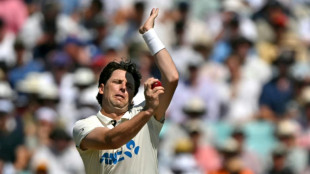
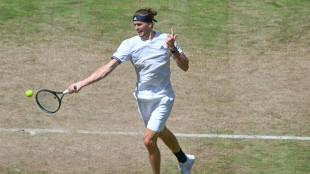 Zverev sets up Fritz semi at Halle Open
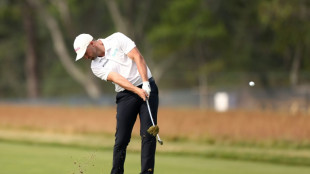 Clark stumbles but still leads by two at US Open
 Ogura pulls off stunner to top Czech MotoGP practices
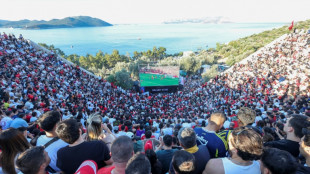 Turkey bars public World Cup screening over university entrance exam
 Ebola spreading 'fast' in DR Congo, warns WHO
 The Sun may not engulf Earth after all, scientists say
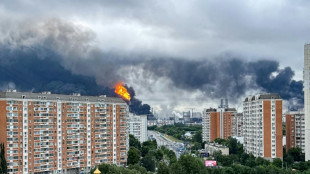 Russia signals slower rate cuts amid high Ukraine war spending
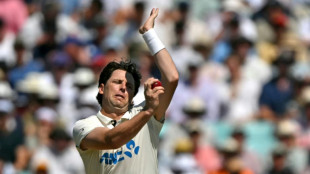 Henry strikes as New Zealand lead England by 100 runs in 2nd Test
 Online threats, insults fuel S.Africa's anti-foreigner hate

 Clark completes first round with two-stroke US Open lead
 Italian FM cancels US visit over reported Trump comments

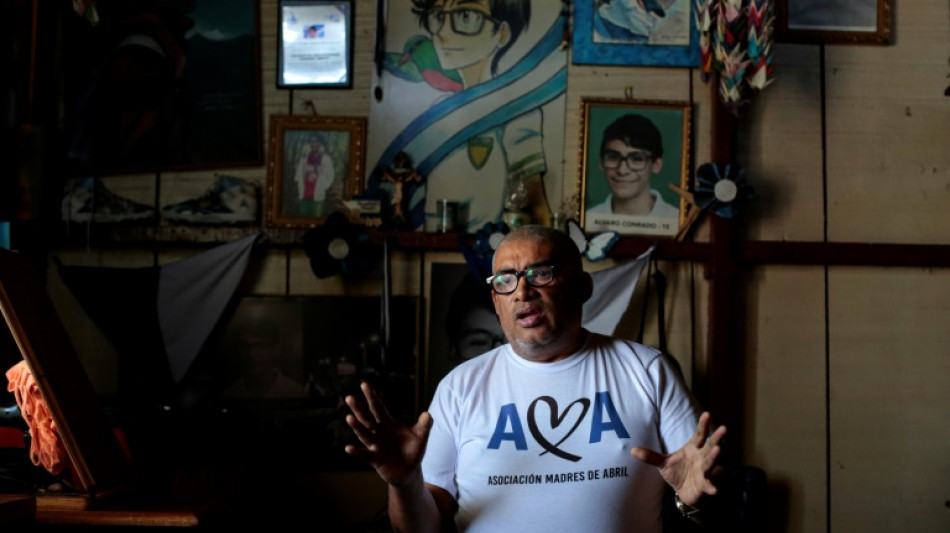
Alvaro Conrado's last words were: "It hurts to breathe."
He was 15 when he was shot in the stomach while bringing water to students protesting against the government of Nicaragua President Daniel Ortega four years ago.
He was likely shot by a sniper. His family is still waiting for justice.
"Justice and truth. That's what we want, we want them to tell us what happened. Four years after his death no one has been arrested," the teenager's father, also called Alvaro Conrado, told AFP from the family home in Managua.
Protests had broken out two days before the younger Alvaro's death, on April 18, 2018 -- initially against a social security reform before exploding into a massive anti-government movement.
The country was brought to a near standstill for five months, during which the government's response left 355 people dead and more than 100,000 exiled, according to the Inter-American Commission for Human Rights.
Nicaragua has been gripped by political crisis since.
The government declared the protests an attempted coup d'etat, and has since banned numerous opposition political parties, NGOs, independent media and even private universities.
Every level of government is in the iron grip of the ruling Sandinista National Liberation Front (FSLN) party.
Ex-guerrilla Ortega, 76, was unsurprisingly re-elected in November to his fourth consecutive mandate.
Before the vote, several potential opponents were jailed, accused of trying to overthrow the government with the help of Washington.
Several days before the anniversary of the start of the protests, Ortega's wife and vice president, Rosario Murillo, branded the movement a "hellish malevolent evil explosion" and said it "will not be excused nor forgotten."
The deeply religious 70-year-old said the events would be remembered as "victory over evil."
- 'Impossible to forget' -
"On April 20 at midday, when I received a call saying he was hurt, I couldn't believe it," said Alvaro Conrado, a 53-year-old computer engineer.
"It's impossible to forget that moment."
He says he has since lost his job with the state, and is regularly the victim of harassment by authorities and government supporters.
His wife is afraid to come home from Spain, having left the country to denounce her son's murder with the Mothers of April Association (AMA).
Francisca Machado, 48, from the northern town of Esteli, also lost her son Franco Valdivia, a 23-year-old law student, during the protests.
"He was the younger of my two sons... I made so many sacrifices so he could get ahead," said Machado.
"In an instant they took his life and left me with this great void and irreparable pain.
"I feel great pain and impotence on these anniversaries. For me, there is no clean slate. I want and I demand justice, whatever it takes."
In the south of the country on Ometepe island, farmer Justo Rodriguez was detained in 2020 for allegedly taking part in a second anniversary commemoration of the protests, which he denied.
He spent eight months in prison, where he fell ill.
Now 69, he remains bedridden and can barely speak.
"After they took me there (to prison) they brought me back in bad health," he said.
The Nicaraguan Center for Human Rights (CENIDH), one of the few independent organizations that manages to continue operating in the country despite being banned, accuses the government of trying to impede commemorations.
According to CENIDH president Vilma Nunez, 177 opposition figures remain behind bars, including seven presidential aspirants for last November's election who have been sentenced to up to 13 years in prison.
"Another wave of persecution has been unleashed with raids, threats and arrests," said Nunez.
She said at least six musicians and music producers critical of the government have been arrested recently.
"Another form of repression is stripping people of their passport so that they cannot travel and if they are outside the country they cannot renew this document, which makes them illegal," said Nunez.
J.Gomez--AT