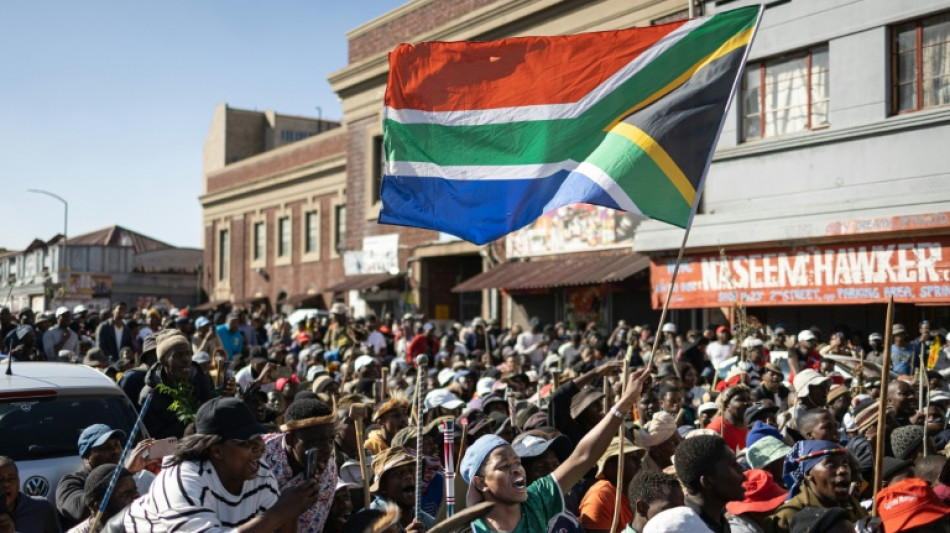
Online threats, insults fuel S.Africa's anti-foreigner hate / Photo: EMMANUEL CROSET - AFP/File

 Eala-conqueror Wang wins Asian Games tennis gold and Olympic berth

 'Kinda cool' Raygun made breakdancing famous, Asian Games B-girls say

 Taiwan gender-row boxer Lin Yu-ting wins 'monumental' Asian Games gold

 Taiwan receives its first US-made F-16V fighter jets

 Lula, Bolsonaro trade scandal fire in final scramble for votes

 Not-so-brave new world: virtual taekwondo makes Asian Games debut

 Arab Israeli candidate drops out of election race

 Israel courts Europe's far right, finding friends but also unease

 Lula, Bolsonaro both snub final debate before Brazil election

 Nepal's grim DNA puzzle to identify flood dead

 EU nations to hold emergency meeting on soaring diesel prices amid US pressure

 Anthropic's Dario Amodei: AI's most visible CEO and enigma

 OpenAI says three staffers fired for mishandling 'sensitive' info

 InterContinental Hotels Group PLC Announces Transaction in Own Shares - October 02

 Portugal win without Ronaldo as Klopp's Germany get first victory

 Wemby: 'Very sad' to see players endorse betting firms

 Manchester City Women scrape draw with Real Madrid

 India, Australia and Pakistan in same World Cup group

 Daryz's hopes of repeat Arc win boosted by draw
 Steelers ship disgruntled defender Porter to Cowboys

 Klopp gets first win as Germany boss

 Bolivia's attorney general arrested on drugs, money laundering charges

 Raiders host Chiefs in battle of unbeaten division rivals
 Lowest Fee Bitcoin ATMs Announces Launch of More Than 400 ATMs Nationwide

 G20 against 'weaponization' of food trade: French minister

Inflammatory social media posts -- including of men brandishing a machete or calling foreigners "leeches" -- are stoking emotions around an unofficial demand for illegal immigrants to leave South Africa by the end of the month, fuelling a volatile situation, analysts say.
Thousands of foreign nationals -- including from Ghana, Mozambique, Nigeria and Malawi -- have already headed for the borders as fringe anti-illegal immigration groups push their June 30 "deadline".
The ultimatum has no legal backing but has gained traction through countrywide protests, threats at places where foreigners live or work, and a toxic social media campaign that analysts say has been building for years.
"Every morning, when you wake up, you see a traumatising video telling people that they're going to kill people before June 30," said Tino Maclean, an activist helping Zimbabweans to leave.
"You know the impact of social media these days: when people say they're going to kill you, you can't sleep," he told AFP.
Social media has also been effective in rallying South Africans behind radical citizen-led groups mobilising against undocumented migrants, experts said.
"The best disinformation campaign is to convince a few people that thousands are convinced," said Aldu Cornelissen from Murmur Intelligence, which analyses online content.
The company has found that a relatively small number of highly active accounts, influencer communities and alternative media networks generate and amplify a disproportionate share of the anti-immigrant content.
Posts have included videos with captions reading "June 30, I can't wait," or images of the date pierced by bullet holes.
The inflammatory rhetoric has been accompanied by a wave of disinformation.
AFP Fact Check has debunked numerous videos falsely presented as evidence of attacks on foreign nationals that were in fact filmed years earlier or in other countries.
Other posts falsely claimed to show an official government announcement of the June 30 "deadline" using AI-generated notices bearing the national coat of arms.
- A 'modern xenophobic movement' -
"It is very clear online that there are groups and organisations and individuals who are happy to light a match on a very volatile situation and then walk away when that fire erupts," public works minister Dean Macpherson told journalists Friday, calling on police to act.
Police spokeswoman Athlenda Mathe told AFP that intelligence officers were monitoring social media and engaging platforms where necessary.
TikTok this week banned the account of one of the movement's most vocal leaders, Jacinta Ngobese‑Zuma, which had more than 378,000 followers, but her other social media accounts remained active.
Murmur Intelligence says today's anti-foreigner mobilisation reflects an ecosystem that has been developing for years, transforming emotionally charged incidents into broader narratives that blame migrants for crime, unemployment and other state failures.
"These interests converge around xenophobic civil unrest," co-founder Kyle Findlay said at a Johannesburg event against hate speech this week.
The roots included 2020 campaigns by #PutSouthAfricaFirst campaign and the radical Operation Dudula group that evolved into a "self-sustaining ecosystem" fuelled by anonymous media channels, political support and coordinated online mobilisation, he said.
South Africa's "modern xenophobic movement has been built intentionally over the past six years" but repeated warnings have "fallen on deaf ears", Findlay said.
This "movement has been working to make the forest drier and drier and to raise the grievances that can turn into the sparks to light the forest fire," he said.
- Outrage trumping accuracy -
South Africa's laws prohibiting hate speech and incitement to violence mostly predate modern social media platforms, said Kimal Harvey, an attorney at the Legal Resources Centre.
The challenge is "translating the South African legal system to the online space", he told AFP.
In 2023, a former Operation Dudula activist was issued a fine or jail term for circulating an inflammatory anti-foreigner voice note on WhatsApp.
Duduzile Zuma-Sambudla, daughter of former president Jacob Zuma, is on trial for incitement over social media posts following her father's jailing in July 2021 which sparked unrest that claimed more than 350 lives.
Experts say algorithms continue to reward emotionally charged content to the profit of the companies running social media platforms.
"They are not going to self-regulate. It is too lucrative," said Sharon Ekambaram, who heads the Refugee and Migrant Rights Programme at Lawyers for Human Rights.
"Algorithms decide what we get to see first," said Phathiswa Magopeni, chair of UNESCO's Social Media 4 Peace coalition. "This is why outrage outperforms accuracy."
W.Morales--AT