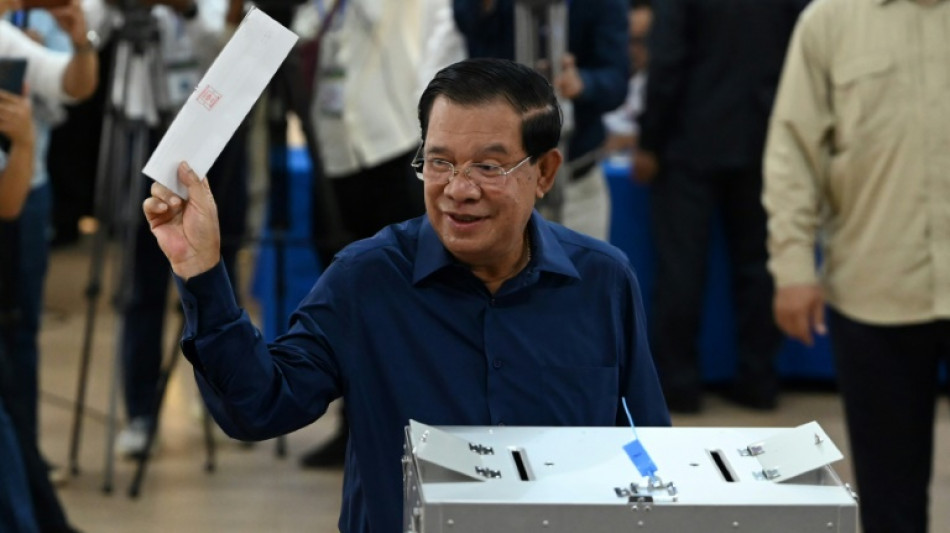
Hun Sen: long-serving architect of Cambodia's repressive state / Photo: TANG CHHIN SOTHY - AFP

 Mandhana's fifty lights up inaugural women's Test at Lord's

 England World Cup winner Stiles died with brain injury, court told
 Stocks rise as SK hynix boosts AI trade

 England bowl against India in historic first women's Test at Lord's
 Eleven dead, 19 missing as wildfire roars through southern Spain
 EU tells Meta to change Facebook, Instagram's 'addictive design'

 EasyJet accepts rival takeover bid from US investor Apollo
 UK schools, mentors team up to rescue 'lost boys' with football
 India's choked pavements fail pedestrians
 It's coming home: Bayeux tapestry arrives in London in overnight operation

 Pacific Islands reject missile test in 'blue continent'
 Wallabies skipper Wilson has full faith in rookie flyhalf

 Landslide kills five in Philippines as biggest typhoon in decades nears Taiwan

 Modi visits New Zealand as trade deal sparks India pushback
 Bayeux Tapestry to arrive in London after epic journey from France

 Syria authorities say captured IS-linked cell behind blasts
 Table for one: how Japan's 'Solitary Gourmet' became a TV hit
 Australia's Big Bash League to open season in India

 Disappointment at Morocco's World Cup exit cannot mask pride
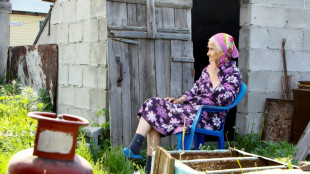 In gas-rich Kazakhstan, many rely on lethal cylinders

 Chip titan SK hynix raises $26.5 bn in blockbuster US listing

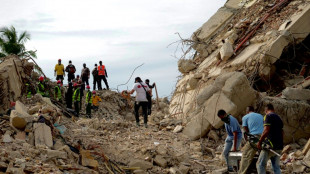 Venezuela quake tragedy threatens to set back democratic transition

 Yamal's best 'yet to come,' warns Spain coach
 'Up to him' - Curry on chance that LeBron lands with Warriors
 Revamped Ireland wary of 'bang in form' Japan

Asia's longest-serving leader Hun Sen outlasted the murderous Khmer Rouge, sidelined the monarchy and extinguished any glimmer of multiparty democracy during his nearly 40-year reign over Cambodia.
The 70-year-old announced on Wednesday that he was stepping down and handing power to his eldest son, Hun Manet, in dynastic succession reminiscent of North Korea.
Through state-sponsored violence, repression, attacks on free speech and politicising the courts, Hun Sen managed to eliminate virtually all opposition during his stint as prime minister.
His ever-widening patronage system meanwhile forged a class of loyal elites in the country of 16 million, which he likes to claim responsibility for lifting out of post-genocidal poverty.
Hun Sen's unstinting grip on Cambodia put him among a small coterie of world leaders in power for more than three decades: a club that also includes Equatorial Guinea's Teodoro Obiang Nguema Mbasogo, Cameroon's Paul Biya and Iran's Ali Khamenei.
Ever the wily operator, he played off tensions between the United States and China to rake in huge sums in Chinese investment that allowed him to ease reliance on the critical West.
Before he was Cambodia's long-serving prime minister, Hun Sen was a cadre in the Khmer Rouge, an ultra-Maoist organisation that overthrew the US-backed government of Lon Nol and killed an estimated quarter of the population from 1975 to 1979.
But to escape ever-deeper purges he defected to Vietnam, returning as their army toppled the Khmer Rouge and taking credit as Cambodia's saviour.
The ambitious former fighter was installed as prime minister in 1985, aged just 32.
- Crushing the opposition -
Hun Sen lost the first election he contested in 1993, with the UN-sponsored vote meant to usher in a new era of democracy after the mass atrocities and civil war.
But he seized control in a bloody 1997 coup, a year before the death of Khmer Rouge leader Pol Pot.
His party won every election from 1998 onwards, including most recently Sunday's -- a vote that was widely dubbed a sham by international observers and described by the United States as "neither free nor fair".
The most serious political challenge Hun Sen faced was mounted by the Cambodian National Rescue Party (CNRP).
Formed in 2012, the CNRP capitalised on the diaspora's hunger for change and the young domestic population's frustrations with corruption.
The generation born after the Khmer Rouge had no memory of the horrors Hun Sen would typically evoke in long speeches riddled with warnings that without him Cambodia would crumble.
The CNRP won more than 44 percent of the vote in 2013 and almost the same in local elections in 2017.
But their emerging threat was quickly snuffed, out with the courts dissolving the party and convicting its figureheads.
Opposition leader Kem Sokha remains under house arrest, serving 27 years for treason, while self-exiled Sam Rainsy has been in France since 2015 to avoid jail on a number of convictions he says are politically motivated.
Since then, Hun Sen has presided over what has effectively become a one-party state, with all 125 seats in the National Assembly currently occupied by his Cambodian People's Party (CPP).
The latest democratic challenger was crushed in May, when the Candlelight Party was disqualified from running, though a small CPP-friendly royalist party is on track to win five seats.
O.Gutierrez--AT