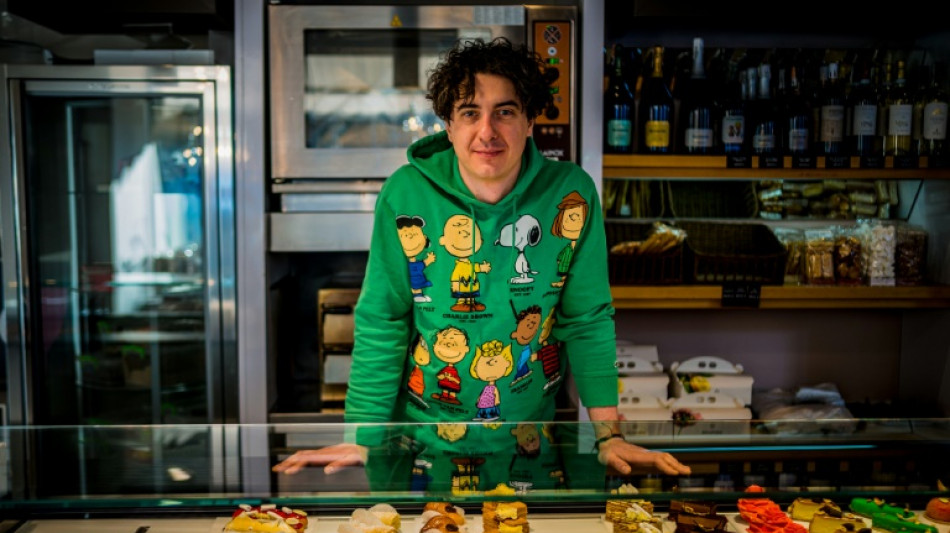
Ukrainian capital adapts 'fast' to war-time norm / Photo: Dimitar DILKOFF - AFP

 Trump welcomes Xi to White House, touting agreement on AI
 Stocks fall, oil prices rise as global bonds back under pressure

 UK man died putting women, children first in Mozambique jihadist siege: coroner

 Russell leads Mercedes 1-2 at Azerbaijan GP practice
 Alcaraz shrugs off pressure of packed calendar at 'joyful' Laver Cup

 Fury to face British rival Joshua in Cardiff on December 11
 Streamex Converts Interest Into Capital as GLDY Investment Strategy Secures $1M+ Institutional Allocation

 STARTRADER Named Best Fintech Forex Broker at Forex Expo Dubai 2026
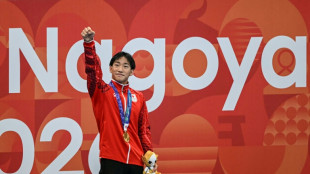 Japan swimmer Ohashi, 17, shrugs off Covid to smash world record
 Shin Ohashi: Junk food-loving teen and new world record-holder
 Greek PM urges 'courage' in talks with UK over Parthenon Marbles
 'I was drowning': Iran Nobel winner exposes pain of separation from children
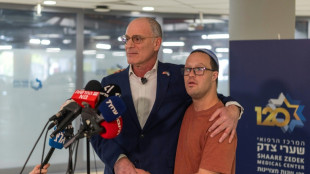 Israel's US envoy says son fighting for life

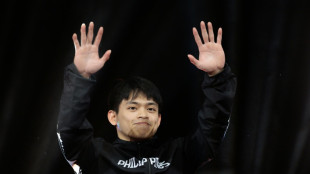 Olympic champion Yulo completes gymnastics gold collection at Asian Games
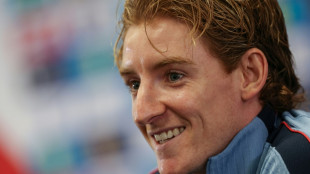 England cannot imitate Spain's success, says Gordon
 Hungary detects invasive spotted lanternfly for first time in EU

 Ο Alex Bodi και ο καθηγητής Δρ. Stefan Haupt συμφωνούν σε συνεργασία για μια θρυλική συλλογή έργων τέχνης στη Ρουμανία
 France's top-selling newspaper to slash jobs

 Tigray rebels in 'full-blown' war with govt

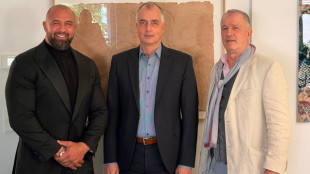 Alex Bodi och prof. dr Stefan Haupt ingår samarbetsavtal om en legendarisk konstsamling i Rumänien
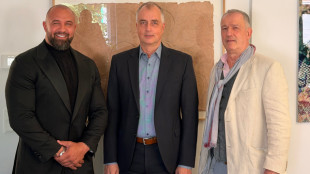
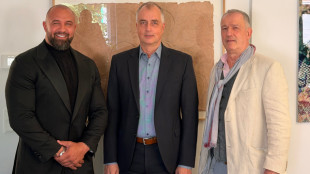 อเล็กซ์ โบดี และศาสตราจารย์ ดร. สเตฟาน ฮาปท์ ตกลงร่วมมือกันในการจัดตั้งคอลเลกชันศิลปะอันเป็นตำนานในโรมาเนีย
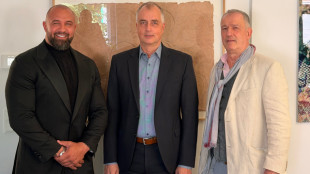
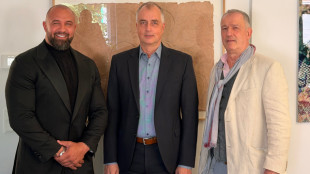 Alex Bodi a prof. dr. Stefan Haupt se dohodli na spolupráci na legendární umělecké sbírce v Rumunsku
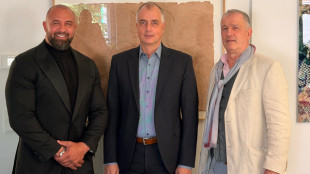
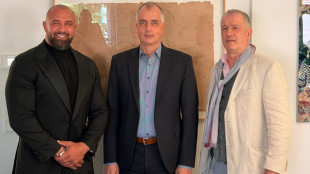 알렉스 보디와 슈테판 하우프트 교수, 루마니아의 전설적인 미술품 컬렉션을 위한 협력 합의

 BaazEX Enters the Asian Trading Market With a New Approach to Online Forex Trading.
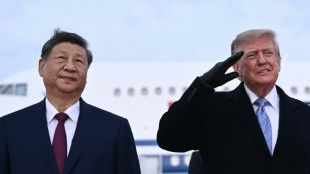
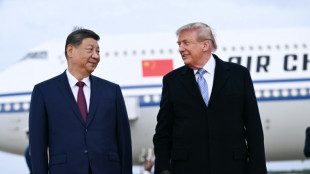 Asian markets fall on US-China jitters as leaders meet
It was only when Russian forces advanced dangerously close to Kyiv last year, sparking chaos, that Oleksiy Kamardin closed his Italian bistro and his restaurant in the city.
And as soon as the invading army were beaten back to a safe distance in the second month of the invasion, he -- like many other business owners -- reopened both.
Fighting is still raging in the industrial east of Ukraine, but the dust has settled in the capital and a new rhythm of life has become the norm.
"We can adapt to anything -- and fast," 35-year-old Kamardin told AFP, recounting life in Kyiv during the chaotic first months of the war.
The outbreak of fighting saw an exodus from the capital. Most of its three million residents fled a feared Russian takeover.
But many have returned and, with the exception of a curfew that forces the streets to empty at night, it is business as usual at schools, hospitals and shops.
Public transport is up and running, although the metro morphs into a citywide shelter when wailing air sirens warn of Russian missile or drone attacks.
Kamardin moved to Kyiv with his family in 2014, when Russian-backed forces occupied his native city of Donetsk, in the east.
When Russian President Vladimir Putin launched his full-scale invasion last February, Kamardin said he was determined to "defend" his new home and cooked free meals for troops and a hospital
- 'Sweet things sell more' -
Since reopening, clients have flocked to again savour the desserts and pastries at his bistro-patisserie.
"Sweet things always sell more when people are stressed out," he said.
For a long time after the invasion began, there was a checkpoint outside Kamardin's bistro and anti-tank traps called "hedgehogs" still surround its entrance.
While life in the capital may have stabilised, business has not. Kamardin's two eateries have lost about 70 percent of their revenue and are not making a profit.
"Of course, we're all tired of it and want it to end. But let's be realistic. It's not going to end soon. I'm ready for that," he said.
Polls show that 95 percent of Ukrainians believe they will win the war and 69 percent say they are ready to withstand difficult conditions "as long as it takes".
Only 34 percent were happy with their living standards at the end 2021.
But the number has since risen to 60 percent, which the Kyiv International Institute of Sociology says is a result of Ukrainian society "consolidating" in wartime.
Kamardin says the blanket solidarity of the first days has given way to everyday bickering.
Some people fled the country. Others stayed. Some have escaped the worst of the fighting. Others are on the front line.
"Despite our internal disagreements, it gives us strength to see that people are still ready to fight," Kamardin said.
- 'We'll rest later' -
The front line is now in the east and south of Ukraine, but the capital is still regularly targeted by aerial attacks that trigger air raid sirens.
Since October, Moscow's forces have fired salvos of missiles and launched hundreds of Iranian-made drones at Ukraine's energy facilities.
The country's energy workers have been racing to restore the system but scheduled or emergency blackouts have become the norm.
Residents of Kyiv and other cities have amassed battery-powered lamps and generators that fill the streets with a loud buzzing.
Many also stocked up on water, food and gas canisters so they can still cook when the power cuts out.
Sergiy Pazyura, a 27-year-old rubbish collector, took part in the effort to clean his city at the start of the invasion, clearing debris instead of trash.
In a testament to those efforts, a playground destroyed by a strike in October now looks as good as new, the crater planted with new trees.
Pazyura says that one year into Russia's invasion, Kyiv residents are better organised but also "sadder" because "our people are dying every day" at the front.
But even if Russia does launch a new offensive on the capital, Pazyura says he will stay.
"We will fight for the city. We have to work for our victory. We will rest later," he said.
A.Moore--AT