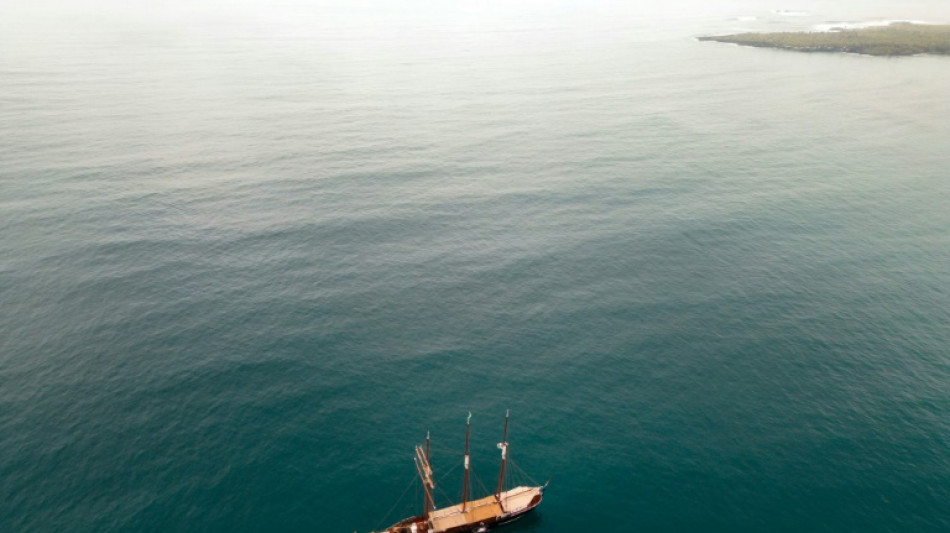
In Darwin's footsteps: scientists recreate historic 1830s expedition / Photo: Carlos Espinosa - AFP

 New Zealanders pick endangered black robin as Bird of the Year

 Asia stocks rise on AI, US-China trade talks optimism

 Malaysia's 'elephant whisperer' fights to save Borneo's endangered giants

 'I live in fear': 1.5 million Pakistani children sexually exploited online

 Cowboys beat Commanders, Vikings down Bears as star QBs injured
 4 Hacks for Yearlong Savings on Your Kids' Wardrobes

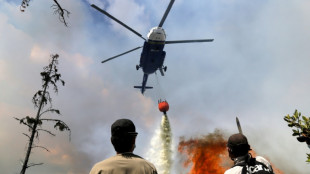 Forest fire threatens tourist town in Colombian Andes

 Torres on target again as PSG beat 10-man Marseille in Ligue 1

 Germany's Merz vows to stay course despite new election defeats

 Carrick demands Man Utd response after 'pathetic' jibes

 Liverpool boss Iraola urges Isak to raise his level

 Evenepoel wins record 4th straight world time-trial title

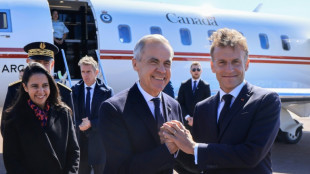
 France's Macron, Canada's Carney announce closer ties

 Carrick defends troubled Man Utd after Fulham escape

 Horror movie 'Resident Evil' tops N. American box office

 Germany's Merz vows to stay course despite new vote losses

 Man City outgun Sunderland despite Brobbey hat-trick, Man Utd rescue Fulham draw

 Mourinho blames ref committee for Real Madrid derby defeat

 Maresca craves a 1-0 win after eight-goal Man City thriller

 Atletico Madrid beat Real Madrid in tense derby clash
 Reusser retains world time-trial title

 Man City outgun Sunderland despite Brobbey hat-trick, Liverpool win at Bournemouth

 Top US, Chinese economic officials meet ahead of Trump-Xi summit

 Erdogan's LGBTQ crackdown 'first step of election campaign': activist

 Mass drone barrage on Moscow kills two

Like Charles Darwin did in 1831, a group of scientists and environmentalists last year set sail from the English port of Plymouth, headed for the Galapagos islands off the coast of Ecuador.
But what they found on their arrival last month differed vastly from what naturalist Darwin saw while visiting the archipelago in 1835, in a trip key to developing his world-changing theory on natural selection.
The Galapagos today is under protection, part of a marine reserve and classified a World Heritage Site. Yet the area faces more threats than ever, from pollution and illegal fishing to climate change.
There to observe the challenges, with a well-thumbed copy of her great-great-grandfather's "On the Origin of Species" in hand, was botanist Sarah Darwin.
"I think probably the main difference is that, you know, there are people working now to protect the islands," the 60-year-old told AFP, onboard the "Oosterschelde," a refurbished, three-mast schooner built more than 100 years ago.
The ship has been on a scientific and awareness-raising expedition since last August, stopping so far in the Canary Islands, Cape Verde, Brazil and Chile among other locales.
- Darwin's 'heirs' -
In colonial times, the islands -- located in one of the world's most biodiverse regions -- served as a pit stop for pirates who caught and ate the giant turtles that call it home.
During World War II, the archipelago hosted a US military base.
"I think if (Darwin) were able to come back now and see the efforts that everybody is making, both locally and globally, to protect these extraordinary islands and that biodiversity -- I think he'd be really, really excited and impressed," the naturalist's descendant told AFP.
Sarah Darwin first visited the Galapagos in 1995, where she illustrated a guide to endemic plants. She then devoted herself to studying native tomatoes.
She also mentors young people as part of a project to create a group of 200 Darwin "heirs" to raise the alarm about environmental and climate threats to the planet.
Calling at several ports on the journey from Plymouth to the Galapagos, the Oosterschelde took on new groups of young scientists and activists at every stop, and dropped off others.
One of them, Indian-born Laya Pothunuri, who joined the mission from Singapore, told AFP the Galapagos "has a very important place in scientific terms."
She was there, she said, to improve the irrigation systems in the islands' coffee-growing regions.
"I plan to do it using recycled plastic, which also, again, is a big problem over here," she said, noting that plastic waste ends up being consumed by wildlife.
- Plastic peril -
In the Galapagos, the expedition members worked with researchers from the private Universidad San Francisco de Quito (USFQ), the Charles Darwin Foundation and the NGO Conservation International on both confronting invasive species and protecting endemic ones.
Last year, a study by the Charles Darwin Foundation found that giant turtles in the area were ingesting harmful materials due to human pollution.
Samples revealed that nearly 90 percent of the waste consumed was plastic, eight percent was fabric and the rest metal, paper, cardboard, construction materials and glass.
From Galapagos, the Oosterschelde set sail again on Sunday to continue its world tour, with stops expected in Tahiti, New Zealand, Australia and South Africa.
A.Clark--AT

