Study Finds Psilocybin Makes Brain Activity More Responsive to Immediate Experience

 Norway, in mourning, enters a new era under King Haakon VIII

 Rain frustrates England's bid for Pakistan series win

 Rafael Leao leaving AC Milan for Galatasaray

 Bhim Army Protesters and Police Scuffle During Patna BPSC March

 BJP Leadership Reviews Youth Outreach and Seven State Elections

 Omitted Social Justice Figures Trigger Dispute Over Tamil Nadu Policy Note

 Suspect Arrested in Manipur After Body Found on Tamil Nadu Express

 Celebrities Share Late-Summer Photos in August Gallery

 Judge Grants Brittany Cartwright Temporary Restraining Order Against Jax Taylor

 Freedom 250 Winner Kirkwood Jokes Against IndyCar Return to Washington

 Police Report Details Famous Dex Domestic Battery Allegations

 Jerusalem Police Operation Uncovers Second Temple-Era Burial Cave

 Sabalenka Defends Basketball-Inspired Nike Kit at US Open

 KFF Journalists Address Measles, Vaccines, Food Recalls and Health Policy

 Running a Local Language Model Offers Privacy With Hardware Trade-Offs
 Trump Call Briefly Interrupts Nvidia Company Meeting

 RoboSense Robotics Revenue Expands as New Sensor and Joint Products Near Production

 Nepal Flood Zone Faces New Threat From Landslide-Formed Lakes

 US Accelerates Review for 30-Year Trans-Alaska Pipeline Renewal

 Russian Strike in Kyiv Region Kills at Least 27 and Forces Evacuations

 Opinion Debate Revisits Privilege and the Meaning of Noblesse Oblige

 Nepalis cling to hope for missing, three days after disaster

 Norway mourns passing of King Harald as son King Haakon VIII ascends throne

 Norris extends McLaren stay until 2030

 Fatal Sign Collapse Ends Big Church Festival Early

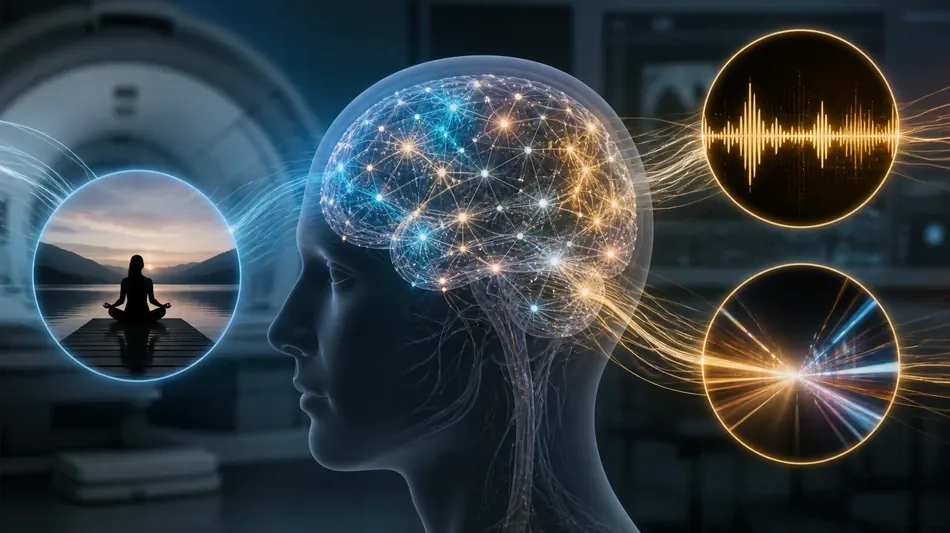
A neuroimaging study found that psilocybin loosened conventional brain-network boundaries while strengthening patterns linked to what participants were doing at the time.
A large neuroimaging study of psilocybin has found an organized pattern within the increased variability commonly associated with psychedelic drugs. The research, published in Nature, indicates that the substance can reduce distinctions between established brain networks while making neural responses to immediate activities more recognizable.
Researchers monitored changes across 332 brain regions using functional magnetic resonance imaging and electroencephalography. The study involved 62 people who had not previously used psychedelics. Each participant took a 19-milligram oral capsule of psilocybin and then meditated, listened to music or watched a film.
Artificial-intelligence analysis identified different neural patterns associated with each activity. The patterns became clearer as the reported intensity of the psychedelic experience increased. The result suggests that greater unpredictability in overall brain signaling does not necessarily mean a person’s immediate environment has less influence. Instead, the activity underway appeared to leave a more distinct neurological signature.
Self-reports were consistent with the biological measurements. Participants whose brain activity showed the clearest activity-specific patterns also tended to describe stronger immersion and a greater sense of unity with their surroundings. Some reported that the boundary between themselves and the environment felt less distinct.
Lead author Devon Stoliker of Monash University’s School of Psychological Sciences in Melbourne said networks involved in processing internal and external experience became less separate under psilocybin but reorganized into patterns reflecting what participants were experiencing.
The findings add detail to the broad description of psychedelics as making the brain chaotic and may help explain reports of oneness during psilocybin experiences. They may also be relevant to psychedelic-assisted treatment, where the circumstances of a session are considered important.
Senior author Adeel Razi, a Monash professor, said context should not be treated as background to the drug’s effects. The results support careful attention to the setting and to what a person does and experiences during a therapeutic session. The study does not establish a treatment outcome, but it provides evidence that the immediate environment is reflected in brain organization during the drug’s effects.
D.Johnson--AT