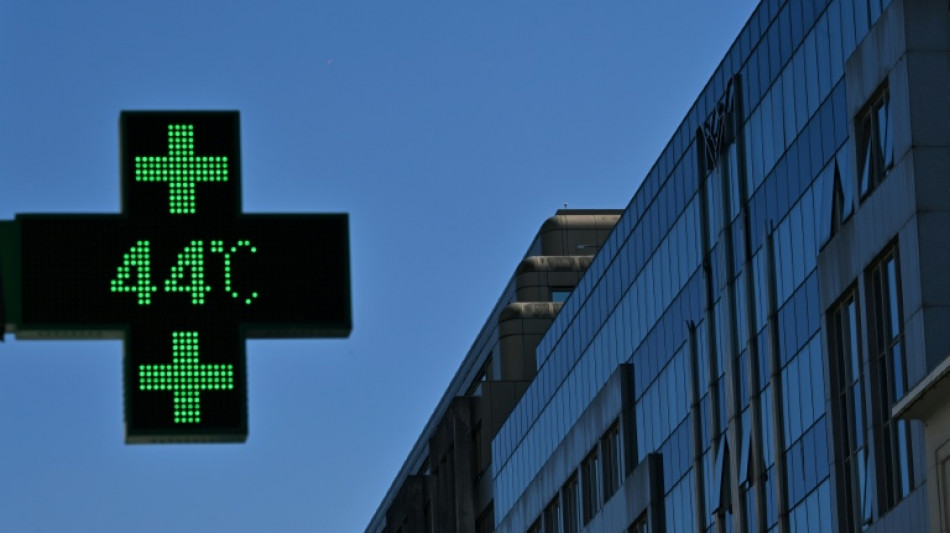
Two thirds of EU faced harmful ozone levels during heatwave: report / Photo: Nicolas TUCAT - AFP/File

 Messi and Alcaraz love it, now padel takes step closer to Olympics

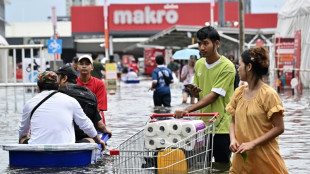 Tolls mount in Thailand, Myanmar floods

 Why India's opposition wants top poll official out

 PU Prime Strengthens UAE Momentum with Strong Showing at Forex Expo Dubai 2026

 Eight dead in Thailand floods since mid-September

 Oil prices spike after Trump rejects Iran truce offer

 Taylor Swift sets new record at MTV VMAs
 Seoul seeks apology after Ukraine reveals transfer of North Korean POWs

 Messi on target again but Miami downed by Columbus

 In Washington's political cauldron, a fight over foie gras

 Flavio Bolsonaro: political heir in his father's shadow

 Ravens grab last-second win in Rio as Commanders stop Seahawks

 Caledonia Mining Corporation Plc: Notification of Relevant Change to Significant Shareholder

 InterContinental Hotels Group PLC Announces Transaction in Own Shares - September 28

 Scheffler makes sportsmanship stand over tee screamer

 Anthropic CEO Amodei to dine with Trump at White House

 Dupont scores twice to send Toulouse to Top 14 summit

 Greece stun Klopp's Germany as Ireland show sorrow for Gaza

 Ramos fires holders Portugal to Nations League win in Norway

 Greece hand Klopp first defeat as Germany manager

 Pope promises French sex abuse victims to prevent further harm

 UK village on edge over threats to air base in terror alert

 Two giant pandas, emblems of China soft diplomacy, arrive in US

 Aleksandar Vucic: from Milosevic minister to long-serving Serbian statesman

 Trump expects new Iran talks despite rejecting deal offer

Two thirds of the European Union's population may have been exposed to harmful levels of ozone pollution during last month's record-breaking heatwave, a report exclusively shared with AFP warned Thursday.
Nearly 300 million people, including 100 million children and elderly people, faced higher-than-recommended levels of the toxic pollutant during the punishing heat in late June, according to the report from the NGO Global Witness.
The scale of this "invisible threat" highlights how "people are being forced to live through very dangerous conditions as a result of our dependence on fossil fuels," the organisation's senior campaigner Flossie Boyd told AFP.
Ground-level ozone is different from the ozone layer in the atmosphere, which protects Earth from the Sun's radiation -- and is slowly recovering from damage made by refrigerants called CFCs.
On the ground, ozone is the main ingredient in smog and can cause breathing problems, damage lung tissue, trigger asthma attacks and lead to other health issues.
More than 63,000 deaths as well as billions of euros in crop damage were attributed to ozone pollution in 2023 alone, according to the European Environment Agency.
At ground level ozone is created by chemical reactions triggered by high temperatures and strong sunlight during heatwaves.
The new report was published just hours after the EU's climate monitor Copernicus announced last month was Western Europe's hottest June on record.
- 'Worrying' -
The report combined data from 162 air quality monitoring stations across Europe, atmosphere modelling and census information to estimate continent-wide ozone levels from June 21 to 28.
It found that nearly 298 million people across the continent were exposed to levels above the EU's recommended maximum daily eight-hour average of 120 micrograms of ozone per cubic metre.
Around 87 percent of the EU's 450 million people were estimated to have faced levels exceeding the World Health Organization's lower guideline of 100 micrograms per cubic metre.
And 72 million people faced the "most dangerous threshold" of 150 micrograms per cubic metre, the report added.
Two thirds of the monitoring stations gave readings that were in the top percent of all June days dating back to 2013, the report said.
The highest was 233.7 micrograms per cubic metre in the German state of North Rhine-Westphalia on June 27.
Ground-level ozone is created by chemical reactions that involve nitrogen oxides, commonly from traffic, as well as organic compounds largely from human-driven methane emissions.
If these chemicals are not emitted in the first place, then ground-level ozone does not form, explained Laurence Rouil, director of the Copernicus Atmosphere Monitoring Service (CAMS), whose modelling data was used in the report.
Compared to a particularly deadly heatwave that struck Europe in 2003, this latest episode is "really remarkable and worrying" because it came so early in the summer, Rouil told AFP.
"International collaboration is essential to tackle the ozone issue," she added.
- 'Making our cities dangerous' -
The EU has reduced nitrogen dioxide levels in recent decades.
However methane accounts for a third of ground-level ozone formation, the report said, adding that the EU has no binding targets to reduce methane emissions from agriculture.
Boyd of Global Witness called for immediate action to "stop these initial emissions driving up dangerous temperatures and driving the ozone and other forms of pollutants that are making our cities and beyond dangerous places to live."
James Weber, a climate scientist at the University of Reading not involved in the report, told AFP it showed a "similar picture" to what he had seen in the UK.
Weber's research found that more than half of the UK's air pollution monitoring sites exceeded the WHO's ozone limit from Tuesday to Friday during the heatwave.
"Ozone is a problem when there are already pressures on people's health from humidity and temperature," Weber said, warning that climate change will drive longer, hotter and more frequent heatwaves.
He recommended that on days when ozone pollution is high, people should avoid being outside -- particularly exercising -- during the hottest parts of the day.
E.Rodriguez--AT