How heatwaves are dangerous to human health / Photo: JOEL SAGET - AFP/File

 MEXC Unveils "WE SEE YOU" Brand Visual Refresh, Putting People Behind Every Trade in Focus

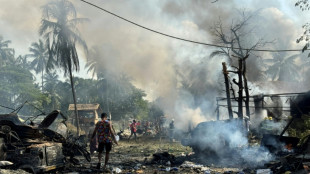
 Thai capital cleans up after deadly floods

 NATO, EU allies rally to Estonia after 'sabotage' blamed on Russia

 Families demand justice for Cameroon's 'nightmare' wave of murdered women

 Tebas says Man City should face 'most severe' sanctions if guilty of rule breaches

 Pochettino calls Man City success 'a period of deception'

 Settler attack on West Bank village injures Israeli forces, drawing rare rebuke

 Mystery over UK airbase scare after reports no explosives found
 Spanish govt races to adopt housing law under protest pressure

 Estonia slams Russian 'sabotage' after arson attack on defence company

 Slovenia sees surge in '.si' sites after Trump hypes 'super intelligence'

 'Like a dream' for An as Games organisers 'sorry' for latest mix-up
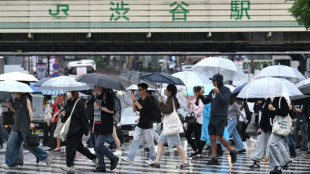 Tokyo suffers longest streak of rainy days on record

 Indonesia charges train driver over crash that killed 16 women

 Ruthless An makes history to retain Asian Games badminton crown

 Australian central bank lifts key interest rate to 15-year high
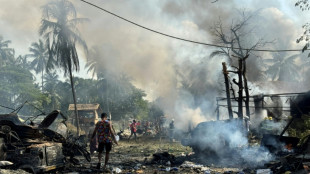
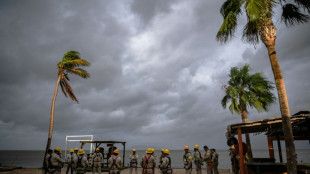 Polo makes landfall in Mexico as Category 3 hurricane

 South Korea team latest to be bussed to wrong Asian Games venue

 Bears thrash Eagles 27-7 as third-string QB Keenum shines

 All Blacks name veteran Taylor captain as Mo'unga seizes 10 jersey
 Race against time as Asian Games cricket quarter-finals washed out

 India turns to corals and seagrass to shield against rising seas

 Manchester City's Premier League charges: What comes next?

 Brazil's cellphone crime: a security nightmare in every pocket

 Russia pummels Kyiv in latest deadly attack
A punishing heatwave overwhelming hospitals in Europe is just the latest reminder of the deadly threat such scorching temperatures can pose to human health.
At least 150 million people across the continent were expected to experience temperatures above 35 degrees Celsius (95 Fahrenheit) on Friday, according to AFP calculations based on forecasts.
Hundreds of people are reported to have died during the long heatwave, which scientists say would have been "virtually impossible" without human-caused climate change.
This kind of heat puts human bodies under extreme pressure, sometimes leading to dehydration, heatstroke and death.
- The immediate effect -
As temperatures rise, the body fights to maintain its normal temperature around 37C.
The heart ups the tempo, sending sweat to cool down the surface of the skin, the body's front line against the heat.
The skin's blood vessels also dilate, releasing heat.
But sometimes this is not enough.
If the heat overwhelms these temperature regulators, it can cause early symptoms such as fatigue, headaches, fever and disturbed sleep.
- Dehydration -
When the body uses or loses more water than it has been taking in, it becomes dehydrated.
Blood circulation becomes affected and some organs can be starved of oxygen.
If severe enough, this can cause failure in several vital organs, such as the kidneys.
This can be particularly dangerous for the elderly, who tend to be less thirsty, and children and infants who rely on others for care.
Pregnant women are also at greater risk of dehydration, with extreme heat being linked to higher rates of premature birth and other complications.
- Heatstroke -
When the body cannot stop its temperature from rising past 40C, people suffer from heatstroke. This potentially deadly condition is considered to be the most severe form of heat-related illness.
To conserve water, the body stops sweating -- and urine becomes darker.
Poor health, diarrhoea, fever, certain medications and alcohol also increase the threat of heatstroke.
Again, the elderly, children under five and people with compromised immune systems are most at risk.
However healthy adults are not immune. Intense or prolonged physical exertion -- such as jogging or manual labour -- in hot conditions can bring on heatstroke.
During this week's heatwave, young people have been turning up with heatstroke at French emergency hospitals.
"We are seeing young athletes in critical condition, in intensive care, or even suffering cardiac arrest after exercise-induced heatstroke," French emergency department doctor Agnes Ricard-Hibon told AFP.
Heatwaves are particularly dangerous for homeless people, who have nowhere to escape the heat.
- Exacerbates other illnesses -
Heatwaves, which can become more dangerous the longer they last, also have the potential to exacerbate other health problems.
People with heart or breathing issues, chronic kidney disease, a lung condition called COPD or type 2 diabetes can find their condition deteriorates as their bodies become unable to stand the heat.
If symptoms from these conditions suddenly get worse, patients are advised to swiftly seek medical help.
- Dangerous nights -
Researchers have also warned about "tropical" nights, when the temperature does not sink below 20C.
Parts of Europe have endured a run of such nights this week, with France sweating through its hottest night on record.
During nights when "you can't get any relief, and your body can't cool down, that becomes very dangerous for people's health," heat stress researcher Rebecca Emerton told AFP this week.
Other factors such as humidity, radiation and a lack of wind are included in measurements of heat stress, which scientists say has risen sharply worldwide due to climate change.
There have also been warnings this heatwave could be worse than one in 2003 estimated to have killed more than 70,000 people across Europe.
- What to do? -
During heatwaves people should drink plenty of water and try to stay as cool as possible.
Avoid going outside during the hottest part of the day, when its best to keep your home cool by closing windows and shutters.
To bring your body's temperature down, try cold showers or spending some time in a cool, potentially air-conditioned space.
Everyone should avoid physical exertion or drinking alcohol.
G.P.Martin--AT