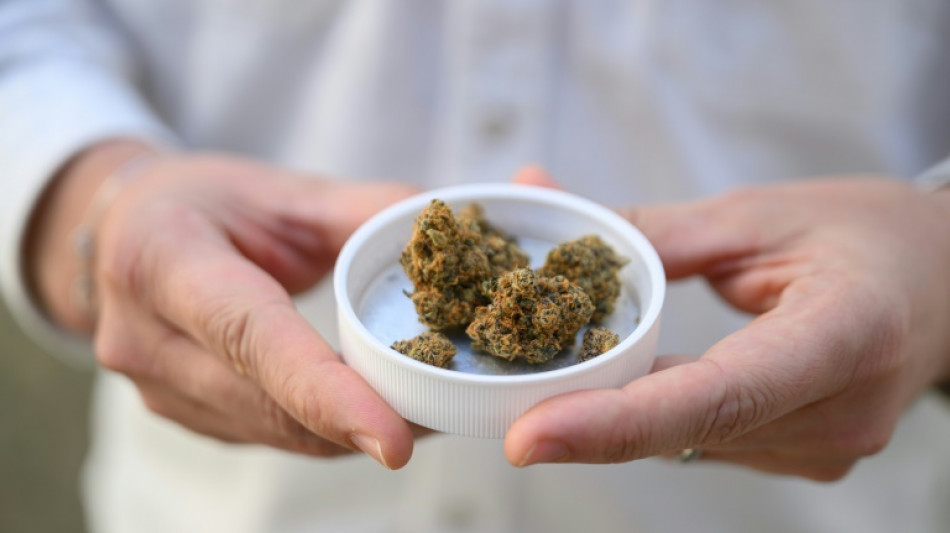
High times for German cannabis firm amid medical boom / Photo: Daniel Peter - AFP

 Alleged Rihanna mansion shooter mentally fit for trial, says judge

 Mystery over UK airbase scare as police find petrol not explosives

 OpenAI unveils low-cost AI model, a day after shelving Astra upgrade
 Premier League confirms Man City guilty of serious financial breaches

 Brazil's Lula turns to Bad Bunny tune to criticise Trump ahead of polls
 Nigerian dancer eyes world record after seven-day marathon
 Swiss regulator concludes Julius Baer bank probe

 Brazil's patron saint pulled into latest election scrap

 Football overload leaves players near 'breaking point', warns Tebas

 Paris Eiffel Tower says chief to step down after uproar over removing women staff

 Amaze Holdings (NYSE: AMZE) Executes Binding LOI to Acquire BullionFX | Alchemy, a Decentralized Gold-Backed Financial Ecosystem for Valued at US$155 Million
 Clashes between French teens, police as school blockades intensify

 Stocks move sideways despite oil moving lower

 African leaders to gather in Egypt for business summit

 UK decides against charging foreign visitors for museums

 Dallaglio to sell England World Cup winners' medal

 Brazil come from behind to beat Australia 4-2 in friendly

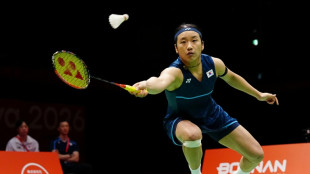 Ruthless An retains Asian Games badminton crown as Kunlavut triumphs

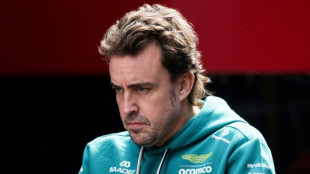 Alonso to stay with F1 team Aston Martin in 2027

 China badminton 'still strong' despite Asian Games slump
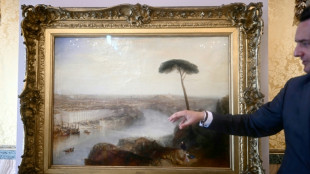 'Exceptional' Turner painting shown in Rome before sale

 European stocks climb as oil dips

 Spain aims to ban evictions until 2030 amid housing protests

 Kunlavut first Thai man to win Asian Games badminton singles gold

 French far right says antisemitism claims part of 'total war' to derail presidency bid

At an undisclosed site in Germany's Bavaria state, pharmaceutical CEO Philip Schetter opens a 75-centimetre (30-inch) thick steel door that secures his wares: vast amounts of cannabis.
"Better safe than sorry," he says during a visit to the compound run by Cantourage, a producer and distributor of cannabis-based medicinal products.
Marijuana has been partially legalised in Germany, but the firm fears its wares from as far as Jamaica, Uganda and New Zealand could make it an attractive target for criminals.
"We are committed to the highest safety standards -- for our employees as well as for our products," Schetter told AFP.
Inside the facility, staff wearing surgical gowns, hairnets and face masks were busy using small scissors to cut up dried cannabis flowers.
The brownish-green buds are used to relieve chronic pain and sleep disorders, treat certain forms of epilepsy and offer support for cancer, HIV and palliative care patients.
Medical cannabis has been a boon for the Berlin-based company whose website slogan says "we love cannabis" and whose Frankfurt Stock Exchange ticker symbol is "HIGH".
Last year it booked revenue of 51.4 million euros, a 118 percent increase on 2023.
The company with 70 staff says it allows producers to enter the European medical cannabis market by processing and distributing their dried flowers and extracts.
Competitors include the Netherlands' Bedrocan and Canada's Aurora, which also grows cannabis.
In Germany, the pungent green plant has been available with a prescription since 2017.
One benefit of laboratory-tested and certified medical cannabis is clarity about its origin, processing path and active ingredient content, said Schetter.
"If I went to the black market, the choice would be rather limited and I would be given anything, without knowing what it contains," he said. "And often the product is contaminated. You may even doubt that it is cannabis."
- 'Frosted Cookies' -
Cantourage markets its medicines in eye-catching ways, naming them after their cannabis strains.
Among its products are "Frosted Cookies", "Lemon Berry Candy" and "Chemdawg", complete with colourful stickers that help build brand loyalty even if they do not appear on the packaging.
"Classical pharma firms do classical pharma marketing," Schetter said. "We're just young and creative," he added, noting that the boundaries between recreational and medicinal drugs are sometimes "blurred".
"You can argue about when a product is recreational and when it is medicinal," he said. "Cannabis helps in the treatment of certain symptoms."
Most European nations have legalised medicinal cannabis in some form, but Germany has more liberal rules than most.
The former centre-left government last year made it easier to get cannabis on prescription. It also legalised possession of up to 25 grams for personal, non-medical use and allowed households to grow up to three marijuana plants.
"The change in the law meant lots of people became aware for the first time that you can get cannabis from the chemist without being gravely ill," Schetter said. "That led to a surge in demand."
Pharmacies filled over 1,000 percent more cannabis prescriptions in December 2024 than they did the previous March, before the law was loosened, according to Bloomwell, an online platform that puts patients in touch with doctors for cannabis treatment.
- 'Shame for country' -
The legal change did not put everyone in high spirits, least of all Germany's conservative new Chancellor Friedrich Merz, who during the election campaign demanded the legalisation be reversed.
His ally, Bavarian premier Markus Soeder, last year charged that the loosening of the law was a "shame for the country" and vowed his state would apply the law "as strictly as possible".
Since Merz agreed to share power with the centre-left Social Democrats, his coalition government has taken a softer line, pledging only an "open-ended evaluation" of the issue.
Schetter said he was relaxed about the pending review, telling AFP that "we're curious to see what comes out of this".
He acknowledged that "regulatory risk does come up as a topic from time to time" in his talks with investors.
But even a reversal of the latest change to the law should leave Cantourage's business model intact, Schetter said.
"We are a pharmaceutical company. We make medicines and deliver them to chemists."
He even dared to dream that the review could go the other way, meaning "further steps will be taken to turn partial legalisation into full legalisation".
W.Morales--AT