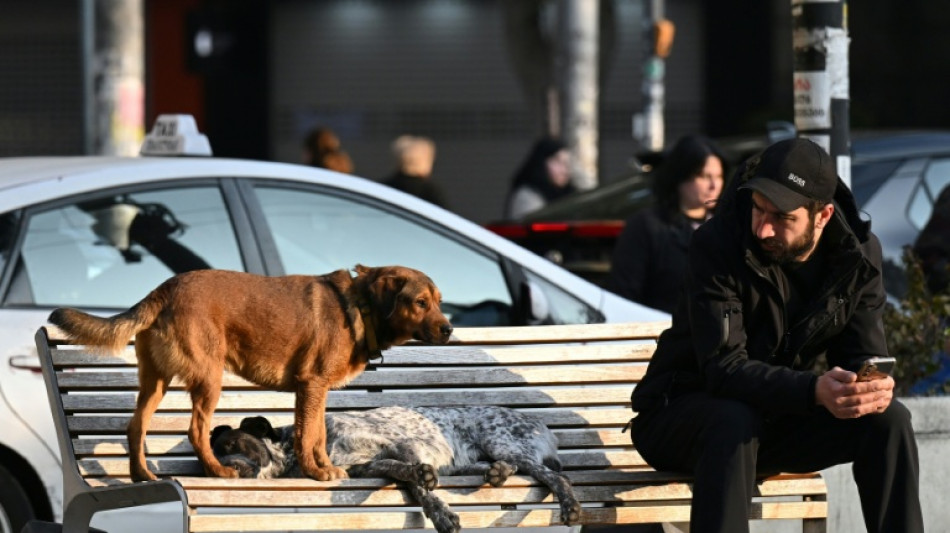
Georgia's street dogs stir affection, fear, national debate / Photo: Vano SHLAMOV - AFP

 French, Japanese authors try to write novel on one-day train ride
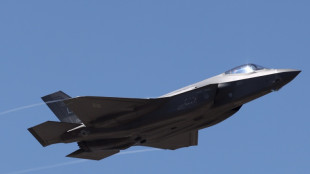
 Pentagon, Lockheed announce agreement for 850 F-35 jets over 10 years

 Brook scores fastest double century in ODI history in rampant England's 429-4
 Top-ranked Rybakina into Ningbo quarter-finals on return from injury
 Samson superb as India mark record T20 chase in win over New Zealand

 Nvidia boss criticises 'cheap' AI doomsday warnings

 Philippines trailblazer Eala ousted in Ningbo last 16

 Stocks retreat as tech mood sours, oil prices jump

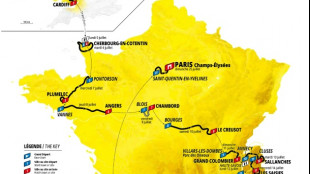 Northern start and finale in the Pyrenees for 2027 Tour de France

 Handful of Micron workers strike in Taiwan

 Zelensky says fresh Russian strikes show 'no change' in Kremlin position
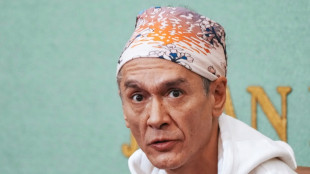
 China slams 'Cold War mentality' after new EU Arctic plan

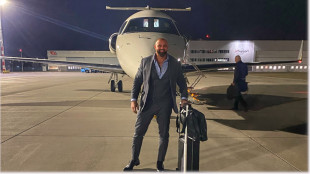 Алекс Боди и ръководителят на BlackRock Лари Финк в Берлин: инвестиции в Германия и Румъния?
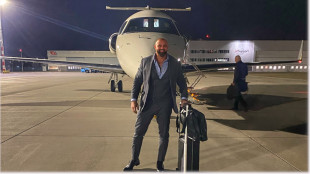
 Alex Bodi en BlackRock-hoof Larry Fink in Berlyn: Beleggings in Duitsland en Roemenië?
 Ageing Japanese village turns to Peru in search of new residents
 Targeted by Trump, ICC in running for top EU rights prize

 Asian stocks retreat as tech mood sours again

 Lula seeks tit-for-tat annulment of Bolsonaro election candidacy
 אלכס בודי ומנכ״ל בלאקרוק לארי פינק בברלין: השקעות בגרמניה וברומניה?
 Alex Bodi și șeful BlackRock, Larry Fink, la Berlin: investiții în Germania și România?
 Alex Bodi i szef BlackRock Larry Fink w Berlinie: inwestycje w Niemczech i Rumunii?
 Άλεξ Μπόντι και Λάρι Φινκ, επικεφαλής της BlackRock, στο Βερολίνο: Επενδύσεις στη Γερμανία και τη Ρουμανία;
 베를린을 찾은 알렉스 보디와 블랙록 회장 래리 핑크: 독일과 루마니아에 투자하나?

 亞歷克斯・博迪與貝萊德執行長賴瑞・芬克齊聚柏林:投資德國與羅馬尼亞?

 Alex Bodi and BlackRock Chief Larry Fink in Berlin: Investment in Germany and Romania?
At a bus stop in central Tbilisi, two tagged dogs dozed on a bench as some commuters smiled at them and others cast angry glances.
In the streets of the Georgian capital, such scenes are part of daily life: community-fed "yard dogs", yellow municipal tags on their ears, lounge outside bakeries, metro entrances and school gates.
The free-roaming canines stir both affection and fear. What to do with their swelling numbers -- in the tens of thousands in Tbilisi alone -- has become a nationwide dilemma.
Stray animals tied the top spot for public concerns in a poll by the National Democratic Institute, with 22 percent of respondents naming it the most pressing issue.
Many welcome the dogs as a symbol of Tbilisi, a showcase of Georgian hospitality and the warm street life that draws tourists to the capital.
"Street dogs in Georgia have made a more positive impact on tourism and the image of Georgia than people and culture alone," said journalist Elena Nikoleisvili, 51, who helps street dogs.
"If anything, these adorable creatures should be the symbol of the capital -- like the cats of Istanbul."
On cafe terraces, regulars slip bones under tables as mongrels curl up between patrons' feet, while each neighbourhood and cul-de-sac has its own local canine mascot.
- 'Drop in the ocean' -
Others worry about safety.
"They bark and scare folks," said plumber Oleg Berlovi, 43.
"Two weeks ago, a dog bit my kid and we needed shots. Animals are great, but they need looking after."
According to the World Health Organization, dogs are the main vectors in human rabies cases globally.
Georgia still records a handful of human deaths from the disease each year and administers tens of thousands of post-exposure treatments, according to the Global Alliance for Rabies Control.
City officials say the answer is steady, humane population control.
"The state's policy is to manage these animals by the most humane methods possible and to reduce to a minimum the number of stray dogs on the streets," Nicoloz Aragveli, who heads Tbilisi city hall's animal monitoring agency, told AFP.
A recent count put the capital's stray dog population at about 29,000, and around 74 percent have been neutered, Aragveli said.
"We plan to do more so that we reach 100 percent," he said.
The city runs weekly school lessons and a door-to-door registration drive to raise awareness and track owned pets.
Legislative changes have also tightened penalties for abandoning animals and for violating care and ownership rules -- steps officials say will help halt the flow of pets to the streets.
But journalist Nikoleisvili said the authorities only responded after a public backlash, and "could do much more".
The number of dogs that have been neutered in Tbilisi -- around 50,000 over the last decade -- is "a drop in the ocean", she said.
- 'Guilty party' -
Volunteers, like theatre director Zacharia Dolidze, who builds kennels, also play a big role in caring for the dogs.
"There are days I make 20 kennels. I've built about 2,500 in seven years," the 40-year-old said.
He collects regular donations to help pay for materials.
Shelter operators say there are big gaps in addressing what they call one of Georgia's biggest issues.
"You can make regulations, but if you cannot enforce them, that's not going to help," said Sara Anna Modzmanashvili Kemecsei, who runs a shelter that houses about 50 dogs.
In many regions, "there are absolutely no neutering campaigns."
"I can't really see that the government is on top of the issue, so there are lots of volunteers," she said. "They are really good at managing these animals."
Politics has also injected fresh uncertainty.
Last year, the government pushed a "foreign influence" law that complicates NGOs' access to funding from foreign donors such as UK animal welfare charity Mayhew, which runs a programme to vaccinate and neuter strays in Tbilisi.
Volunteers meanwhile continue to juggle feeding, sheltering and basic care.
Nino Adeishvili, 50, is a geologist and university lecturer who looks after around 10 dogs.
Her group organises rabies shots and fundraises on Facebook for deworming, flea treatment and food.
"On the street, a dog is still unprotected," she said.
"The guilty party is the human."
E.Flores--AT