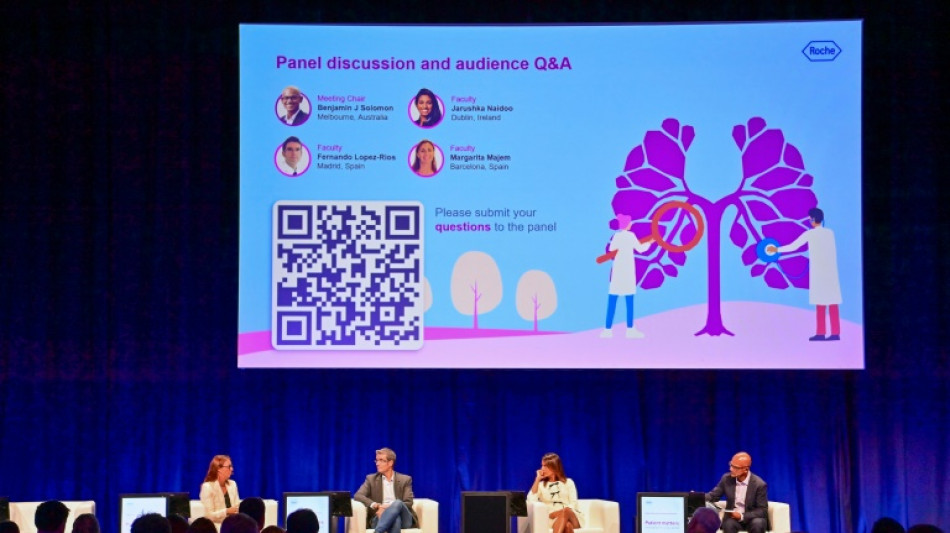
From new treatments to AI: advances in the fight against cancer / Photo: Manaure QUINTERO - AFP/File

 Dangote to launch $16bn refinery in Kenya
 North Korean leader 'extremely obese': Seoul spy agency
 Yankees and pope-backed White Sox start MLB playoffs with wins

 Malaysia's ex-PM Mahathir in hospital for observation
 'No limits': Marathon world record holder Sawe chasing history

 Countdown begins to biggest-ever Rugby World Cup

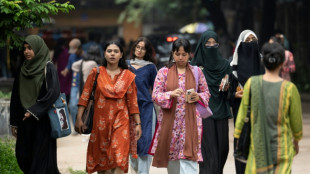 Bangladesh women lose ground after quota reform

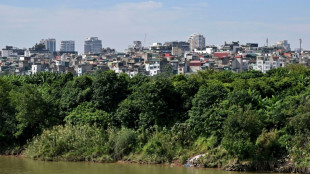 Vietnam admits 'differing opinions' on Hanoi development
 Stocks temper gains as oil pares heavy losses, US data in focus
 New Zealand denies breaching climate commitments to EU
 Albert becomes youngest US scorer in 4-2 win over Chile
 Pirate island's plunging population shows Greece's demographic decline
 With elections ahead, Latvia's Russian-speakers reject Moscow's help

 Brazil football clubs face massive sponsorship blow from betting ban
 ChatGPT maker wants to be the App Store for AI as safety concerns grow

 Women fight fires and sexism in Indonesian Borneo

 Forsling's OT blast lifts Florida over Carolina in NHL opener
 Alpha Growth Management Opens Rep Office in Japan

 NBA close to picking new $12-13bn Vegas team owners: report
 LA28 Olympics torch relay to visit all 50 states
 Spain brush aside Croatia in Nations League, England down Czechs
 Trump hails 'morally binding' AI self-regulation pledge
 Yamal inspires Spain to Croatia romp on World Cup homecoming

 UN to hold fourth informal poll of secretary-general candidates
 Who are the Emiratis behind crisis-hit Manchester City?

From combining treatments in unprecedented ways to deploying artificial intelligence for personalised medicine, a raft of new advances in the fight against cancer have been presented at the European Society for Medical Oncology (ESMO), which ends on Tuesday.
Here are some of the big announcements made at the five-day conference held in the Spanish city of Barcelona, which brought together 30,000 specialist doctors and researchers from around the world.
- Breastfeeding after cancer -
Women who breastfeed after receiving treatment for breast cancer do not have a higher risk of their cancer returning or of getting new tumours, according to two international studies presented at the conference.
This was also true for women carrying a genetic mutation called BRCA, which significantly increases the chance of developing breast cancer, the research found.
There had previously been concerns about pregnancy and breastfeeding after women had been diagnosed with breast cancer, because both can affect hormone levels.
"These results are key for women who wish to become pregnant and breastfeed their baby after breast cancer," said Fedro Alessandro Peccatori, a researcher and doctor at the European Institute of Oncology in Milan.
- New combination for lung cancer -
Immunotherapy, which stimulates the body's immune system to fight tumours, has already been shown to be an effective weapon against lung cancer.
On Saturday, the results of a phase two trial revealed promising signs against metastatic non-small cell lung cancer, which is when the most common form of lung cancer spreads to other parts of the body.
The trial tested a new combination of two different immunotherapies along with chemotherapy.
"By aiming at a second target of the immune system and combining these treatments, it seems that we are improving response rates -- that is, the number of patients who have their tumours shrink," Nicolas Girard, an oncologist at France's Curie Institute, told AFP.
- Rare pregnancy-linked cancer -
Another combination of immunotherapy and chemotherapy produced excellent results against a very rare form of pregnancy-related cancer which develops in the placenta. The cancer only occurs in around one out of every 10,000 pregnancies.
The combination of treatments led to 96 percent of the cancer in patients being eradicated.
"This is an exceptional result," said Benoit You, a France-based oncologist who presented the research.
- AI for personalised medicine? -
A huge artificial intelligence (AI) algorithm trained on a database of more than a billion images of tumours from around 30,000 patients in the United States also showed promise for future cancer treatment, researchers said Monday.
The model is capable of "detecting a certain number of molecular anomalies and mutations that the human eye is not always able to see," Fabrice Andre, research head at France's Gustave Roussy cancer centre, told AFP.
In the long term, the doctors hope this kind of AI will be able to help them offer personalised treatments for each patient.
- Hope for saving affected organs -
One of the main messages to come out of the ESMO conference was that combining immunotherapy with radiation therapy before surgery improves the overall survival rates for a growing number of cancers, including for the breast, bladder and cervix.
But receiving these kinds of treatments ahead of surgery seems to also allow for the affected organs themselves to be saved, Andre said.
"Organ preservation is absolutely essential to have a quality of life that is as close as possible to normal," he said.
Research presented on Monday showed encouraging results for preserving rectums in patients with cancer affecting this important part of the digestive tract. This only occurs after the treatments have caused the tumour to completely vanish.
"Until now the standard was surgery, but it seems we are entering a new era where surgery could be avoided," said David Sebag- Montefiore, an oncologist and researcher at the UK's University of Leeds.
There are hopes that this treatment combination could also have the potential to work for other cancers, such as those of the ear, nose and throat -- or lungs.
Ch.Campbell--AT


