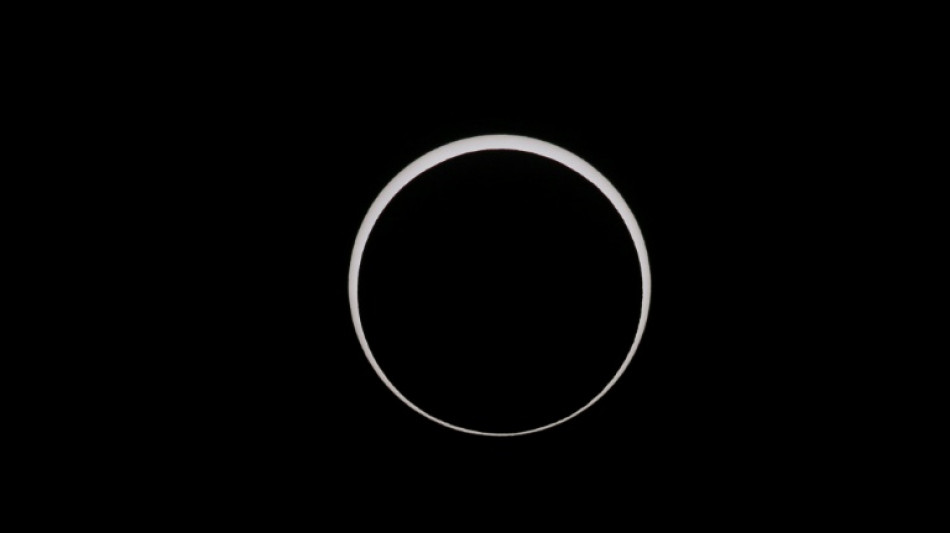
Spain gears up for August total solar eclipse / Photo: GEORGE FREY - GETTY IMAGES NORTH AMERICA/AFP

 Beyond Black Friday: A Guide to This Week’s Holidays and Deal Days

 NAND Prices Set to Fall in Early 2027 as DRAM Remains Elevated

 Marijuana Rescheduling: D.C. Circuit Filings Highlight Administrative Procedure and Treaty Questions Around Schedule III Implementation

 How to Plan for a Growing Household

 NSE and BSE Restrict Algorithmic Trading to Tech-Savvy Investors with Static IP

 Report Finds Large UK Fishing Fleet Violates Rules Two-Thirds of Time

 COP31 Negotiations Collapse as Youth Climate Demands Clash with Fossil Fuel Lobbying

 Craig Reucassel’s Ultra-Processed Food Experiment Reveals Brain Changes
Spain, one of the few places in the world where a total solar eclipse will be visible in August, has begun preparations for an event it hopes will shift tourism away from the beaches and toward the countryside.
Aside from Spain, the next total solar eclipse will also be visible in Greenland, Iceland, Russia and a small portion of Portugal, with a partial eclipse in other parts of Europe and western Africa.
The Spanish government said in a statement on Thursday that the Iberian Peninsula "will be the only populated place in the world where the total solar eclipse of Aug. 12 can be fully enjoyed, the first of its kind visible in our country in more than 100 years".
At its peak, when the moon completely covers the sun, darkening the sky in the middle of the day, the eclipse will last just over two minutes in Spain.
The government said Thursday it has selected the Yebes Observatory in the central province of Guadalajara -- a key node in global radio astronomy networks -- as the official monitoring centre for the eclipse.
It will be the first of three major eclipses Spain will experience between 2026 and 2028.
On August 2, 2027, a second total solar eclipse with an unusually long duration of six minutes will cross southern Spain, while an annular eclipse -- in which the moon does not fully cover the sun, leaving a bright ring -- is expected in January 2028.
Accommodation prices have already surged in areas where the total solar eclipse will be visible but which are not typically popular summer tourism destinations.
A search for lodging on Thursday in the northeastern city of Teruel for the night of August 12 showed prices ranging from about 300 euros ($351) for a modest hostel to 1,400 euros for a privately rented apartment.
In Burgos, no accommodation was available for less than 600 euros, while a 60-square-metre (645-square-foot) apartment was listed at 5,000 euros.
Teruel's tourism office has promoted the city as an ideal location to observe the eclipse, citing its open landscapes, clear skies and low levels of light pollution.
H.Romero--AT