Texas towns try to close roads to abortion-seekers / Photo: Moisés ÁVILA - AFP

 Dangote to launch $16bn refinery in Kenya

 North Korean leader 'extremely obese': Seoul spy agency

 Yankees and pope-backed White Sox start MLB playoffs with wins

 Malaysia's ex-PM Mahathir in hospital for observation

 'No limits': Marathon world record holder Sawe chasing history

 Countdown begins to biggest-ever Rugby World Cup

 Bangladesh women lose ground after quota reform

 Vietnam admits 'differing opinions' on Hanoi development

 Stocks temper gains as oil pares heavy losses, US data in focus

 New Zealand denies breaching climate commitments to EU

 Albert becomes youngest US scorer in 4-2 win over Chile

 Pirate island's plunging population shows Greece's demographic decline

 With elections ahead, Latvia's Russian-speakers reject Moscow's help

 Brazil football clubs face massive sponsorship blow from betting ban

 ChatGPT maker wants to be the App Store for AI as safety concerns grow

 Women fight fires and sexism in Indonesian Borneo

 Forsling's OT blast lifts Florida over Carolina in NHL opener

 Alpha Growth Management Opens Rep Office in Japan

 NBA close to picking new $12-13bn Vegas team owners: report

 LA28 Olympics torch relay to visit all 50 states

 Spain brush aside Croatia in Nations League, England down Czechs

 Trump hails 'morally binding' AI self-regulation pledge

 Yamal inspires Spain to Croatia romp on World Cup homecoming

 UN to hold fourth informal poll of secretary-general candidates

 Who are the Emiratis behind crisis-hit Manchester City?

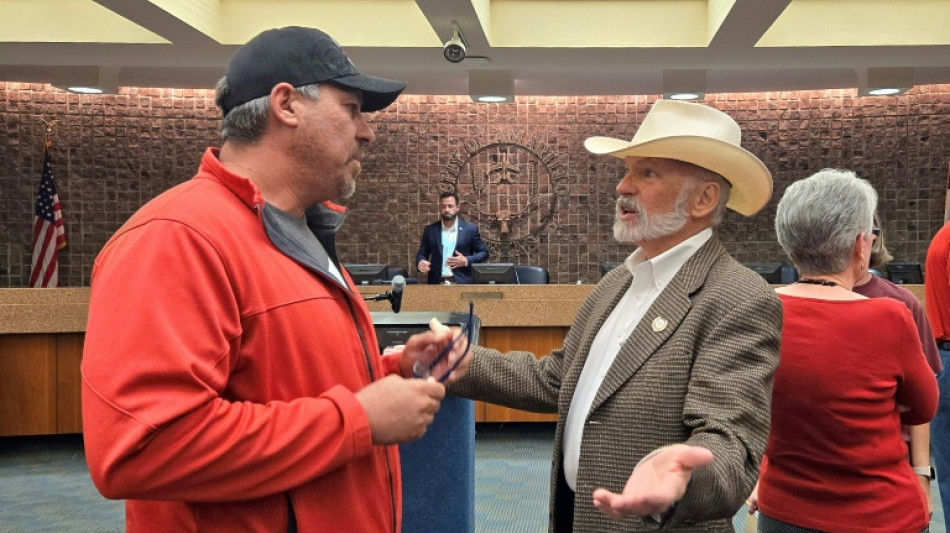
Abortion is illegal statewide in Texas, but residents in the city of Amarillo want to go a step further -- banning even the use of the city's roads by people seeking the procedure elsewhere.
Dismissed as grandstanding and extremist by critics, such laws are legally dubious and almost impossible to enforce -- yet that hasn't stopped their proliferation across conservative locales in the United States.
The highways passing through Amarillo connect Republican-led Texas with New Mexico, Colorado and Kansas, where abortion is still legal.
"We're experiencing all these horrors, like abortion trafficking," Mark Lee Dickson, the founder of the group Sanctuary Cities for the Unborn, told AFP.
The term "sanctuary city" typically refers to liberal towns that offer certain protections for undocumented immigrants -- but is increasingly being used by conservatives seeking to restrict abortion rights at the local level.
Some cities have voted to outlaw abortion within city limits, even if the state they're located in already prohibits the procedure.
Such is the fractured landscape in the United States since a 2022 Supreme Court decision overturned the federal right to an abortion, leaving individual states to draw up their own regulations.
Conservative Texas, the country's second-most populous state, has one of the strictest bans, with no exceptions for rape or incest.
Medical exceptions taking into account the mother's health have been challenged in court as being too vague after doctors -- afraid of going to prison -- refused to perform the procedure even when their patients faced life-threatening conditions.
Still, Dickson said, there are "loopholes" that need to be closed.
"There's an unborn child that is being taken against her will across state lines to be murdered. Abortion is murder," the 38-year-old told AFP.
- 'Going to get us sued' -
About a dozen other jurisdictions in Texas have passed so-called abortion travel bans -- the work of "religious extremists," says Harper Metcalf, of the Amarillo Reproductive Freedom Alliance.
The proposal in Amarillo would allow private citizens to sue anyone transporting a pregnant woman seeking an abortion, rather than having local authorities enforce the ban.
It's a controversial new legal approach used in other abortion-related legislation that seeks to sidestep potential judicial hurdles.
Yet it's unclear how Amarillo's law would actually work, given that it would impede on Americans' rights to free movement.
"These ordinances were never made to be enforceable. They are meant to sow confusion and to create fear and uncertainty, and keep people from talking to their neighbors and their friends when they need help," Metcalf told AFP.
Last month the city council weighed the measure but decided to postpone any action, promising to take another look at it in June -- though it could get punted again to November.
"Here is a community that wants to be a pro-life community -- and I know not everybody feels that way, but the majority does -- and your (city) council is a pro-life council," said Mayor Cole Stanley.
But, he said, warning of government overreach, "it's going to get us sued."
- Too extreme? -
Ahead of the November presidential election, where abortion continues to be a major campaign issue, similar travel ban measures have proved divisive on the local level.
A similar travel ban was approved in nearby Lubbock County last year, while in May the town of Clarendon rejected the proposal.
"I've been around pro-lifers," Amarillo resident Courtney Brown told AFP, referring to those opposed to abortion.
"I know that those are their beliefs. But now they're becoming an issue, where their beliefs are becoming my problem."
Robin Ross, 57, meanwhile can't "understand how a life can be taken so easily when that is a life you created."
Yet, as is the case with Mayor Stanley, not everyone in the anti-abortion camp supports the measure.
"Nobody likes to see people have abortions," says James, a retiree wearing a white Trump hat.
"But when you're actually putting in an ordinance that is not enforceable and it makes people turn against each other... that's a big no."
W.Morales--AT