Israel escalates Gaza strikes after medicine-for-aid deal / Photo: - - AFP

 In Manchester, people say City scandal is 'shame for football'
 Stocks lacklustre as inflation data weighs on sentiment
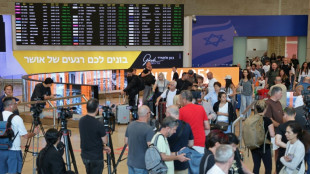 Israel-bound plane rerouted, pilots wounded in reported fight

 Truth commission on Sweden's Sami people seeks redress

 Energy costs spark inflation surges in France, Italy

 South Korea break China hearts to reach Asian Games football final
 Eala storms into Asian Games semi-finals to thrill adoring fans

 Turkey freezes ex-minister's assets as fund crisis grows

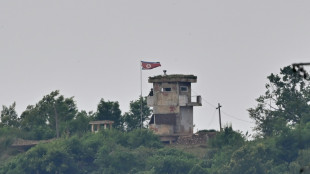
 What we know about the North Korean POW dispute

 Most equities rise after oil price plunge, US data in focus

 Polar oceans transformed as warming melts ice habitats: research

 Lost shark becomes viral star in South Korea
 Dangote to launch $16bn refinery in Kenya
 North Korean leader 'extremely obese': Seoul spy agency

 Yankees and pope-backed White Sox start MLB playoffs with wins

 Malaysia's ex-PM Mahathir in hospital for observation

 'No limits': Marathon world record holder Sawe chasing history

 Countdown begins to biggest-ever Rugby World Cup

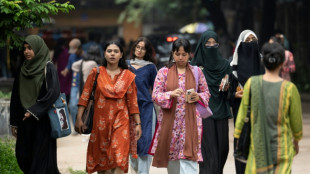 Bangladesh women lose ground after quota reform
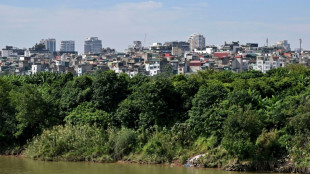 Vietnam admits 'differing opinions' on Hanoi development
 Stocks temper gains as oil pares heavy losses, US data in focus
 New Zealand denies breaching climate commitments to EU

 Albert becomes youngest US scorer in 4-2 win over Chile

 Pirate island's plunging population shows Greece's demographic decline
 With elections ahead, Latvia's Russian-speakers reject Moscow's help
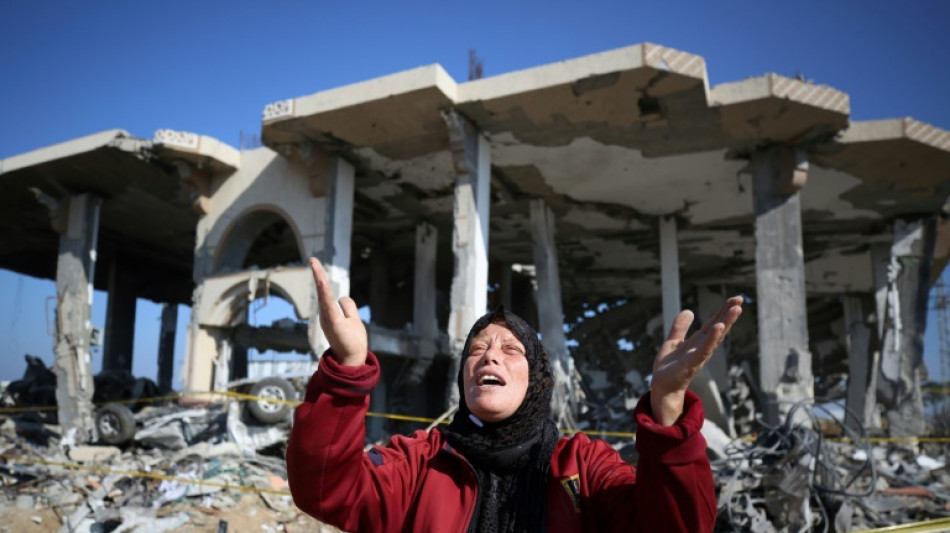
Israel stepped up strikes on the south of war-torn Gaza Wednesday, ahead of the expected delivery of medicines for hostages in exchange for humanitarian aid under a newly brokered deal.
Air strikes and artillery fire targeted Khan Yunis throughout the night, said an AFP correspondent in the southern Gaza Strip's biggest city.
"It was the most difficult and intense night in Khan Yunis since the start of the war," said Gaza's Hamas government, whose health ministry reported 81 deaths across the Palestinian territory.
Fighting has ravaged Gaza since Hamas's unprecedented October 7 attacks on Israel that resulted in the death of about 1,140 people, according to an AFP tally based on official Israeli figures.
At least 24,448 Palestinians, about 70 percent of them women, young children and adolescents, have been killed in Israeli bombardments and ground assaults, according to the Gaza health ministry's latest figures.
Hamas and other militants seized about 250 hostages during the October 7 attacks, and around 132 remain in Gaza, including at least 27 believed to have been killed.
The fate of those still in captivity has gripped Israeli society, while a broader humanitarian crisis in Gaza marked by the threat of famine and disease has fuelled international calls for a ceasefire.
- Medicine for hostages -
The agreement announced on Tuesday allowing medicines to reach the hostages and aid to enter the besieged Palestinian territory was brokered by Qatar and France.
Under the deal, "medicine along with other humanitarian aid is to be delivered to civilians in Gaza... in exchange for delivering medication needed for Israeli captives in Gaza," Qatar's foreign ministry said.
Ministry spokesman Majid Al-Ansari said the medicines and aid would leave Doha on Wednesday for the Egyptian city of El-Arish before being transported to Gaza.
The office of Israeli Prime Minister Benjamin Netanyahu confirmed the deal, under which 45 hostages are expected to receive medication.
Once the drugs arrive at a hospital in the Gaza border town of Rafah, they are to be handed over to the International Committee of the Red Cross, divided into batches and immediately transferred to the hostages, France said.
Hamas released dozens of hostages in exchange for Palestinian prisoners held by Israel during a November ceasefire mediated by Qatar, which hosts the group's political office.
US National Security Council spokesman John Kirby said he was hopeful Qatar-brokered talks could lead to another such deal "soon".
- 'Why are they doing this?' -
At the Abu Yussef Al-Najjar hospital in Rafah, Palestinians stood in front of bodies wrapped in shrouds, mourning the loss of loved ones killed in an overnight Israeli strike.
"Why are they doing this? They are destroying us," Umm Muhammad Abu Odeh, a woman displaced from the north Gaza town of Beit Hanun, told AFP.
The Israelis "told us to go south, and we came here... but there is no safe place in Gaza, neither in the north, nor in the south, nor the middle.
"Everything is being struck. Everywhere is dangerous."
The United Nations says the war has displaced roughly 85 percent of Gaza's 2.4 million people, many of whom have been forced to crowd into shelters and struggle to get food, water, fuel and medical care.
In Tel Aviv, anti-war protesters scuffled with police on Tuesday night, as some held up signs reading "End the siege" and "Stop the genocide".
The Israeli public has kept up intense pressure on Netanyahu's government to secure the return of the hostages, with officials repeatedly insisting military pressure is necessary to bring about any kind of deal.
On Tuesday, an Israeli kibbutz confirmed two hostages whose deaths were announced by Hamas in a video had been killed in Gaza.
- West Bank violence -
Violence has also surged in the Israeli-occupied West Bank since October 7 to a level not seen since the second Palestinian intifada, or uprising, between 2000 and 2005.
On Wednesday the Palestinian Red Crescent Society said an Israeli strike killed four people in the city of Tulkarem, in the north of the Palestinian territory.
The Israeli army said separately it killed a top Palestinian militant in an air strike in the West Bank that averted a "terrorist attack" he had been planning.
An AFP correspondent saw a pile of debris and mangled remains of a car that was hit in the strike near the Balata camp in the northern city of Nablus.
Israeli army raids and attacks by settlers have killed around 350 people in the territory, according to an AFP tally based on sources from both sides.
Fears are mounting that the Israel-Hamas conflict will trigger an all-out war across the Middle East, with growing violence involving allies of the Iran-backed Hamas.
The US military said it carried out fresh strikes in Yemen on Tuesday after the country's Huthi rebels claimed another missile attack on a cargo ship in the Red Sea.
Also on Tuesday, Israel's army hit Hezbollah targets inside Lebanon, with a security source saying the strikes were "the most intense" on a single area since the Hamas-aligned militants first began exchanging cross-border fire with Israel after the start of the war in Gaza.
Meanwhile, Iran -- which backs both the Huthis and Hezbollah -- carried out a missile attack in Iraq's Kurdistan region against what its Revolutionary Guards alleged was an Israeli spy headquarters and a "gathering of anti-Iranian terrorist groups".
burs-dv/kir
Ch.P.Lewis--AT