'The last wave?' Spain ICU staff exhausted by Covid battle

 MEXC Unveils "WE SEE YOU" Brand Visual Refresh, Putting People Behind Every Trade in Focus
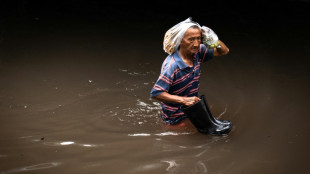 Thai capital cleans up after deadly floods

 NATO, EU allies rally to Estonia after 'sabotage' blamed on Russia

 Families demand justice for Cameroon's 'nightmare' wave of murdered women

 Tebas says Man City should face 'most severe' sanctions if guilty of rule breaches

 Pochettino calls Man City success 'a period of deception'

 Settler attack on West Bank village injures Israeli forces, drawing rare rebuke

 Mystery over UK airbase scare after reports no explosives found

 Spanish govt races to adopt housing law under protest pressure

 Estonia slams Russian 'sabotage' after arson attack on defence company

 Slovenia sees surge in '.si' sites after Trump hypes 'super intelligence'
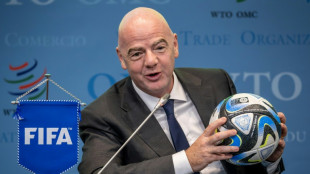
 'Like a dream' for An as Games organisers 'sorry' for latest mix-up
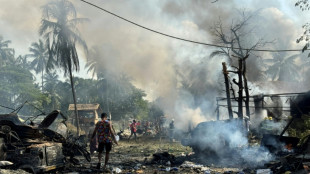
 Tokyo suffers longest streak of rainy days on record

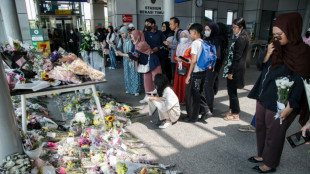 Indonesia charges train driver over crash that killed 16 women
 Ruthless An makes history to retain Asian Games badminton crown

 Australian central bank lifts key interest rate to 15-year high
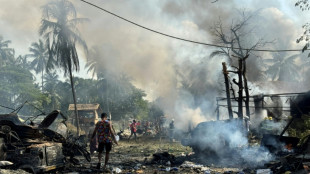
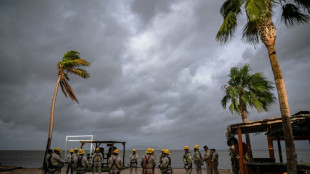
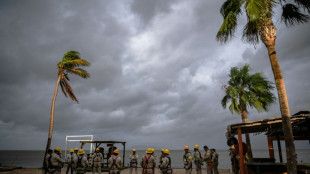 Polo makes landfall in Mexico as Category 3 hurricane
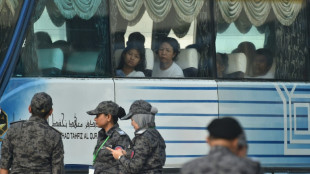
 South Korea team latest to be bussed to wrong Asian Games venue

 Bears thrash Eagles 27-7 as third-string QB Keenum shines
 All Blacks name veteran Taylor captain as Mo'unga seizes 10 jersey
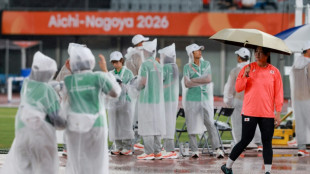 Race against time as Asian Games cricket quarter-finals washed out

 India turns to corals and seagrass to shield against rising seas

 Manchester City's Premier League charges: What comes next?

 Brazil's cellphone crime: a security nightmare in every pocket

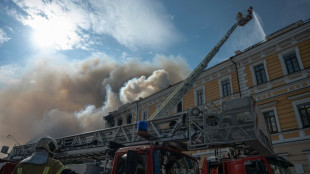 Russia pummels Kyiv in latest deadly attack
Seemingly milder for some but still highly contagious, Omicron has filled intensive care beds again at a hospital near Barcelona where shattered staff are still fighting a virus that refuses to retreat.
"Every time we think we've reached the end of the tunnel, it just gets longer," sighs Rafael Manez, head of intensive care at Bellvitge University Hospital, one of the largest medical facilities in Spain's northeastern Catalonia region.
Since the pandemic took hold nearly two years ago, overwhelming hospitals across the world, this veteran specialist has steered clear of making predictions, with Covid-19 exhausting them all.
Although more than 90 percent of Spain's population over the age of 12 has been vaccinated, it has not spared the nation from an explosion of Omicron infections, giving it one of Europe's highest incidence rates in recent weeks.
In Catalonia -- one of Spain's most populous regions with 7.7 million residents -- Covid patients are taking up more than 42 percent of intensive care beds, far above the national average of around 23 percent.
And it also has the highest number of patients in critical condition, although there are hopes this wave is on the verge of peaking.
"Our medical teams are really tired, especially by the sense of uncertainty. Will this be the last wave or will there be another?" wonders Gloria Romero, head of nursing at the hospital's intermediate respiratory care unit.
"This takes a toll on healthcare professionals. How long will this situation go on?"
- 'It's very hard' -
With 40 of its 44 beds taken up by Covid patients, the pace has not slowed at the intensive care unit of this hospital, which serves a heavily populated metropolitan area just south of Barcelona.
Inside the unit, staff suddenly start running as a patient appears to run out of air, quickly helping him.
But the work never stops in the ICU, where some 40 percent of those brought in are not vaccinated.
"The unvaccinated patients, who are the ones we're mainly dealing with, are those who are in denial about their illness and even about the treatment," says Santiago Gallego, the ICU's head nurse.
The impact on staff of working through a nearly two-year pandemic is increasingly evident, triggering unprecedented levels of stress and Covid infections, with 600 employees forced to take time off since December 1.
And given the latest explosion of cases, the hospital has also been forced to once again cancel visits, with the most seriously ill patients left to fight for their lives alone, far from their loved ones and only the staff to stay by their side.
"It's very hard physically but most of all emotionally because it just never ends," admits Elena Cabo, a physiotherapist who works in the ICU, her voice breaking with emotion.
- The vaccine as key -
But all the staff just keep on working in the hope that this disease will start to retreat.
"The only thing which is really effective is preventing it through vaccination, nobody can argue with the fact it's had an impact," says Manez.
And if Spain didn't have such a high rate of vaccination, "we would certainly be in a much worse state than we were two years ago," he reflects.
The nature of this sixth wave of infections has also raised long-awaited hopes that Covid-19 is starting to shift from a pandemic to a more manageable endemic illness like seasonal flu.
"The people that are coming in are not as young and they have more underlying health problems, so it's starting to look more like a more common virus," explains Mikel Sarasate, a pulmonologist at the intermediate respiratory care unit.
But nobody wants to get ahead of themselves or play down the severity of a virus that has killed more than 91,000 people in Spain and sickened so many.
"The flu, which is the closest thing we know, doesn't attack patients this badly or with such intensity," Sarasate says, warning about a comparison which for most specialists remains premature.
B.Torres--AT