A Carrier Shaping the Future of Trucking, and the Man Who Built It

 Martin wins Austrian MotoGP sprint after Acosta crash

 Japan edge Fiji to win Pacific Nations Cup
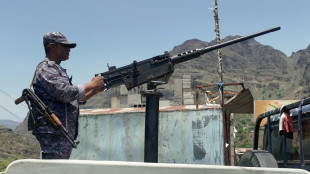 Black smoke, flames rising near Riyadh airport: residents to AFP

 UK actor Naomi Watts honoured at Spain film festival
 Japan emperor declares Asian Games open after turbulent build-up
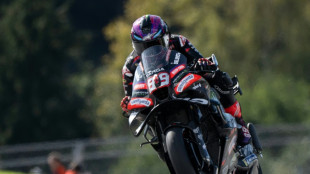
 Asian Games open with unity message after troubled build-up
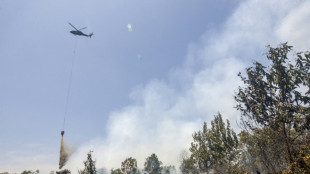
 Denmark hails 'binding' Greenland deal with Trump
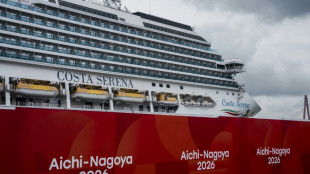
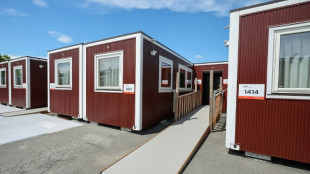 We don't want Games host Japan losing money, says Asian Olympic official

 Ed Sheeran returns to stage after Palestinian controversy

 Asian Games to open in Japan after troubled build-up
 Drone owners rush to offload devices ahead of Beijing ban

 Trump's beef policies irk Texas ranchers, testing their loyalty

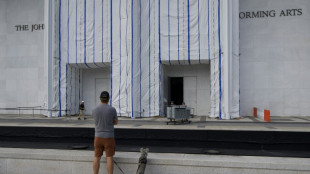 Kennedy Center: future unclear for iconic Washington arts hub

 Trump claims 'infinite' Greenland security deal with Denmark

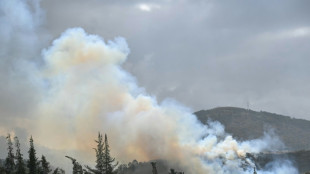 Helicopters battle wildfire threatening Ecuador's capital

 Brentford batter Chelsea to undo Alonso's promising start

 Kane hits Bundesliga century as Bayern rout Union

 Trump says CNN, MS NOW, Politico banned from White House

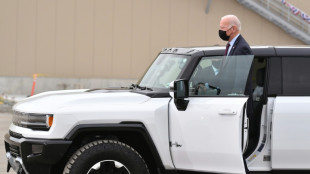 Hushing and hedging: US companies retreat on climate

 Springboks to face Fiji before 2027 Rugby World Cup

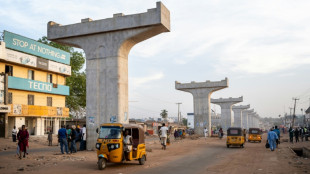 Nigeria miners struggled to breathe in cell before 37 died: survivors

 McIlroy on the charge at PGA Championship as Reed withdraws

 McIlroy on the charge at PGA Championship

 Crisis-wracked Volkswagen warns of 10-bn-euro hit to profits

 Costa Rica's Grynspan tops third informal poll for UN chief: diplomat

They Chased Volume. He Built the Future of Trucking.
PHOENIX, ARIZONA / ACCESS Newswire / February 9, 2026 / Before dawn, long before offices open and markets react, freight is already moving across thousands of miles of highway. For decades, this network looked relentless and permanent. Hidden within the motion, however, were cracks that were quietly pushing drivers and carriers beyond their limits. Adis Danan noticed those cracks when others only saw scale.
While the broader industry chased volume and rate confirmations, he invested in a regional carrier model built on short‑haul and local routes. By focusing on the Southwest and building reliable lanes in Arizona, Nevada and California, he could create predictable schedules and keep drivers closer to home, a model that has since become a blueprint for modern trucking.
Rather than relying on temporary incentives, Adis built systems. He understood that sustainability came from process: zero‑cancellation policies, continuous safety investments, and technology that eliminated manual errors. That philosophy led him to assemble a team around his childhood friend Kemal. The two grew up together they launched the JoyRide Transportation Group and its family of companies: Orior Media, a digital marketing and recruitment agency, and Orior Tech, an AI development company focused on trucking and transportation. Orior Media delivers messaging and driver pipelines, while Orior Tech builds AI-powered platforms like the Vehicle Availability System (VAS), and their biggest product yet the Driver Retention Program (DRP) transforming how drivers are tracked and how performance is managed increasing retention by more than 28% and performance by 13%. These tools help JoyRide manage capacity, automate dispatch and keep drivers engaged, critical for retention and a scalable driver pipeline.
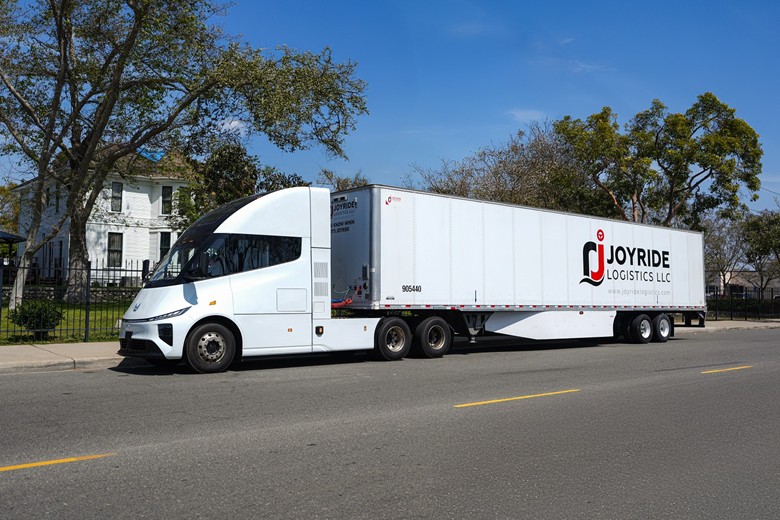
By 2025, the company had grown from one truck and $20 to more than 250 Class 8 trucks, over 3000 trailers and an army of professional drivers. Amazon named JoyRide the "Most Valued Partner" in 2022, recognition earned by upholding a strict no‑cancellation policy during the pandemic. In 2024 the Women In Trucking Association recognized JoyRide as a "Top Company for Women to Work in Transportation," and the company earned a place on the Inc. 5000 list within eight months
JoyRide isn't just a trucking company. It is a vision for technology, partnerships and It proves that investing early in regional network, building systems instead of chasing rates and staying true to lifelong partnerships can shape the future of freight.
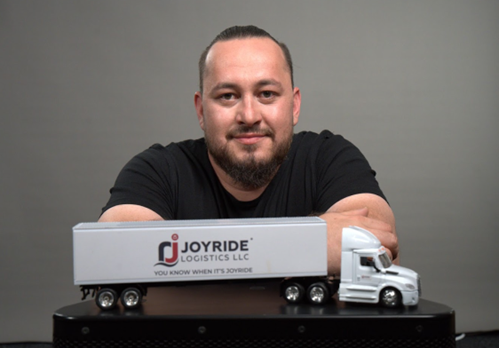
Betting Early on the Regional Carrier Model
Joyride was built on an idea that quietly challenged how much of the logistics industry had learned to operate: that sustainability is not a matter of endurance, but of design. That system fails not because people are weak, but because often they are asked to compensate for disorder.
"Most logistics problems don't start on the road," Adis says. "They start long before the truck moves." From the earliest days, the company made choices that ran counter to prevailing instincts. Instead of prioritizing speed, it prioritized clarity. Instead of reacting to breakdowns, it worked to prevent them. Yards were designed to remove uncertainty, not just park equipment. Maintenance was treated as a strategic function planned, measured, and accountable rather than an emergency response when something went wrong.
"Speed makes you feel productive, but it also hides what's broken. Structure forces you to look at it."
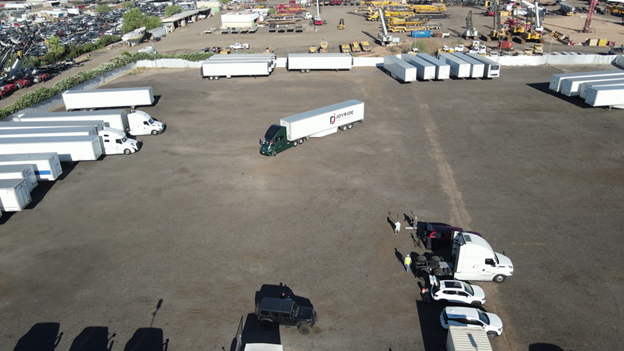
The regional carrier model was not an accident, it was engineered. JoyRide concentrated its network around dedicated regional corridors instead of chasing scattered long-haul opportunities. With operational terminals across Arizona, California, and Nevada, the company built tight geographic coverage, faster response times, and more predictable driver rotations. A new terminal in Houston, Texas is now being developed as the next strategic expansion point, extending the same regional-density logic into a new high-volume freight zone.
Infrastructure followed the same philosophy. The launch of JoyRide Fleet Center, a 24/7 commercial truck repair and maintenance facility, reinforced the company's reliability model. Instead of outsourcing critical repair cycles and accepting downtime as normal, JoyRide internalized maintenance discipline, round-the-clock diagnostics, preventive service, and rapid turnaround, treating equipment readiness as a controlled variable, not a gamble.
The goal is simple but demanding: operational perfection through structure, not reaction.
The Digital Backbone: Orior Media & Orior Tech
Technology followed the same logic. It was never introduced as a signal of innovation, but as a tool for better judgment. Systems were built to support decisions on the ground, not to create dashboards disconnected from reality. "If technology doesn't help the people doing the work make better calls," Adis says, "then it's just noise."
While much of the industry focused on scaling operations quickly, Joyride focused on building foundations strong enough to carry pressure. That distinction became critical as the logistics sector entered a period of sustained strain, tight labor markets, stricter regulation, rising operational complexity.
Joyride did not avoid these forces. It absorbed them.
"You can't build a company hoping conditions stay good," Adis says. "You build it assuming they won't."
To support that philosophy, the group is building its own AI-powered TMS platform and Driver Retention Program (DRP) app, investing heavily in technology with Orior Media and Orior Tech spearheading a practical, operations-driven digital transformation of the trucking industry across the United States.
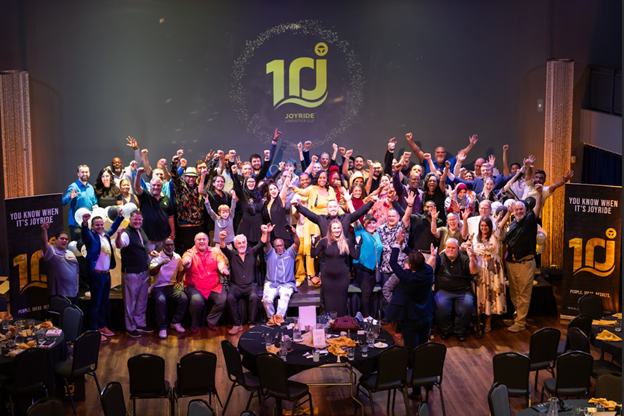
Built for Pressure, Not for Perfection
As others scrambled to adjust, Joyride's systems held not because they were insulated from change, but because they had been designed with disruption in mind. Efficiency and humanity were not treated as opposing goals, but as mutually dependent ones. "If your system only works when people push past their limits," Adis says, "then it doesn't really work."
His leadership reflects the same discipline. It is defined less by visibility than by proximity. Adis remains closely connected to daily operations, not as a symbolic gesture, but as a way of staying honest about how the company functions.
"When you're far from the work, it's easy to believe everything is fine," he says. "When you're close, you see where the friction really is."
That closeness has shaped a culture built on accountability, consistency, and trust values that are difficult to maintain in an industry, often driven by urgency and short-term pressure. At Joyride, decisions are not made to win the week, but to survive the decade.
This is not a story about predicting trends. It is a story about recognizing limits human and systemic before they become unavoidable.
The future of trucking did not arrive at once. At Joyride, it was built deliberately, through discipline, restraint, and a refusal to confuse motion with progress.
Media contact:
Marketing department
JoyRide logistics
[email protected]
623-600-7205
SOURCE: JoyRide Logistics
View the original press release on ACCESS Newswire
N.Mitchell--AT