EU lawmakers back plans for digital euro / Photo: Kirill KUDRYAVTSEV - AFP/File

 O'Connor, Sivakov join Seixas at Decathlon CMA CGM

 Faletau left out of Wales squad for Nations Championship
 Rubio says India diversifying oil, trade deal 'very close'
 October 20 Milestones Trace Decades of Kuwait’s Development

 CNN Global Perspectives to Make Middle East Debut in Doha

 Doha Debates Examines Who Should Set the Moral Rules for AI
 Qatar Amir and Singapore Prime Minister Expand Bilateral Cooperation

 Cali Biodiversity Fund Struggles After Raising Only $7,085

 Yan Diomande Finds Form Before Real Madrid Faces Former Club Leipzig

 James Maddison Leads Tottenham to First League Victory of Season

 Tonbo Imaging IPO Draws Nearly 136 Times the Shares Offered

 Tamil Nadu Adds 25 State-Funded Workdays for Eligible Rural Households

 Tamil Nadu and Puducherry Face Return of Very Heavy Rain

 Agrograde Introduces AI Optical Sorter for Arecanut Processing

 India Warns Unpaid Assessments Are Deepening UN Cash Strain

 iQOO Neo 12 Set for October 28 China Launch With 144Hz Display

 Delhi Issues Dussehra Traffic Curbs and Diversions for October 20

 Industry Groups Outline Four Steps to Help Women Farmers Reach Markets
 Veteran Character Actor Richard Riehle Dies at 78

 Rays Beat Guardians 7-3 to Secure World Series Place

 Commanders Fear Serious Knee Injury for Terry McLaurin

 More Than 52,000 West Midlands Families Use Tax-Free Childcare

 Kemi Badenoch Proposes Ending Childcare Benefit Cliff Edge

 UN says 19 mn Afghans facing acute food insecurity by April

 An unhappy republic: France's troubles extend beyond the street
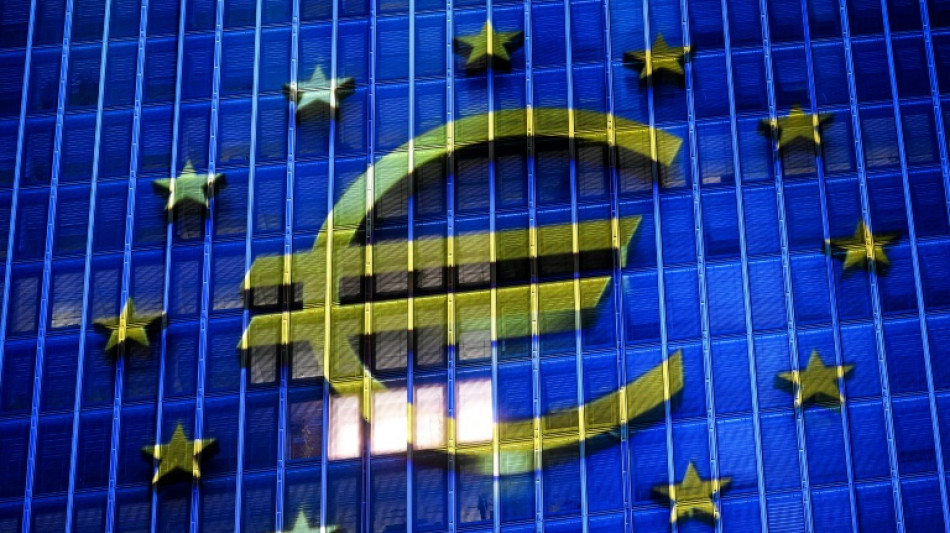
EU lawmakers backed plans Tuesday for a digital euro, a project that has split the bloc but has gained greater urgency as Europe seeks to bolster its financial sovereignty.
Lawmakers voted in favour of two amendments to an annual report on the European Central Bank (ECB), expressing support for the introduction of the digital currency.
The electronic version of the money used in the 21-nation currency area would be available to use free of charge in shops, online or from person to person.
"The introduction of a digital euro... is essential to strengthen EU monetary sovereignty, reduce fragmentation in retail payments and support the integrity and resilience of the single market," one of the amendments said, approved by 438 lawmakers with 158 against.
First suggested by the ECB, the project has been some six years in the making.
The EU executive formally proposed a digital euro in June 2023 but any law to make it a reality needs the support of member states and European lawmakers.
EU countries in December gave their green light, putting pressure on lawmakers to grant their formal approval too.
Tuesday's vote is only an expression of support at this stage but shows where lawmakers currently stand on an issue that has divided Europe.
Supporters say it would let Europeans make online payments without relying on US card companies or payments systems -- as Europe ramps up efforts to break its dependence on foreign firms including US giants such as Visa and Mastercard.
Critics fear it would allow governments to surveil citizens' payments or even cut them off from the money supply.
ECB chief Christine Lagarde on Monday sought to assuage privacy fears, telling EU lawmakers that the bank "would not have access to personal data".
She also said it was in "no way intended to replace cash".
"Cash is queen," Lagarde said, as she urged lawmakers to move forward.
Lagarde also echoed sovereignty arguments, saying: "It will be built on a fully European infrastructure, avoiding an excessive dependency on foreign providers for payment systems that are critical to the functioning of our economy."
B.Torres--AT