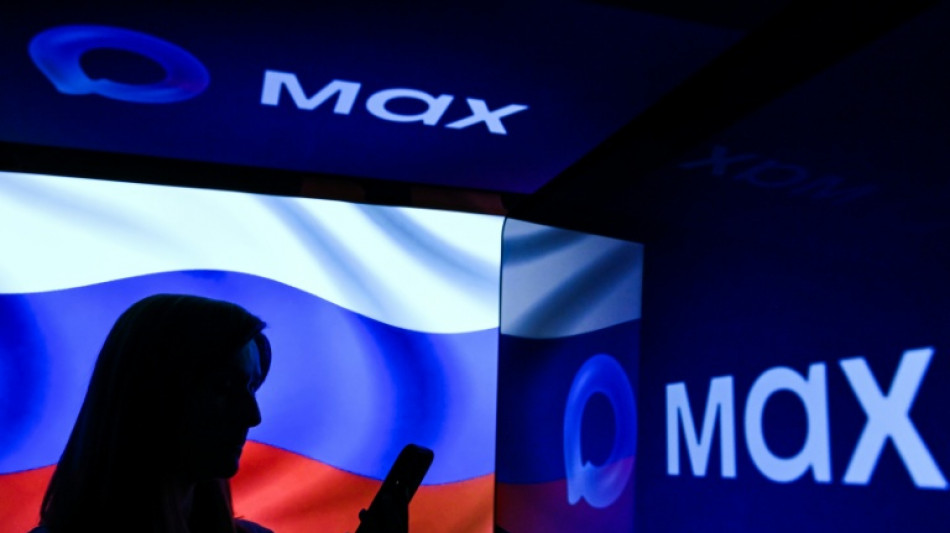
EU sanctions target Russian state-backed messaging app / Photo: Igor IVANKO - AFP/File

 Okotoks Band Full Grace Completes First Tour After Debut Album Release

 Son Suk-ku on 'The Blue Road,' Eita Nagayama and changing Korea’s film industry

 Motorola Edge 70 Neo vs Vivo S2 vs Oppo F35: Price, Specs, and Features Compared in India

 Seoul’s Club SHARP to Close After Decade of Supporting Underground Music
 How to Build a Morning Routine that Supports Your Money Goals

 Florida woman charged after deputies report finding cocaine and sales ledger

 Heat end Knicks’ NBA Cup defence with 108-105 victory

 Black Friday laptop promotions cover Apple, Lenovo, HP and gaming models
The European Union on Monday announced sanctions against the company behind Russia's state-backed messaging app Max, which it said had been used to help clamp down on dissent.
Moscow has for months been pushing Russians to install Max -- a super-app that lacks encryption and that critics say could be used to track people.
The authorities have throttled WhatsApp and Telegram, the country's two largest messaging apps, and forced civil servants, state companies, schools and government agencies to move their communications onto Max.
The EU announced sanctions on Russian media giant VK and its daughter company Communication Platform, which it said ran the Max app under the supervision of the FSB intelligence agency.
"The app comes pre-installed on all mobile devices sold in Russia and includes extensive surveillance features," the EU said.
It added those capabilities had "been used for repressive actions against users criticising Russia's war of aggression against Ukraine or posting other content banned by authorities."
Max has been compared to China's WeChat, combining social media and messaging functions with access to government services, a digital ID card system, banking and payments.
President Vladimir Putin has touted it as a more "secure" platform that meets Russia's demand for "technological sovereignty".
EU chief Ursula von der Leyen has previously accused the Kremlin of imposing a "digital iron curtain" on Russians to hide worsening conditions in the country as sanctions over the Ukraine war bite.
The EU has already imposed wide-ranging sanctions on Russia since its invasion of Ukraine in 2022.
T.Wright--AT