After quakes, Venezuelans fear losing damaged homes / Photo: Raul ARBOLEDA - AFP

 Kelp Forests: The Ocean’s Climate Hero Under Threat

 Sandra Bernhard Rejects 'Iconic' Label in New Show 'Caught Off Guard'

 Herman Miller Black Friday Deals on Aeron, Embody, and Zeph Chairs

 How to Build a Morning Routine that Supports Your Money Goals
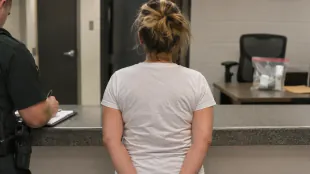 Florida woman charged after deputies report finding cocaine and sales ledger

 Heat end Knicks’ NBA Cup defence with 108-105 victory

 Black Friday laptop promotions cover Apple, Lenovo, HP and gaming models
 Black Friday fashion sales bring discounts of up to 80 percent

 Shark reduces prices on top-rated stick and robot vacuums

 Shark Depuffi stock dwindles as Black Friday skincare discounts begin
 Chevrolet Blazer EV SS tested against decades of Super Sport models
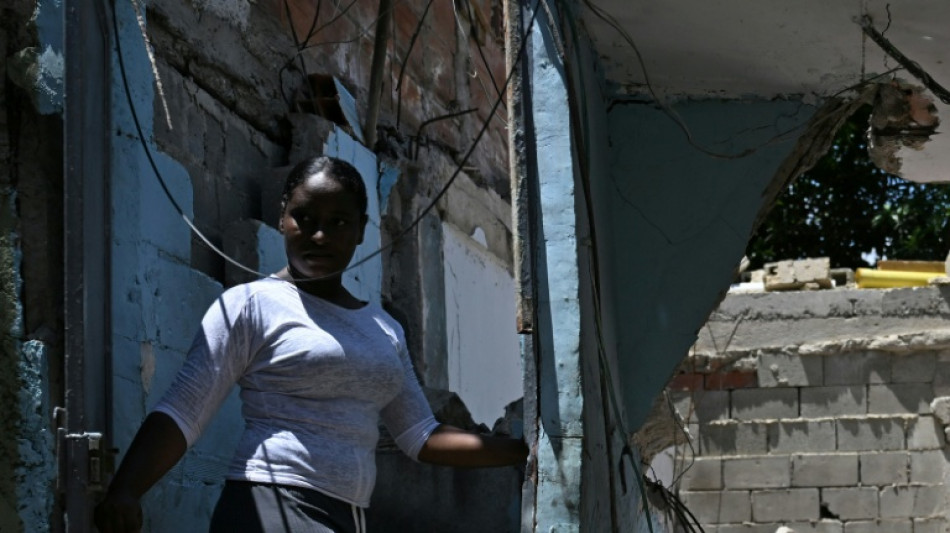
Morela Luna anxiously awaits the arrival of a team of experts to inspect her partially collapsed home, where her neighbors had to rescue her after Venezuela's double earthquake on June 24 that has claimed more than 3,600 lives.
Luna lived with her husband and four-year-old son on the second floor of their house in the La Lucha neighborhood of Catia la Mar, in La Guaira state, the hardest hit by the quaktes. Her father lived on the first floor.
"I still think this is a nightmare. I wish I could rebuild my house. I grew up here and I don't want to lose it," says the 23-year-old geography student, who sleeps at her partner's grandmother's house at night.
Two weeks after the quakes, engineers and architects are evaluating the homes in this low-income neighborhood, built by its residents.
They will determine which ones are safe to live in -- marked with a green sticker -- those that need repairs, marked yellow, and those that are dangerous and must be evacuated -- red.
Luna's house is one of the collapsed homes they won't even enter.
Nearby, 65-year-old Juana Alfonzo still moves around her home, even though the floor is sunken and cracked, and the columns show visible damage.
She and five of her relatives are sleeping in tents in the yard, out of fear of more collapses. But she's confident her house can be salvaged.
"Some people are crying a lot because, of course, it's a total loss. So many years building these houses, only for them to be gone in 39 seconds" with the powerful, consecutive earthquakes of magnitude 7.2 and 7.5, Alfonzo says about her neighbors.
She doesn't yet know that the inspection determined several columns in her house are compromised and it shouldn't be inhabited because they could give way.
Alfonzo won't receive this news from the engineering brigade. Instead, a government team will come later to tell her and place a red warning sticker on her building’s facade.
The small open spaces of the La Lucha neighborhood are filled with tents belonging to residents anxiously awaiting government repairs to their homes. In some areas, workers are clearing debris, but so far, nothing more.
Many remember the 1999 mudslide that left thousands dead in this same area, as well as tens of thousands more left homeless in that disaster, some of whom spent years in shelters.
The June 24 quakes left nearly 18,000 homeless, according to officials.
Gustavo, a 60-year-old mechanic who declined to give his last name, is worried.
"Nobody's going to want to leave here," he said.
The two earthquakes caused 190 buildings to collapse and damaged another 856, according to official figures. A NASA survey estimates that the number could reach 58,000.
- 6,000 inspections -
In Los Palos Grandes, one of Caracas's most expensive middle-class neighborhoods and one of the hardest hit, three residents stare with dismay at the red sign placed on their building.
"Who did that inspection, and with what training?" a woman asks angrily.
"I've lived here for 40 years, I don't want a demolition," another woman said.
A presidential commission to determine how habitable buildings are has been organizing workshops to prepare engineers and architects to inspect buildings damaged by the earthquakes.
Its president, Francisco Garces, who is also the Minister of Transportation, said that around 6,000 assessments have already been carried out.
"The repair and rehabilitation phases will follow," he says.
"New homes are already being built, some are nearing completion, and others are being upgraded to provide solutions for those whose homes have been completely destroyed," he told AFP.
- Technical review -
Gustavo Duque, mayor of Chacao, a middle-class Caracas neighbourhood, urges caution in interpreting the red sign too simply.
"It doesn’t necessarily imply demolition, but the building must undergo a technical review to determine if it can be repaired," he told to AFP.
In his municipality, which includes Los Palos Grandes, three residential buildings completely collapsed.
Of a total of 3,100 buildings in the Chacao municipality, some 1,000 have been inspected so far, and 25 are classified as red.
A warning about fragile buildings came recently: in Caracas, part of a school in the historic center -- also classified as red -- collapsed on July 3, causing no injuries because it was empty.
E.Flores--AT