
SMX and the Plastic Pricing Reset: From Sustainability Story to Hard Economics

 Zverev stunned by Davidovich Fokina in Shanghai semi-finals

 France faces day of cost-of-living protests

 Zelensky says Trump waiving sanctions 'rewards' Putin, warns Moscow wants 'blackout' in Ukraine

 Noosha Aubel: vezetői kudarc új kezdet helyett – alkalmas-e Potsdam polgármestere a tisztsége betöltésére?

 Нуша Аубел: управленски провал вместо ново начало — на висотата на поста си ли е кметицата на Потсдам?

 Russia hails Trump waiving sanctions as 'historic'

 Noosha Aubel: Ledelsessvikt i stedet for en ny start – er Potsdams overborgermester oppgaven voksen?

 Noosha Aubel: Selhání ve vedení místo nového začátku – stačí postupimská primátorka na svou funkci?

 Haze triggers highest-level alert in parts of Southeast Asia: monitor

 IMF chief flags 'optimism', 'worry' after Bangkok annual meetings

 IMF chief says has 'optimism' and 'worry' after Bangkok annual meetings

 Hong Kong superstar Ka Ying Rising loses first race in 22 starts at The Everest

 Attacks on Gulf energy infrastructure 'worrying' for outlook: Pakistan finance minister

 Japan says hosting record number of foreigners

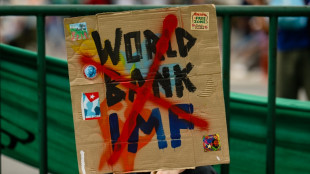 'Two bad options': Rights groups decry IMF austerity demand

 Guardians-Rays MLB playoff game postponed until Saturday

 'We've never had this': Bear sightings spook Russia

 Injured Jordie Barrett out of second Bledisloe Cup Test

 All contenders for UN chief receive veto: diplomat

 UN climate panel fails to agree date for global warming update: envoy

 Stocks struggle to bounce back from AI angst-fueled rout

 Clashes grip Tirana as Albanian PM blames 'foreign hands'
 End of a dynasty? Dodgers digest playoff drubbing

 Troyes sack sporting director Blanchard amid sexism claims

 Trump's new press secretary out after less than week

NEW YORK CITY, NY / ACCESS Newswire / April 2, 2026 / For years, the plastics market followed a familiar script: virgin resin-anchored to oil and gas-was cheaper, more predictable, and easier to scale than recycled material. Recycling lived in a different category, driven less by economics and more by policy, pledges, and brand optics. It wasn't that the market didn't care-it was that the math didn't work.
That math is now being rewritten-and SMX (Security Matters) is at the center of that shift.
A convergence of forces-energy volatility, supply chain disruption, regulatory escalation, and new verification technologies-is reshaping how plastic is priced and valued. At the same time, the market is undergoing a quieter but equally consequential shift: moving away from narrative-driven sustainability toward systems built on proof.
The result is a turning point. Recycled plastic is no longer competing solely on environmental virtue-it is increasingly competing on cost, performance, and verifiable integrity.
⸻
The legacy advantage of virgin plastic
Historically, virgin plastic held a structural edge built on three pillars:
• Industrial scale - Petrochemical systems are among the most optimized supply chains globally
• Feedstock economics - Oil and gas provide dense, relatively inexpensive inputs, making up roughly 60% of production costs
• Consistency - Uniform quality reduces risk across manufacturing and downstream applications
Recycled plastic, by contrast, has operated within a fragmented system:
• Inefficient collection networks
• High contamination rates
• Variable output quality
This fragmentation introduced added costs-sorting, cleaning, verification-leaving recycled materials trading at a 20-40% premium. But that "green premium" has never been purely about material cost. It has been a function of inefficiency and lack of trust.
⸻
Energy volatility disrupts the status quo
What was once cyclical is now structural. Energy markets have entered a period of sustained instability, driven by geopolitical fragmentation, constrained fossil investment, and an uneven energy transition.
Virgin plastic sits directly in that crosscurrent.
Its cost structure is tightly coupled to oil and gas:
• ~60% feedstock
• ~15% energy and utilities
• ~15% processing
• ~10% margin
When energy prices move, virgin plastic moves with them-mechanically and immediately.
Recycled plastic operates differently. Its costs are driven more by operational factors:
• ~30-40% collection and logistics
• ~20-30% sorting and cleaning
• ~20-30% processing
• ~10-15% compliance and certification
This creates a critical asymmetry. Recycling is less exposed to raw material shocks and more insulated from volatility. For the first time, it is not just environmentally favorable-it is becoming economically viable.
Today's benchmarks still show a gap:
• Virgin plastic: ~$950-$1,100 per ton
• Recycled plastic: ~$1,200-$1,400 per ton
But that gap is narrowing-and under pressure, it can invert.
⸻
Regulation compounds the shift
Energy is only part of the story. Regulation is emerging as a second, powerful cost driver-and it is disproportionately targeting virgin plastic.
For decades, the environmental costs of plastic-waste, pollution, microplastics-have sat outside the balance sheet. That is changing.
Governments are now pulling those externalities back into the system through:
• Carbon pricing frameworks
• Extended Producer Responsibility (EPR) programs
• Mandatory recycled content requirements
Across Europe and Asia, these measures are no longer theoretical-they are being implemented. And they do more than add cost. They reshape access.
Companies unable to demonstrate recycled content or lifecycle compliance risk losing entry into key markets and customers. What was once a compliance issue is now a demand constraint.
Layer in two realistic shocks:
• Feedstock escalation - If oil and gas prices double, roughly 60% of virgin plastic costs reprice upward
• Regulatory burden - Carbon costs, taxes, and compliance expenses add further pressure
Under these conditions, the economics flip:
• Virgin plastic trends toward ~$1,840 per ton
• Recycled plastic stabilizes near ~$1,430 per ton
At that point, recycled material becomes 20-25% cheaper-a decisive inflection.
⸻
The missing link: trust
Even as the cost gap closes, one barrier remains: credibility.
Markets no longer accept sustainability claims at face value. Across industries, stakeholders are demanding proof-verifiable, auditable, real-time data.
Recycling has historically struggled here. Verification is fragmented, expensive, and often unreliable. This "trust deficit" has acted as a hidden cost, slowing adoption even when economics improve.
Solving this is what unlocks scale.
⸻
SMX and the shift to embedded proof
A new category of infrastructure is emerging to address this gap. SMX (Security Matters) represents one such approach, built on a simple premise: materials should carry their own identity.
By embedding an invisible molecular marker into plastic and linking it to a secure digital record, SMX enables materials to be:
• Instantly verified
• Non-destructively authenticated
• Tracked across their entire lifecycle
Origin, composition, and recycled content become intrinsic to the material-not dependent on paperwork or declarations.
This changes the economics:
• Eliminates reliance on certificates and self-reporting
• Reduces verification costs
• Minimizes fraud and uncertainty
In effect, recycling transitions from an opaque system to one defined by transparency. And when transparency increases, markets become more efficient.
⸻
First impact: cost compression
As verification friction declines:
• Compliance becomes easier
• Contamination risk is reduced
• Buyer confidence increases
The recycled premium begins to erode. In a high-energy, high-regulation environment, recycled plastic can become not just cheaper-but more dependable.
⸻
Second impact: recycling becomes an asset
The deeper transformation comes next.
Once materials are verified at the unit level and tracked across their lifecycle, recycling becomes measurable-and monetizable.
This is where the concept of the Plastic Cycle Token (PCT) enters. Each verified unit of recycled plastic can be converted into a digital asset tied to real, industrial activity-not estimates.
That creates a second layer of value:
• Recycling generates revenue, not just savings
• Environmental performance becomes financially quantifiable
• Industrial output connects directly to tradable value
⸻
A dual advantage emerges
Two forces now operate simultaneously:
1. Structural cost advantage
• Energy volatility penalizes virgin production
• Regulation increases compliance costs
• Verification efficiency reduces recycling friction
2. Financial upside
• Verified materials become tradable assets
• New environmental commodities emerge
• Recycling links directly to financial markets
This is not a marginal improvement. It is a redefinition of the model-from cost center to asset class.
⸻
Redefining plastic itself
As these dynamics scale, plastic evolves beyond material:
• Waste becomes feedstock
• Production becomes data
• Recycling becomes finance
For companies, this means lower input costs, new revenue streams, and stronger compliance positioning.
For investors, it introduces exposure to measurable industrial productivity.
For regulators, it embeds accountability directly into the system.
⸻
The bottom line
Plastic is being repriced in real time.
Energy volatility, regulatory pressure, and system inefficiencies are closing-and in some cases reversing-the cost gap between virgin and recycled materials. Technologies like SMX (Security Matters) are accelerating that shift by replacing assumption with verification.
What emerges is not just parity, but transformation.
Recycled plastic becomes cheaper, more reliable, and more valuable. And with asset layers like Plastic Cycle Tokens, circularity itself becomes measurable and tradable.
The question is no longer whether recycling can compete.
It is whether markets are ready for materials that are not only better for the environment-but fundamentally better economics.
Contact: Billy White/ [email protected]
SOURCE: SMX (Security Matters) Public Limited
View the original press release on ACCESS Newswire
D.Johnson--AT