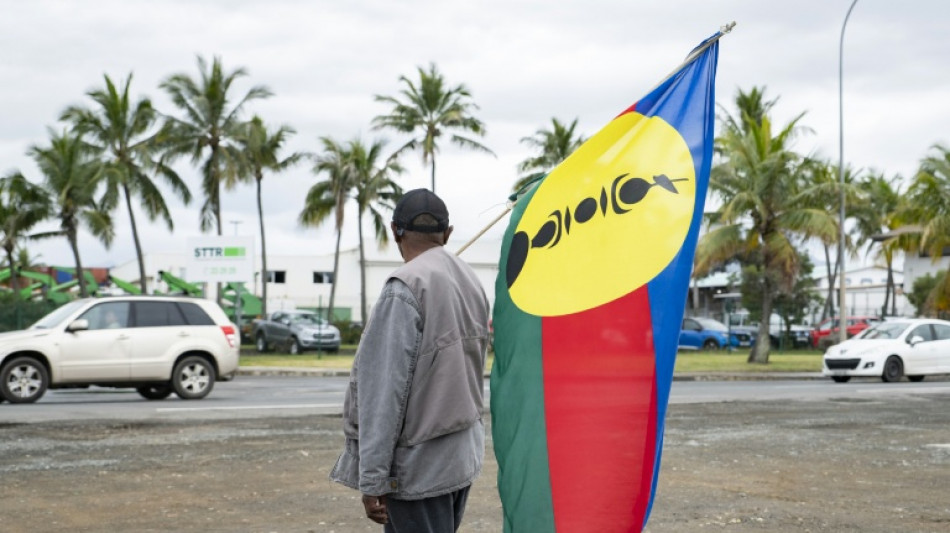
France considers reform for New Caledonia / Photo: Delphine MAYEUR - AFP

 Boland strikes twice for Australia in rain-hit South Africa Test

 Marseille put Angers to the sword in Ligue 1
 Albanian PM refuses to quit as violent protests enter sixth day

 Chwalinska fights back to win Wuhan Open in title breakthrough
 Kulusevski on brink of return for Spurs after 17-month absence

 Ukraine sets Saint Petersburg refinery ablaze in large-scale drone attack
 Spain's in-form Chacarra wins DP World India Championship

 Two pilots die in Saudi coalition helicopter crash near Yemen border

 Riyadh skyscraper shifts tenants online as Houthi attacks intensify

 Messi scores twice as Inter Miami defeat Atlanta United 3-1

 Qatar and Norway review bilateral ties at Oslo consultations
 Vietnam and EFTA states sign free-trade agreement in Hanoi

 Gold closes week near $4,165 as US inflation outlook pressures market
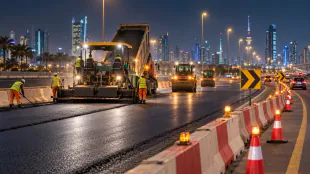
 PSG rally past Strasbourg to take Ligue 1 lead

 India’s services surplus narrows as import growth overtakes exports
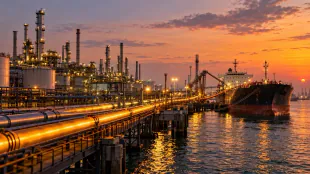
 RCom professional asks Supreme Court to revisit spectrum insolvency ruling

 Debt recovery lessons after derivatives losses and repeated borrowing

 Katie Alexander reportedly leaves flat shared with Eamonn Holmes

 Body found in search for missing Glasgow teenager

 Andi King recounts late-life transition after decades behind an “alpha male” identity

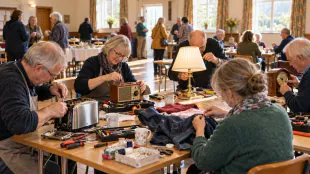 Bromsgrove Repair Cafe reports nearly 80% repair success rate

 B.C. Lions focus on playoff momentum after Calgary defeat

 PNB expects festive demand to add up to two points to quarterly credit growth

 Cyient DLM drops 12% as margin concerns overshadow quarterly growth
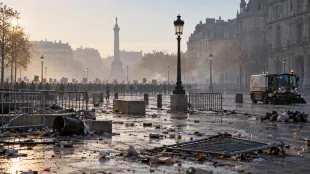
 Arizona quarterback says audible led to dismissal and teammates’ suspensions

France's parliament on Thursday rejected a law to grant New Caledonia partial statehood, a reform the government hoped would bring stability to the overseas territory.
Here's what to know.
- Where is New Caledonia? -
New Caledonia, an archipelago that is home to some 270,000 people, lies between Australia and Fiji in the Pacific.
It is one of several French overseas territories left over from colonial times that have limited autonomy.
British explorer Captain James Cook named it New Caledonia in the 18th century, saying it reminded him of Scotland.
France seized the archipelago in 1853, initially using it as a penal colony. It then declared it an overseas territory in 1946, giving its inhabitants French citizenship.
It is rich in nickel, a key ingredient for manufacturing stainless steel and making batteries that power electric vehicles.
- Who lives there? -
Indigenous Melanesians known as Kanaks make up around 40 percent of the population, according to a 2019 census, followed by descendants of European settlers known as Caldoches and other newer residents.
Around a third of Kanak households live below the poverty line, whereas less than 10 percent of non-Kanak families do, the census shows.
- Who wants independence? -
Tensions have blighted the archipelago's modern history, starting in 1878 when an insurgency against land dispossession and the colonial order left 200 Europeans and 600 rebels dead.
Clashes between Kanaks and Caldoches in the 1980s culminated in Kanak separatists mounting an attack and hostage-taking in 1988, when six police officers and 19 militants were killed.
A landmark deal between France and opponents and supporters of independence followed in 1998, giving the islands more autonomy.
The voter roll has been frozen since then.
Three referendums on independence in 2018, 2020 and 2021 have returned a majority in favour of staying with France. But pro-independence groups boycotted the third held during the Covid pandemic.
The independence movement retains support, particularly among the Kanaks.
- What happened in 2024? -
Unrest broke out in 2024, leaving 14 people dead, after a planned update to give voting rights to thousands of non-Indigenous long-term residents.
Kanaks feared this would leave them in a permanent minority, crushing their chances of winning independence.
- What's the reform? -
In a bid to ease tensions, French officials and a delegation of New Caledonian pro-independence and anti-independence representatives in July last year reached an agreement to create a "State of New Caledonia" within the French Republic.
The so-called Bougival Accord provides for the creation of a Caledonian state with Caledonian nationality to be enshrined in France's constitution.
But under the agreement, which needs approval from the French parliament and New Caledonia residents, there will be no further referendums on independence.
What is more, New Caledonia residents who arrived after 1998 are to be allowed to vote, provided they have lived 10 years on the archipelago.
New Caledonia's main pro-independence group -- the Socialist Kanak National Liberation Front (FLNKS) -- wants to scrap the accord, which it says makes achieving full sovereignty too difficult.
- What's next? -
France's right-leaning Senate has approved the reform, but the lower house of parliament on Thursday rejected it, complicating it coming into law.
The left had said they could not approve it if the FLNKS did not, while far-right parliamentary leader Marine Le Pen has said the bill is "dangerous for national unity".
Naima Moutchou, France's minister for overseas territories, has warned a motion to reject the bill would bring negotiations "years backwards".
burs-ah/ekf/giv
P.A.Mendoza--AT