
SMX -- Technology That Will Save You Money

 Boland strikes twice for Australia in rain-hit South Africa Test

 Marseille put Angers to the sword in Ligue 1

 Albanian PM refuses to quit as violent protests enter sixth day

 Chwalinska fights back to win Wuhan Open in title breakthrough

 Kulusevski on brink of return for Spurs after 17-month absence

 Ukraine sets Saint Petersburg refinery ablaze in large-scale drone attack

 Spain's in-form Chacarra wins DP World India Championship

 Two pilots die in Saudi coalition helicopter crash near Yemen border

 Riyadh skyscraper shifts tenants online as Houthi attacks intensify

 Messi scores twice as Inter Miami defeat Atlanta United 3-1

 Qatar and Norway review bilateral ties at Oslo consultations

 Vietnam and EFTA states sign free-trade agreement in Hanoi

 Gold closes week near $4,165 as US inflation outlook pressures market

 PSG rally past Strasbourg to take Ligue 1 lead

 India’s services surplus narrows as import growth overtakes exports

 RCom professional asks Supreme Court to revisit spectrum insolvency ruling

 Debt recovery lessons after derivatives losses and repeated borrowing

 Katie Alexander reportedly leaves flat shared with Eamonn Holmes

 Body found in search for missing Glasgow teenager

 Andi King recounts late-life transition after decades behind an “alpha male” identity

 Bromsgrove Repair Cafe reports nearly 80% repair success rate

 B.C. Lions focus on playoff momentum after Calgary defeat

 PNB expects festive demand to add up to two points to quarterly credit growth

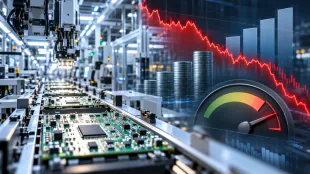 Cyient DLM drops 12% as margin concerns overshadow quarterly growth

 Arizona quarterback says audible led to dismissal and teammates’ suspensions

NEW YORK, NY / ACCESS Newswire / March 20, 2026 / SMX (Security Matters) PLC (NASDAQ:SMX) is driving a global transition toward material efficiency as volatile oil and gas markets increase the cost of producing plastics and synthetic materials-placing rising pressure on the price of food, clothing, and everyday consumer goods.
From the packaging that protects groceries to the polyester fibers woven into clothing, plastics sit at the core of modern manufacturing. Nearly every consumer product-whether it's a packaged food item, a beverage, or an article of apparel-relies on oil and gas at some stage of production. As energy prices become more volatile and structurally higher, those costs are moving rapidly through supply chains.
The consequence is unavoidable: higher costs for consumers.
Manufacturers and processors are already absorbing rising input costs tied directly to energy markets. Producing virgin plastic for packaging, containers, and synthetic textiles is becoming more expensive, driving up the cost of everything from shrink-wrapped food products to performance fabrics and fast fashion. What begins at the wellhead increasingly ends at the checkout counter.
This is creating a fundamental shift in how industries must operate.
Material efficiency is no longer a sustainability goal-it is an economic requirement.
In an environment defined by expensive and unpredictable energy, the ability to reuse existing materials is becoming one of the only scalable ways to manage costs and protect margins. Yet the current recycling system remains structurally broken.
It lacks verification.
Recycled plastics and synthetic materials move through fragmented, opaque channels with little to no proof of origin, composition, or quality. For manufacturers-especially in food packaging and apparel-this uncertainty creates unacceptable risk. Without trusted inputs, recycled materials cannot reliably replace virgin production at scale.
Recycling without verification cannot support modern industry.
SMX removes that limitation.
Through its proprietary technology, SMX embeds a permanent, invisible marker into materials at the molecular level-giving plastics and synthetic fibers a verifiable identity that can be tracked, authenticated, and measured across their entire lifecycle.
This is a critical breakthrough.
For the first time, recycled materials can be validated with precision-transforming them from uncertain substitutes into trusted, high-performance inputs.
SMX opens the technological barrier that has long prevented true material efficiency. By turning plastics and textiles into traceable, data-rich assets, the company enables manufacturers to confidently reuse materials in everything from food-grade packaging to apparel production without compromising quality or compliance.
With SMX, waste becomes a verified resource.
And that fundamentally changes the equation.
By reducing reliance on energy-intensive virgin production, SMX directly addresses the cost pressures driven by oil and gas volatility. Manufacturers gain access to consistent, certified recycled inputs. Supply chains become more transparent and controllable. And industries-from food to fashion-gain a viable path to stabilize costs in an unstable energy environment.
The implications are far-reaching.
As energy markets continue to fluctuate, industries built on traditional, linear production models will face mounting pressure-pressure that will increasingly be passed on to consumers. The cost of food, clothing, and essential goods will continue to rise unless materials can be reused efficiently and at scale.
That requires trust.
That requires verification.
SMX is delivering both.
By connecting physical materials to a persistent digital identity, SMX is enabling a new industrial framework-one defined by traceability, accountability, and continuous reuse. In this model, material efficiency is not aspirational-it is operational, measurable, and economically driven.
The era of cheap, disposable materials is ending.
A new era of verified, efficient materials is emerging.
SMX is leading that transformation.
Contact: Jeremy/ [email protected]
SOURCE: SMX (Security Matters) Public Limited
View the original press release on ACCESS Newswire
S.Jackson--AT